The gap between knowing what SEO content marketing is and shipping articles that actually rank is an operational one. It's a workflow problem. We've seen it inside OutBlogAI's onboarding data: the teams that win aren't the ones with the best writers or the biggest budgets. They're the ones who run a repeatable system from keyword to published post to refreshed update, with a clear handoff between human judgment and AI at every step.
This is that system. We'll walk through 10 stages, follow one example keyword end to end ("how to write SEO content"), and give you a pre-publication checklist you can copy into your own process. We'll also be honest about where AI helps and where it quietly costs you traffic if a human isn't in the loop.
TL;DR
SEO content marketing works in execution when you treat it as a 10-step workflow: business goal, audience research, keyword research, search intent classification, SERP analysis, topic cluster mapping, content brief, writing, on-page SEO with internal links, distribution, measurement, and refresh. The same example keyword ("how to write SEO content") moves through each step in this guide. AI speeds up research, outlining, and drafting. Humans own intent, evidence, fact-checking, and editorial judgment. Google's own guidance on AI-generated content is clear: "Google focuses on rewarding high-quality content, regardless of whether it's human or AI-generated." Quality is the bar. Process is how you clear it.
What SEO Content Marketing Actually Means in Practice
If you've read the pillar article in this cluster, you already know the definition: SEO content marketing is content created to rank in organic search and move a business goal. It's the practical side of content marketing for organic search, where every article is judged on the leads and revenue it produces, not just on traffic volume. That part is settled.
This article picks up where definitions end. We're going to assume three things about you:
- You already know the difference between on-page, off-page, and technical SEO.
- You understand that keywords signal intent, not just topics.
- You've probably published some content that underperformed and want a system to fix it.
In case you are new to SEO content marketing, read this article to familiarise yourself with the concept: https://blog.outblogai.com/blog/en/seo-content-marketing-complete-system-growth-6230b92bf559
If any of those are unclear, the SEO Starter Guide from Google Search Central is the cleanest free resource to close the gap.
What follows is the execution system. We use it inside OutBlogAI to plan our own monthly calendar, and we teach it to customers running their own publishing workflows. Internal telemetry shows a single blog moving through this system from brief to publish takes 7-15 minutes when AI handles the heavy lifting, and human review covers the rest.
The 10-Stage Workflow
Below is the full sequence. Each stage builds on the previous one. Skipping any of them is how content ends up indexed but unread.
We'll track one example keyword through the process: "how to write SEO content." It's a mid-volume informational query that a content marketer, an SMB founder, or an SEO agency might realistically target. You can substitute your own keyword as you read.
Stage 1: Tie the Topic to a Business Goal
SEO content without a business goal is content marketing theater. Before you research a single keyword, answer one question: what happens when this ranks?
Possible outcomes:
- A qualified demo request from a B2B SaaS visitor
- An email signup that enters a nurture sequence
- A sale on an ecommerce category page
- Brand recall that supports a longer sales cycle
Write the outcome down. Put it next to the keyword in your editorial calendar. If you can't name a business outcome, the topic probably doesn't belong in your content plan yet.
Example: Targeting "how to write SEO content" only makes sense if your business goal is to convert SEO-aware readers into trial users, course students, or content tool customers. If your business sells running shoes, this keyword is a distraction.
Stage 2: Audience Research Before Keyword Research
Most teams jump to keyword tools before they know who they're writing for. Reverse it. Pull from your existing customers first:
- Sales call transcripts
- Support tickets
- Customer interviews
- Reddit threads and forum posts in your category
- Comments on competitor content
The output is a tight profile of who you're writing for, what they already know, and what they're confused about. OutBlogAI's onboarding calibration surfaces many of these questions by analyzing the brand's site, but the same logic applies to anyone: the questions your audience is already asking are the questions your content should answer.
Example: For "how to write SEO content," the audience is probably a content marketer or founder who has published a few posts, knows the basics, and wants a more repeatable process. They're not asking "what is SEO." They're asking "how do I do this faster and stop guessing."
Stage 3: Keyword Research and Expansion
Now you can use a keyword tool. The point isn't to find one keyword. It's to map a cluster around your topic.
Start with a seed term ("SEO content"). Expand into:
- Question keywords ("how to write SEO content," "what makes content rank")
- Comparison keywords ("SEO content vs blog content")
- Tool keywords ("SEO content tools," "SEO content checker")
- Long-tail variants ("how to write SEO content for a small business")
A useful rule: one pillar page targets the broad term, and each cluster article targets one specific intent. Don't try to rank one page for twenty keywords. Moz's topic cluster guide and Search Engine Land's cluster primer both walk through this structure in detail. For a deeper look at how AI fits into the outlining and brief phase, OutBlogAI's breakdown of AI-powered content outlines covers that step in detail.
Example cluster around "how to write SEO content":
| Article | Target Keyword | Intent |
|---|---|---|
| Pillar | SEO content | Informational |
| Cluster 1 | how to write SEO content | Informational |
| Cluster 2 | SEO content best practices | Informational |
| Cluster 3 | SEO content optimization | Informational |
| Cluster 4 | SEO content checker | Commercial investigation |
| Cluster 5 | SEO content strategy template | Commercial investigation |
Stage 4: Classify Search Intent
Every keyword has an intent. Most ranking failures happen because the writer ignored it.
The four standard intent categories:
- Informational: the searcher wants to learn. Match with guides, how-tos, explainers.
- Commercial investigation: the searcher is comparing. Match with comparison posts, best-of lists, product reviews.
- Transactional: the searcher wants to buy. Match with product pages, pricing, signup flows.
- Navigational: the searcher wants a specific site. Match with the right landing page, not a blog post.
Look at the SERP, not just the keyword. The intent is whatever Google is already rewarding. If the top results are listicles, write a listicle. If they're long-form guides, write a guide. If they're product pages, your article probably isn't the right format.
Example: Searching "how to write SEO content" returns guides, listicles, and tool roundups. The dominant intent is informational. The format that wins is a long-form guide with concrete examples. A pure listicle would underperform because it skips the explanation readers actually need.
Stage 5: SERP Analysis
Before you write a word, study the page that already ranks #1. Then study the next nine.
What to extract:
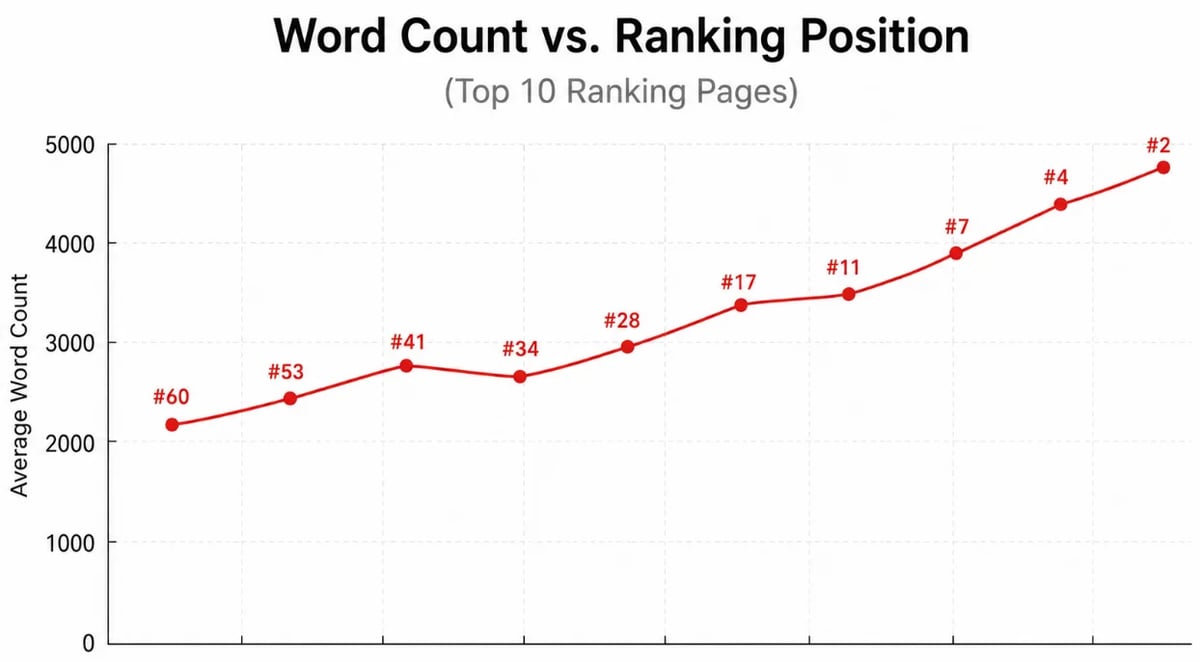
- Average word count of the top 10
- Heading structure (which H2s and H3s show up repeatedly?)
- Content formats used (tables, screenshots, videos, checklists)
- Gaps in coverage (what should they have included but didn't?)
- Questions from "People Also Ask" and related searches
- Backlink profile of the top pages (rough estimate is fine)
This is the step that separates writers from SEOs. A writer starts at the title. An SEO starts at the SERP.
Example: Top results for "how to write SEO content" all include:
- A definition or quick answer
- A step-by-step process
- Examples
- Tool recommendations
- A checklist or summary
Notice what they don't include: keyword density rules, outdated word count targets, vague promises about ranking. A new angle for your own post: lead with the system and skip the rehashed basics.
Stage 6: Map the Topic Cluster
Your single article doesn't stand alone. It sits inside a cluster that signals topical authority to Google.
The structure is a hub-and-spoke model:
- One pillar page covers the broad topic at high level.
- Each cluster article covers one subtopic in depth.
- Every cluster page links up to the pillar.
- The pillar page links down to each cluster.
- Cluster pages link sideways to related clusters where it helps the reader.
This isn't link scheme territory. Google's structured data guidance and E-E-A-T documentation both emphasize topical depth and clear information architecture. The cluster model is how you demonstrate that depth at scale.
Example: This article is cluster page 1 in our SEO content marketing cluster. The pillar covers the definition and benefits. Future articles in the cluster cover on-page SEO, internal linking, distribution, and measurement. Each one links up to the pillar and across to related articles.
Stage 7: Write the Content Brief
The brief is the document that turns research into a draft. Without it, your writer (or your AI prompt) will improvise, and improvisation produces generic content.
A good brief includes:
- Working title and 2-3 alternative titles
- Target keyword and 5-10 secondary keywords
- Search intent and target reader profile
- Required sections (mapped to SERP analysis)
- Word count range (based on SERP, not on what feels right)
- Internal links to add (with target URLs and anchor text)
- External links to cite (with target URLs and context)
- Tone notes and banned phrases
- A clear point of view or angle that differentiates from competitors
The brief is also where AI earns its keep. Generating a structured brief from a SERP analysis is one of the tasks where AI output quality is consistently high and human review time is short. OutBlogAI's internal quality scoring on brief generation typically returns 9/10 or 10/10 because the input data is structured and the output format is predictable.
Example brief for "how to write SEO content":
- Title: "How to Write SEO Content: A 10-Step Execution System"
- Word count: 2,500-3,500
- Tone: direct, practical, no fluff
- Required sections: keyword research, search intent, SERP analysis, brief, writing, on-page, internal links, distribution, measurement, refresh
- Differentiator: follow one example keyword through the full process
Stage 8: Writing the Draft
This is where most SEO content creation actually happens, and where AI tools get used most. It's also where most teams misuse them. The pattern that works:
- Start from a strong outline generated by the brief.
- Use AI to draft sections based on the outline.
- Layer in human voice, examples, and original analysis as you edit.
- Fact-check every claim that touches numbers, dates, named entities, or quotes.
- Cut anything that doesn't earn its place in the article.
AI writing tools such as BoldPilot can help with the drafting and refinement stages, but the output still needs human review for accuracy, context, and original insight.
What AI is good at in this stage:
- Generating first-draft prose at speed
- Restructuring paragraphs when the argument shifts
- Producing variations of headlines, intros, and CTAs
- Summarizing long research into tight passages
What AI is not good at:
- Citing real data accurately without hallucination
- Producing genuine original analysis from first-hand experience
- Recognizing when a claim is wrong or out of date
- Maintaining factual precision across long documents
That second list is why Google's helpful content guidance emphasizes the "Who, How, and Why" of content. The "Who" needs to be a real author with real experience. The "How" needs to be disclosed when automation is involved. The "Why" has to be genuine help for the reader, not search-engine manipulation.
Practical writing tips that actually move the needle:
- Lead each section with the conclusion, then explain it. Readers skim. Make skimming work.
- Use concrete numbers and named tools, not vague generalities. "Ahrefs finds this query has a KD of 34" beats "this is competitive."
- Cut any sentence that doesn't add a fact, an example, or an instruction.
- Write in second person for how-to content ("you" reads more directly than "one").
- Cite primary sources. Google Search Central documentation is the gold standard for SEO claims. For tooling, this roundup of SEO software for agencies covers what's worth paying for versus what you can get for free.
- Don't pad. A 2,000-word article that earns every sentence beats a 4,000-word article with 1,500 words of filler.
Stage 9: On-Page SEO and Internal Linking
On-page SEO isn't a separate stage from writing. It's the layer that makes good writing findable. The two biggest wins:
Title and meta description. Google's title link documentation is explicit: the title should be descriptive and avoid exaggeration. The meta description doesn't directly rank, but a well-written one lifts click-through.
Internal links. Every new article should link to:
- The pillar page in the same cluster (upward link)
- 2-4 related cluster articles (lateral links)
- A relevant product, service, or category page where it makes sense
Internal linking is the structural backbone of topical authority. Most sites underuse it. Tools like OutBlogAI automate internal link suggestions based on cluster mapping because this step is mechanical once the cluster is defined. For more on architecture, Conductor's topic clusters explainer covers schema markup (isPartOf, about, mentions) that helps AI systems parse these relationships.
Other on-page checks before publish:
- One H1 that matches the search intent
- Clean heading hierarchy (no skipped H2 to H4)
- Image alt text that's descriptive, not stuffed
- URL slug that's short, readable, and includes the target keyword
- Schema markup where applicable (Article, FAQPage, HowTo, BreadcrumbList)
- Internal links use descriptive anchor text, not "click here"
Stage 10: Distribute, Measure, Refresh
Publishing is the midpoint, not the end. The last stage of the workflow is what separates compounding content from dead content.
Distribution. SEO traffic alone is slow. The fastest path to early traction is distribution through channels you already own:
- Email newsletter to your subscriber list
- Repurposed clips on LinkedIn, X, or Threads where your audience reads
- Subreddit and forum posts where they're allowed and add value
- Slack communities and Discord servers in your category
Distribution doesn't have to mean paid promotion. It means getting the article in front of the first 50-200 readers who can amplify it.
Measurement. Track these and ignore the rest:
- Organic clicks and impressions in Google Search Console for the target keyword
- Ranking position for the target keyword (track weekly, not daily)
- Assisted conversions, not just last-click
- Topical authority signals (how many cluster pages rank on page 1 for related terms)
OutBlogAI's analytics dashboard surfaces these per post. Outside of a platform, Google Search Console plus a spreadsheet is enough to get started.
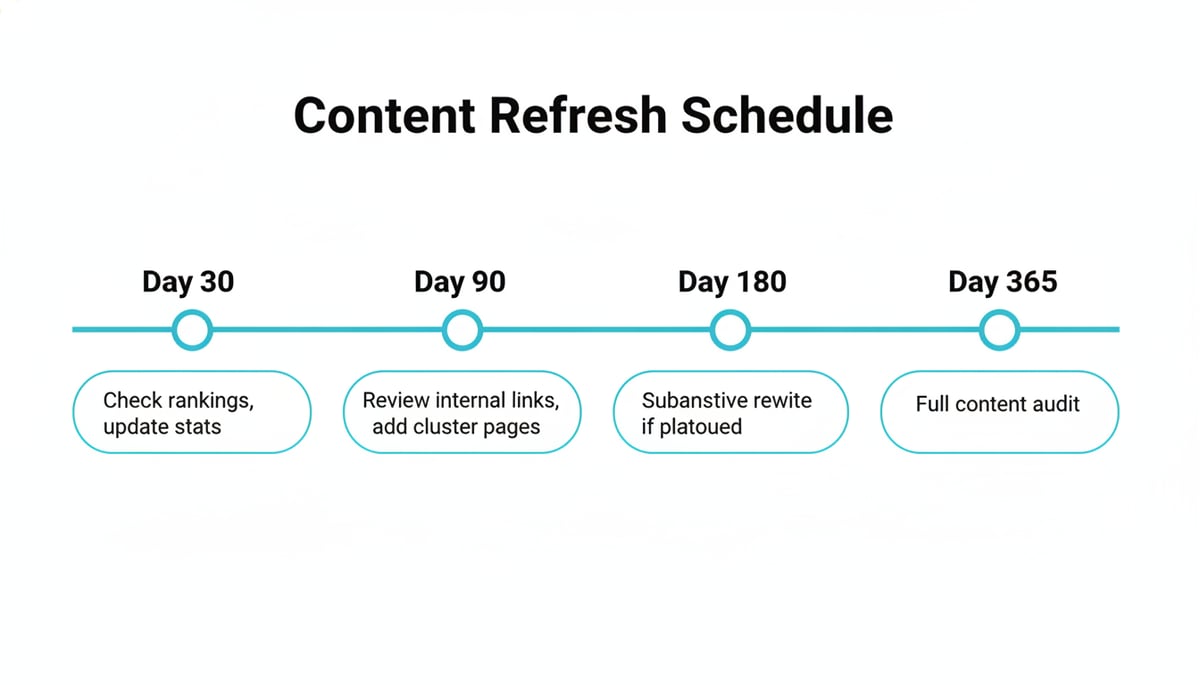
Refresh. This is the most skipped part. Every article needs a scheduled refresh:
- 30 days after publish: check rankings, update any outdated stats
- 90 days after publish: review internal links, add new cluster articles
- 180 days after publish: substantive rewrite if rankings have plateaued
- Annual: full content audit for the cluster
After a major Google update, compress that timeline. We walked through what changed in the March 2026 core update guide, and the short version is that underperforming content usually needs a diagnostic pass, not a panic rewrite.
Dos and Don'ts for SEO Content
A few principles that hold across almost every SEO content campaign:
Do:
- Lead with the reader's question, then answer it.
- Cite primary sources for any claim that touches data or process.
- Match the format that's already winning on the SERP, then improve on it.
- Use AI for research, structure, and drafting speed.
- Add original analysis, examples, or data that competitors don't have.
- Link internally using descriptive anchors tied to the target page's topic.
Don't:
- Don't chase a specific keyword density percentage. Google's spam policies call out keyword stuffing as a violation. Modern ranking systems reward natural language and topical coverage.
- Don't promise ranking outcomes. No one can guarantee a #1 position, and any source that does is selling you something.
- Don't publish AI drafts without human review. Google's guidance on AI content makes the quality bar the same regardless of how the content was produced. AI-only drafts typically fail the "Who, How, and Why" test.
- Don't ignore search intent. A commercial page won't rank for an informational query, no matter how well it's written.
- Don't skip internal links. Cluster architecture is what compounds over time.
- Don't gate content behind forms that block Googlebot from crawling it. Use Flexible Sampling if you need a paywall.
Common Mistakes We See Repeatedly
Across the customer work and content audits we've done, the same errors come up again and again:
Mistake 1: Starting with the tool, not the problem. Teams buy a keyword research subscription before they know what business outcome they're targeting. The tool produces a list. The list produces articles. The articles produce no pipeline.
Mistake 2: Treating AI output as a finished draft. AI drafts are starting points. Without human review for facts, voice, and original insight, they read like every other AI draft on the topic. Google's quality systems are explicitly designed to surface content with information gain beyond what's already on the page.
Mistake 3: Skipping the brief. "Just write something good" isn't a brief. The brief is the difference between an article that targets the right intent with the right structure and one that ranks for nothing.
Mistake 4: Publishing once and never revisiting. Content compounds when it's refreshed. An article updated at 30, 90, and 180 days routinely outranks an equivalent article that was published and forgotten.
Mistake 5: Internal linking as an afterthought. Adding internal links after publishing is too late to design a coherent cluster. Map them in the brief.
Mistake 6: Ignoring the SERP. Writing the article you wanted to write, rather than the one Google is rewarding, is the most expensive mistake. The SERP is your spec sheet.
Mistake 7: Confusing volume with progress. Publishing 50 mediocre articles doesn't beat publishing 10 good ones in a tight cluster.
Pre-Publication Checklist
Before you hit publish on any SEO content piece, run it through this list. We've used versions of it internally and with customers; it's faster than it looks.
Content
- Working title matches the searcher's intent and includes the target keyword naturally
- Meta description is under 160 characters and answers "why should I click?"
- One H1, with H2s and H3s forming a logical hierarchy
- Every section earns its place. Cut anything that doesn't add a fact, an example, or an instruction
- At least one original insight, example, or data point competitors don't have
- All statistics, quotes, and named entities are fact-checked against a primary source
SEO
- Target keyword appears in the title, first 100 words, and at least one H2
- Secondary keywords appear naturally, not stuffed
- URL slug is short, readable, and includes the target keyword
- Internal links added: at least one up to the pillar, two to four lateral, one to a relevant commercial page where appropriate
- External links cite primary sources (Google Search Central, original research, named authors)
- Image alt text is descriptive, not stuffed
Quality
- Reads like a person wrote it, with a clear point of view
- AI-generated sections have been edited for voice, accuracy, and originality
- "Who, How, and Why" of the content is clear: author byline, process disclosed if automation was used, purpose is to help the reader
- Spelling, grammar, and formatting are clean
- The article would earn a share from someone in your target audience
Technical
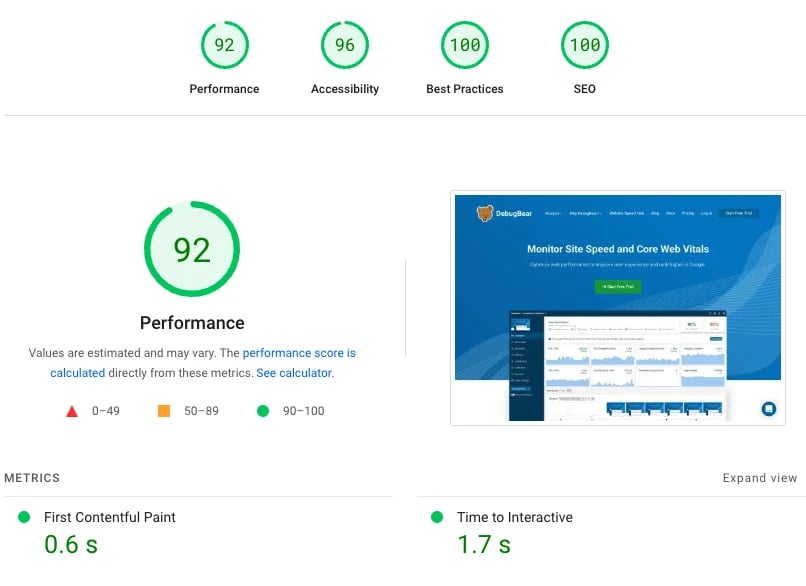
- Page loads in under 2.5 seconds on mobile (check PageSpeed Insights)
- Mobile layout is readable without horizontal scrolling
- Schema markup added where applicable (Article, FAQPage, HowTo)
- Submit URL in Google Search Console for faster indexing
Distribution
- Newsletter draft written
- 2-3 social posts scheduled
- Internal Slack or team channel ping sent
- Added to your refresh calendar with the 30/90/180/annual dates
Where AI Helps, and Where Humans Own the Outcome
This is the section most "AI for SEO" posts skip, and it's the one that matters most.
Where AI genuinely helps in this workflow:
- Research compilation. Summarizing SERPs, top-ranking pages, and "People Also Ask" data into structured inputs.
- Outline generation. Producing a heading hierarchy based on the brief and SERP analysis.
- First-draft prose. Getting 80% of an article into editable shape in minutes.
- Internal link suggestions. Mapping cluster relationships and surfacing anchor text options.
- Meta and title variations. Producing 5-10 options for human selection.
- Distribution drafts. Newsletter blurbs, social posts, and repurposed snippets.
The pattern: AI works best where the input is structured and the output format is predictable. OutBlogAI's internal metrics show these tasks scoring 9/10 or 10/10 on quality review with low human editing time.
Where humans must stay in the loop:
- Setting the business goal and audience definition. AI can't tell you what your business is for.
- Classifying search intent. It requires reading between the lines of what a searcher actually wants.
- Verifying facts. Numbers, dates, named studies, quotes. AI hallucinates these routinely.
- Producing original analysis. First-hand experience, proprietary data, contrarian takes.
- Editorial voice and taste. The choices that make your content recognizable as yours.
- Distribution judgment. Where to share, when, and with what framing depends on knowing your audience.
Google's own AI guidance is explicit on this: "Using AI to manipulate search rankings violates Google's spam policies, but AI's use for creating helpful content is acceptable." The line is helpfulness, not provenance. A human-supervised AI workflow can absolutely produce helpful content. An unsupervised AI workflow that ignores fact-checking and original insight is what gets flagged as scaled content abuse under Google's spam policies.
The teams that win use AI to remove the slow parts of the workflow and spend their human hours on the parts AI can't do well.
Putting It All Together
SEO content marketing works in execution because the execution is a system, not a habit. Once you've run one article through the 10 stages, the next one is faster. Once you've built three or four clusters, the topical authority compounds.
The example keyword we followed, "how to write SEO content," is a single cluster article. It points up to a pillar, sideways to related clusters, and down to a commercial page where appropriate. Refreshed at the right intervals, it earns compounding traffic over 12-18 months. Skip the workflow and it dies on page three.
If you want a starting point, the Google Search Central documentation covers the technical side of SEO in full, and the SEO Starter Guide is the cleanest entry point. For the operational side, your bottleneck is almost always the brief. Fix that, and the rest of the workflow speeds up.