
The Google March 2026 Core Update finished rolling out on April 8. Over 55% of websites saw ranking shifts. Not penalties — a recalibration. Google didn't change the rules. It got better at enforcing them.
Sites that dropped weren't doing something wrong. They were doing something hollow. And for years, hollow was good enough.
It isn't anymore.
The March 2026 Update: What Actually Happened
This wasn't a routine update. It combined a broad core update with a refined spam filter, targeting one specific problem: too much content exists that technically answers a query without actually helping anyone. Google's stated goal was to remove 40% of that from top results.
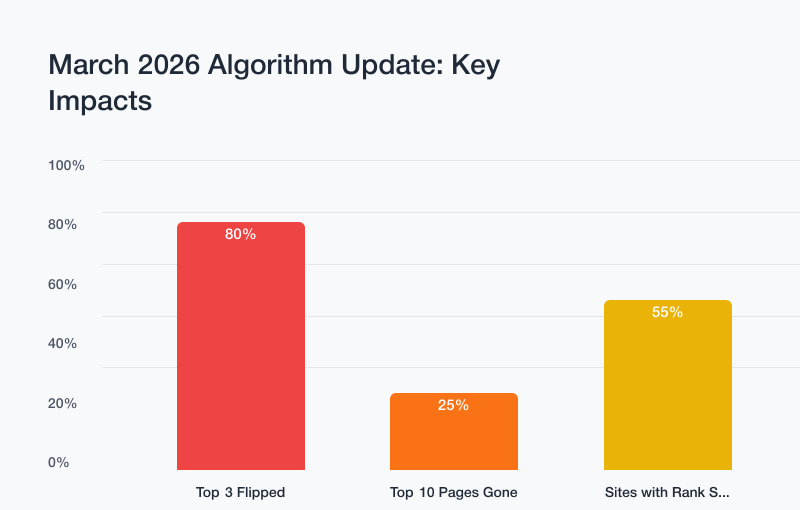
The volatility was immediate — sharper than anything in recent memory. Most core updates roll out gradually, giving sites time to notice and react. This one didn't. Rankings shifted fast, and the confusion that followed made things worse. Site owners made hasty changes before they understood what hit them.
Before doing anything, understand the distinction. A core update is a re-evaluation of quality — Google reassessing whether your content deserves the position it holds. A spam update is a penalty for manipulative practices. They require completely different responses. Misreading which one hit you is how recovery efforts backfire.
The 5 Algorithm Shifts Behind the Rankings Shuffle
To recover and thrive, you must understand the reason behind the changes. The update revolved around five interconnected principles that redefine content quality.
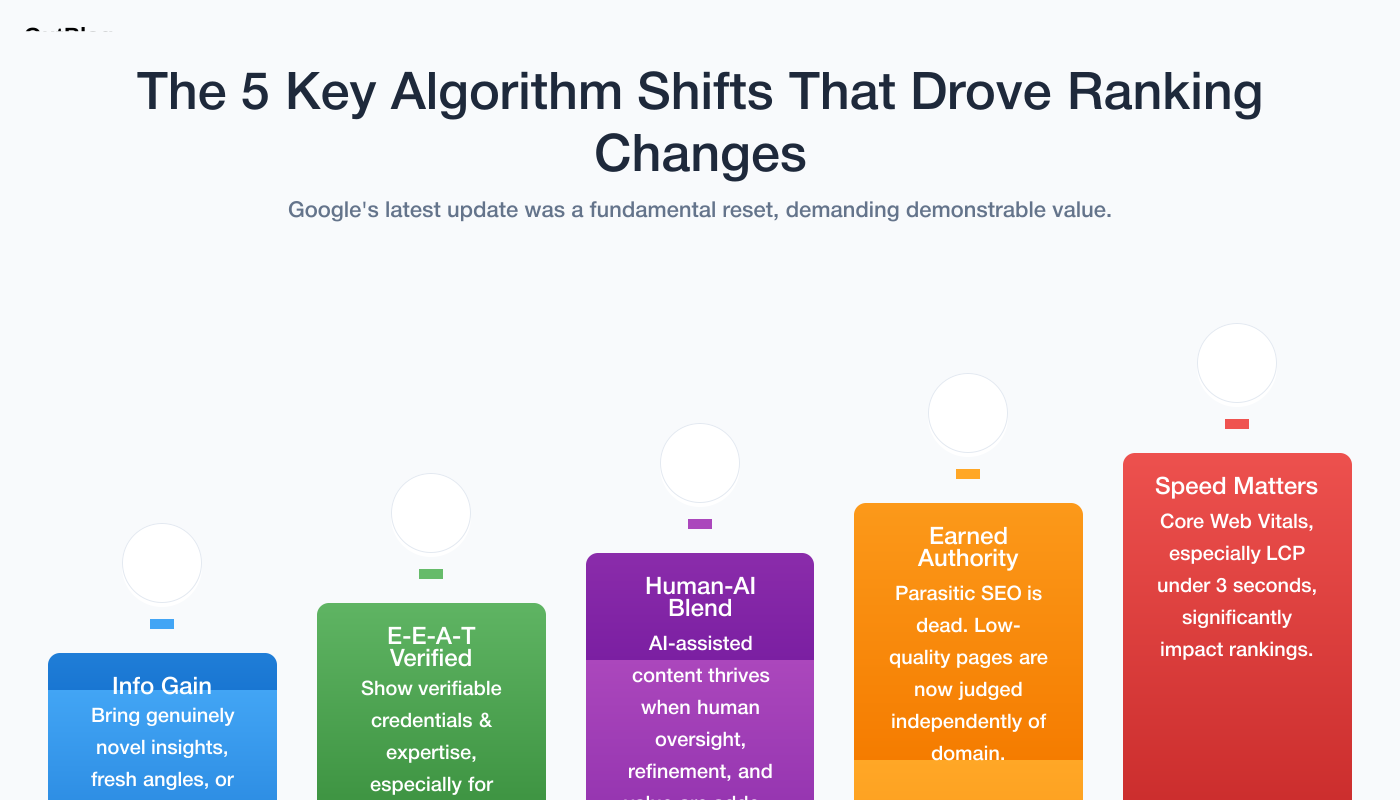 1. Information Gain Over Topical Redundancy
Google has grown remarkably good at detecting when a piece of content is just a remix of what already exists. If ten articles cover the same topic in the same way, the one that earns its place in the rankings is the one that brings something genuinely new — an original study, a counterintuitive finding, a real case from the trenches. Restating common knowledge with better formatting no longer cuts it. The question to ask before publishing is simple: what does this add that wasn't already out there?
2. Verifiable E-E-A-T
Experience, Expertise, Authoritativeness, and Trustworthiness were already on Google's radar, but the bar has moved from "claim it" to "prove it." A visible author bio, links to credible primary sources, and writing that reflects genuine first-hand experience all signal legitimacy. For topics that touch health, finance, or legal decisions — what Google calls "Your Money or Your Life" — this isn't optional polish. It's the baseline.
3. Human Oversight for AI Content
Google doesn't penalize AI-generated content outright, but it does reward content that shows clear signs of human judgment — accurate facts, original perspective, and thoughtful editing. The practical takeaway: AI can draft, but a subject-matter expert needs to read, correct, and genuinely improve it before it goes live. Content that skips this step tends to be fluent but hollow, and the algorithm is getting better at telling the difference.
4. Independent Evaluation of "Parasitic SEO"
This update targeted a specific practice: using the domain authority of a reputable site to rank content that has nothing to do with why that site is trusted. Think affiliate review roundups buried inside a regional newspaper's website. Google is now more capable of evaluating whether a given piece of content actually belongs on the host domain — and pages that feel like stowaways are being demoted accordingly.
5. Elevated Importance of Core Web Vitals
Technical performance has become a meaningful tiebreaker. When two pieces of content are roughly equivalent in quality, the one that loads faster and responds without lag will win. Metrics like Largest Contentful Paint and Interaction to Next Paint are no longer just developer concerns — they directly affect whether great content actually gets seen. Speed is now part of the content strategy conversation.
Patience is the first rule of core update recovery. Rushing to make changes without proper diagnosis can do more harm than good. Follow this structured approach.

The Recovery Playbook
Patience is the first rule. Rushing to make changes before understanding what happened is how sites dig themselves deeper. Follow the sequence.
Step 1: Diagnose the Drop with Precision
Before changing anything, understand what broke. Pull Search Console data and find exactly which pages and queries lost ground — rankings, impressions, click-throughs. Then cross-reference with Similarweb. If competitors dropped in the same window, you're looking at an industry-wide shift, not a site-specific penalty. Overlay your key page performance against the update dates on a single dashboard. The pattern usually reveals itself fast.
Step 2: Conduct a Ruthless Content Audit
Take your top-performing pages from before the drop and your worst-hit pages. Read them like a skeptic. Does this piece offer something no other article does? Is there a real person's experience behind it, or does it read like a summary of summaries? Would a reader finish it and feel informed — or just vaguely processed? Be hard on yourself. The audit only works if you're honest about what you find.
Step 3: Prune, Consolidate, and Improve
Every piece gets sorted into one of three buckets. Keep and improve the pages with real potential — ones that need sharper E-E-A-T signals, fresher data, or a more distinctive angle. Consolidate the clusters of similar articles bleeding into each other; five thin pieces on the same topic lose to one authoritative guide every time. Prune the rest — outdated, unhelpful, or just taking up space. Remove it, redirect it, and stop letting it drag down everything around it.
Step 4: Stop Chasing Keywords. Start Owning a Perspective.
The strategic shift isn't subtle. Move from "what can we rank for?" to "what can we say that no one else can?" Original research, first-hand case studies, expert interviews — content that only exists because someone with real knowledge sat down and wrote it. That's what ranks now. It's also what builds an audience that comes back directly, regardless of what Google does next.

Where Search Is Heading
This update is a signal, not an outlier. The loophole era of SEO is closing. What's replacing it is simpler and harder: be genuinely useful, on a site that has earned the right to be trusted, with content that reflects real knowledge.
Structured data matters more now — Schema markup helps Google understand context, and that context determines whether you appear in rich results and AI-driven summaries. Authority is built through mentions, community presence, and content people reference and repeat — not just backlinks.
The sites that recover fastest won't be the ones that reverse-engineer the update. They'll be the ones that were already close to what Google was looking for.
Conclusion
The March 2026 Core Update wasn't a penalty. It was a recalibration — Google getting better at what it always claimed to reward. Sites that dropped weren't targeted. They were exposed.
Recovery doesn't come from finding a new angle to game the system. It comes from building something Google has no reason to demote: content that's genuinely useful, written by people with real knowledge, on a site that earns its authority rather than borrowing it.
Stop optimizing for the algorithm. Start being worth ranking.