Most health coaches treat their blog like a hobby—a digital scrapbook of good intentions and questionable client acquisition strategies. The result? A mess. And your client calendar? Still collecting dust bunnies while you're busy writing about the "benefits of celery juice" for the tenth time.
Attracting readers might feel good for your ego, but it's useless for your bank account if they aren't converting. Clients aren't idly browsing Pinterest for their next colon hydrotherapy session; they're searching, actively, for solutions to specific problems. If you're not showing up when they search (and, let's be honest, you probably aren't), then you're just another voice shouting into the void. This guide isn't about vanity metrics; it's about dominating those high-intent search terms that directly lead to clients.
This isn't about more recipes. It's about a strategic framework. We’re going to map out the exact content topics that stop potential clients dead in their tracks (the good kind) and compel them to click "work with me." No fluff. Just the definitive playbook for a consistently full client roster.
Beyond Recipes: Why Strategic SEO is Non-Negotiable for Health Coaches
Forget what you heard. SEO isn't just for 'wellness bloggers' anymore. It's not a cute side hustle or a 'nice-to-have' for your business. Many still think it's just about writing or churning out recipes, but that's entirely wrong. SEO is the operating system for your discoverability. It's how people find you – or, more accurately, how they don't.
Your potential clients are on Google. They aren't idly scrolling Instagram hoping to stumble upon you. But they are typing in "why am I so tired all the time" or "best foods for gut health." If you're not there, providing them with answers, then someone else is – likely your competition. That's a missed opportunity.
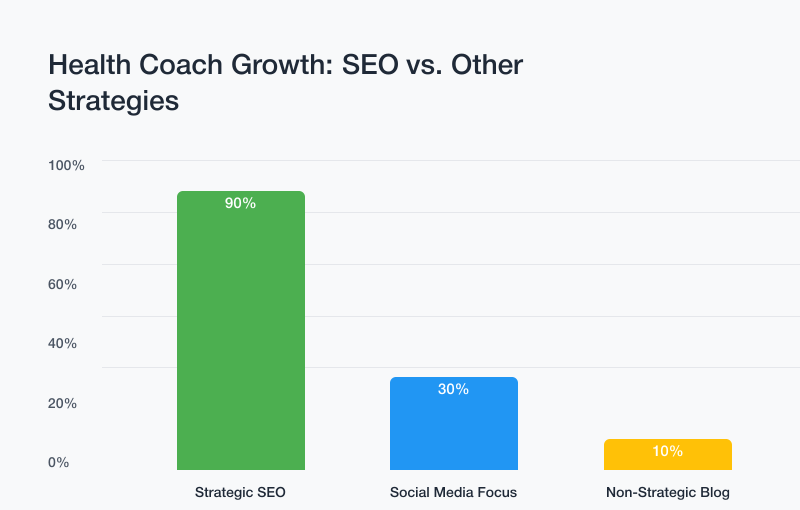
A strategic blog, one that's built for search, is your secret weapon. It feeds Google with more searchable keywords and fresh content, signaling to search engines, "Hey, this site's alive!" Critically, it makes visitors stick around, increasing "dwell time," which Google's algorithm interprets as a sign of usefulness, sending more people your way.
We're not chasing vanity traffic here. The number of eyeballs doesn't matter as much as qualified prospects—people with their wallets out, actively looking for a solution. They're not just browsing; they're searching. And you need to be the definitive answer. Social media, frankly, is a hamster wheel; step off, and you disappear. SEO is slower, yes, but it pays off for years. It's sustainable. Laura Jawad, for instance, dumped social media dependence and built a client-generating website with actual SEO. It works. Even Similarweb (2024) shows that evergreen content keeps traffic flowing long after a tweet dies. A strategic, SEO-driven blog is your ultimate authority builder, your most effective client magnet, and the cornerstone of sustainable growth.
Step 1: Uncovering Client Needs with Foundational Keyword Research
Forget the fancy analytics; much of it is a waste of time. Keyword research isn't some mystical dark art or a "technical SEO task." It's simply about listening.
To truly understand what your audience cares about, focus on their real, gnawing problems—not your shiny new "transformative coaching package," because nobody searches for that. They search for relief, for answers.
So, how do you uncover these problems? Easily. Use Google itself. Type a common issue your clients face, like 'anxiety after work,' into the search bar. The autocomplete suggestions are pure gold, revealing what real people type. Then, scroll to the bottom for 'Related searches'—more invaluable insights. Even Laura Jawad has advocated for this low-tech approach for years; it’s a direct window into people's minds.
Avoid chasing broad terms like 'weight loss' or 'meditation.' That's an unwinnable battle against industry giants. Instead, focus on long-tail keywords such as 'healthy vegetarian meal ideas for beginners with no time.' These are specific, have less competition, and indicate much higher intent. Even better, target low-volume keywords that only get 50-100 searches a month. While seemingly small, these 50-100 people are precisely who you want: qualified leads practically begging for your service. Similarweb (2024) data confirms that these low-volume searches convert exceptionally well for service professionals. Why compete with Amazon when you can own your tiny, perfect corner?
Once you have these terms, leverage your existing content. Those emails you send, your social media posts with thoughtful captions—they are goldmines. Take that content, polish it, and weave in the exact phrases you found. Instantly, you have a potent blog article; you're not starting from scratch, but optimizing what's already valuable.
Ultimately, foundational keyword research isn't about SEO tricks; it's about deeply understanding your future clients and providing them with precise solutions.
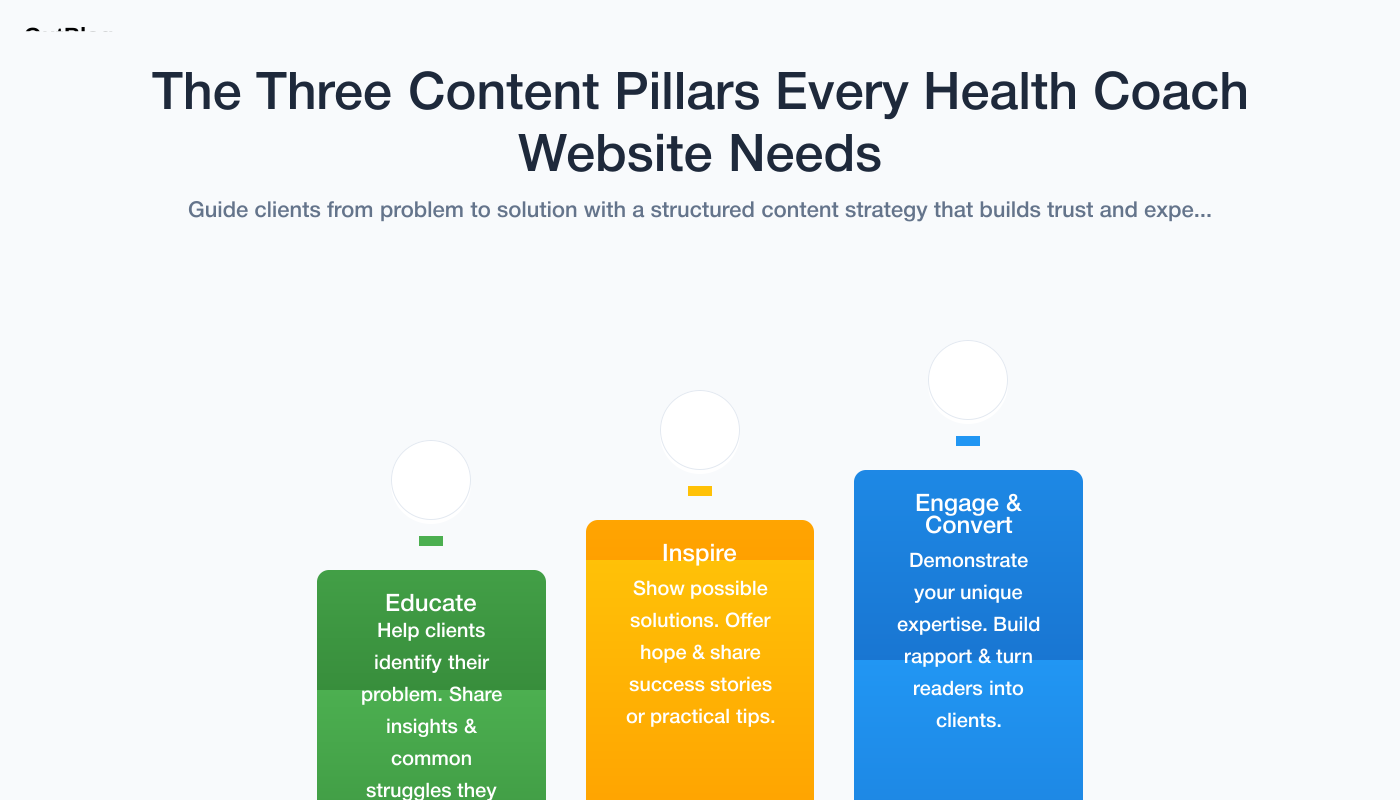
Step 2: The Three Content Pillars Every Health Coach Website Needs
You understand now: you need content. But not just any content. You need a structured system, a clear path, because your clients are on a journey, and you must guide them. Their progression moves from "What's wrong with me?" to "You're the one to fix it."
Consider this journey: people begin with a problem, then seek ways to solve it, and finally, look for a specific expert to help. Your content strategy must mirror this progression. It builds trust, and it signals to Google your undeniable expertise. As Amy Porterfield notes, good content educates, inspires, and entertains. A five-page site will never suffice. Instead, a robust content library, a true knowledge base, tells Google precisely where your expertise lies. By structuring your content strategically, you transform casual readers into committed, paying clients, allowing your digital presence to do the heavy lifting.
Step 3: Building Topical Authority with Content Clusters
Alright, let's talk about playing in the big leagues. Individual blog posts are fine, but they won't lead to true market domination. What you need is an actual strategy, a proper system for building topical authority. This is where content clusters become indispensable.

Instead of merely publishing random posts, think hub-and-spoke. You'll create a central 'pillar' page, such as "The Ultimate Guide to Gut Health," which serves as your hub. This pillar page then links strategically to specific 'cluster' posts like "Best Probiotic Foods," "Understanding Leaky Gut Symptoms," or "Why Bloating Isn't Normal." These smaller pieces, in turn, point back to your comprehensive guide, and your guide links to them. This internal linking isn't an afterthought or a quick fix before publishing; it's a strategic architecture that demonstrates to Google the relationships between your content and tells users, "We've got everything you need on this topic, right here."
This structure is powerful. It prevents keyword cannibalization—that chaotic scenario where your own pages compete against each other for the same search terms. Integrate internal linking directly into your content brief and utilize descriptive anchor text, avoiding generic phrases like "click here." When your website becomes the definitive resource on a subject, that's when you truly begin to rank, thereby increasing your domain authority. It's a process, but it's the only one that yields substantial, long-term results. To achieve true SEO dominance, shift your focus from chasing individual keywords to comprehensively owning entire topics.
Common Mistakes Health Coaches Make in Content & SEO (And How to Fix Them)

You want clients, right? To genuinely help people. Yet, you're likely undermining your online presence significantly. Gurus make it sound effortless, but it's not. Here's the unfiltered truth about what you're doing wrong and how to fix it, fast. Ignoring these fundamental content and SEO mistakes isn't just inefficient; it's actively sabotaging your ability to attract and convert the clients you need.
Technical Health: The Hidden Cost of Heavy Images
When a link just... sits there, loading forever, you bail. Google despises slow sites and punishes them. Those gorgeous high-resolution images? They're actively killing your site speed. If mobile pages don't load in under three seconds, it's a dead end for potential clients.
- The Fix: This isn't brain surgery. Get your images under 100kb; compress them using a dedicated tool. The belief of "I'm not a tech person" is an expensive one, directly wasting your content efforts.
Your Google Snippet: A Neglected Sales Pitch
You've written good content—great. But what appears in Google search results? Often, just boring first few words. This is your sales pitch, your one shot, your advertisement on the biggest billboard in the world. Letting it just exist without selling the click is a missed opportunity. You must sell the click.
- The Fix: Craft a compelling SEO title and meta description. This little blurb needs to sing, compelling users to click. If Google (and your client) doesn't immediately grasp your page's value, your content is essentially pointless—a missed connection.
That Old Content: A Buried Goldmine
You publish something new, it's shiny, and then you move on. But your old content? It's just sitting there, gathering dust, losing traffic. This phenomenon is called 'content decay,' like a wilting garden that can easily be revived.
- The Fix: Identify old posts that used to rank or almost rank using a simple tool like OutblogAI to track performance. Give them a facelift: update information, expand on insights. It's significantly easier to improve an existing keyword ranking than to start from scratch, offering a quick, substantial win. Similarweb (2024) data confirms that refreshing old articles quarterly often recovers lost traffic.
Stop Writing Like a Robot, Please.
The web is flooded with content that reads like AI wrote it, or like someone trying to fool AI. Stiff, unnatural language crammed with keywords repels readers. Your clients want you—your voice, your personality, not a generic pamphlet. Authenticity builds trust, and trust leads to conversions.
- The Fix: Write authentically, in your natural coaching voice. Keywords are crucial, but weave them in seamlessly and naturally. People can detect "over-stuffed" content from a mile away and will quickly disengage. While keyword stuffing might offer a temporary nudge in rankings, it absolutely destroys trust and conversions. Empathy, not just data, brings clients through the door.
Your Content: A Business Asset, Not Just a Pretty Picture
Pageviews are great, but are they driving any concrete action? Or are they merely... views? These are vanity metrics. If your content isn't leading somewhere tangible—a newsletter sign-up, a discovery call—then it's just noise, a colossal waste of time and money.
- The Fix: Every single piece of content must have a clear job and a purpose within your overall digital marketing strategy. If you write about gut health, what's the next logical step for that reader? A free guide? A quick chat? Integrate a clear Call-to-Action (CTA). Then, track it. Stop fixating solely on pageviews and start tracking inquiry forms, bookings, and actual conversions. The silent revenue killer is content that's completely disconnected from your monetization strategy.
So, stop making it harder than it needs to be. Address these common pitfalls, and you'll see a tangible difference. Your bank account, if not your ego, will certainly thank you.
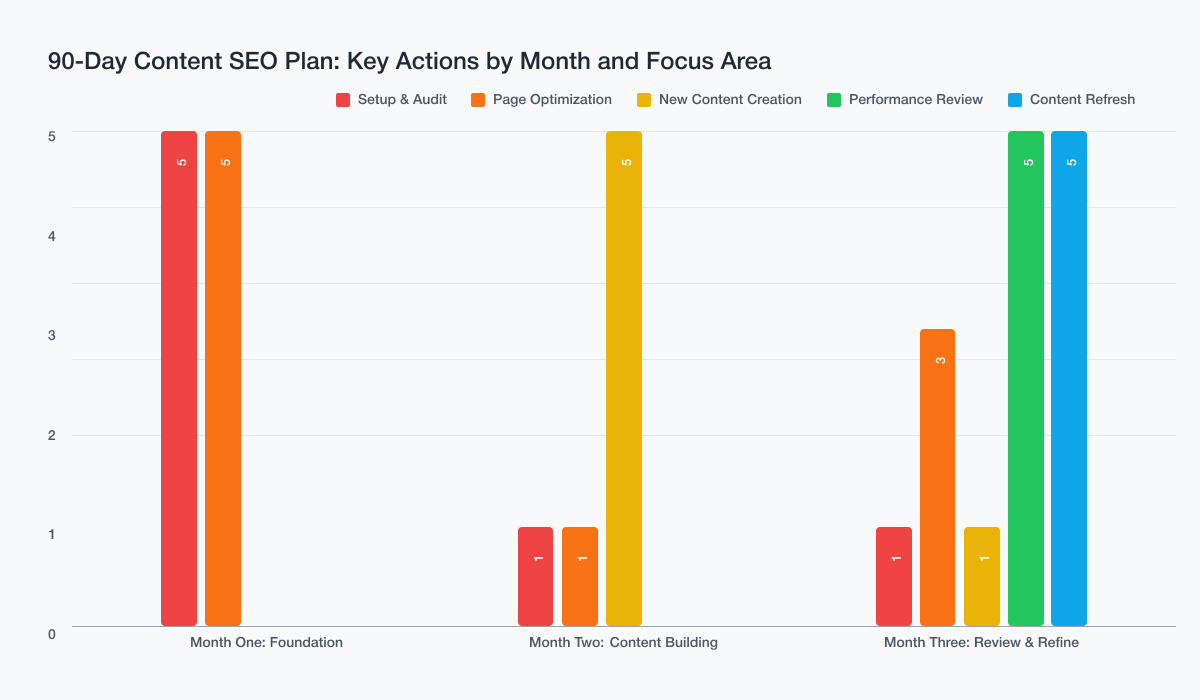
Your 90-Day Content SEO Action Plan
Forget the generic advice. You want to take action, not just consume another article that gathers dust. Here's a raw, actionable breakdown of what you actually need to do over the next 90 days. Prepare to execute.
Month One: Establish Your Foundation. You can't build a house on sand. Your initial focus must be on structural integrity.
- Set up Google Analytics and Search Console. These are fundamental tools, yet frequently overlooked.
- Conduct a quick site audit to identify and fix critical technical issues.
- Optimize two to three core service pages—your primary revenue drivers—with targeted keywords and compelling copy. Make them truly resonate.
Month Two: Build Your Content Muscle. This month is dedicated to creating substantive content, beyond mere keyword stuffing.
- Map out your first "topic cluster." This strategic approach, while a buzzword, is highly effective. Design a central pillar piece supported by several smaller, interconnected articles.
- Write that main "pillar page." Go deep, aiming for a minimum of 1,200 words, with more depth often yielding better results. It must be exceptionally valuable.
- Produce two to three supporting cluster posts. Keep them focused and strategically link them all together to satisfy search engines.
Month Three: Analyze & Optimize for Impact. Now, assess your efforts and refine your strategy.
- Monitor traffic to your new posts to identify what's gaining traction and what's not.
- Identify pages with high impressions but low clicks—pages Google shows but users don't open. Rewrite their meta titles to compel clicks, understanding that headlines are crucial.
- Select an existing, high-performing old post and give it a comprehensive facelift. Update information, expand on insights, and add more value. Refreshing existing content is often easier and more impactful than starting from scratch.
Here's the critical reality: this process isn't fast. You might observe initial flickers of progress in 3-6 months, but pages typically take a year or more to "mature" in Google's eyes. Similarweb (2024) data consistently confirms this slow-burn reality. So, abandon expectations of overnight magic. Commit to consistent, strategic effort, and you will build a digital presence that steadily attracts qualified clients for years to come.
Frequently Asked Questions
Alright, let's address your most pressing concerns. I've heard them all before.
- What's the ideal post length? If you want Google to take your content seriously, aim for depth. A minimum of 1,200 words is a good starting point, and often, more is better—especially if competitors are only offering superficial reads. Focus on creating something genuinely helpful, substantial, and something you wouldn't skim.
- How often should I publish? Not daily, unless you command a large team and an endless budget. Consistency is paramount. It's far more effective to publish one meticulously crafted piece every two weeks, religiously, than five rushed articles followed by a month of silence. If you can maintain high quality at a higher frequency, do so; your content library will build faster, and search engines will eventually take notice.
- I have traffic, but no clients. What gives? Gaining visibility is a significant win. However, are you attracting the right people, or merely shouting into the void? Re-evaluate your content: does it genuinely align with your services? Crucially, do you explicitly ask readers to take the next step—to sign up, or schedule a call? Many overlook this vital component. Refine your Call-to-Action (CTA) to be unmistakably clear and compelling.
- Do I need expensive SEO tools? Not initially, no. Google Search Console is free and incredibly powerful—use it. Google's own search bar, with its autocomplete and related searches, is a goldmine for keyword ideas. Paid tools are an investment for when your business is consistently generating substantial revenue and you're ready to scale operations. Until then, bootstrap your efforts.
For sustained success, prioritize content quality, consistency, clear calls-to-action, and leveraging free tools before investing in expensive solutions.
Alright, let’s strip away the niceties. You’re not trying to win a popularity contest with another kale smoothie recipe. You're a health coach focused on one thing: clients. Specifically, the ones actively searching for solutions to their exact pain points, ready to invest in transformative change.
Forget 'blogging for awareness.' That's for dabblers. Your content needs to be an undeniable magnet for high-intent leads—period.
So, here's the bottom line:
- Your content strategy isn't about throwing spaghetti at the wall; it's a calculated attack plan. Map out what your ideal client actually searches for when they’re desperate for help. That's your conversion pathway, not some vague 'engagement' metric.
- Get surgical with your keyword research. Understand the precise language of their struggles. Is it 'how to reduce belly fat after 40' or 'functional medicine practitioner for Hashimoto's'? Be specific; become their exact answer.
- Build an unshakeable digital fortress of topical authority through pillar content and interconnected clusters. Prove to Google (and your future clients) that you're the definitive expert, not just another voice in a crowded room.
This isn't easy. But the health coaches who master this approach are the ones consistently filling their calendars without relying on endless social media performances or expensive, fleeting ads. They're building a sustainable business, not just maintaining a hobby.
It demands unwavering focus and grit. But the alternative is a perpetual hustle, isn't it?
So, enough pontificating. Close this tab. Open your keyword tool. Map out your first pillar. Go build the engine that brings qualified clients directly to your doorstep.