Writing Authority Content That Turns Readers into Projects
According to a detailed analysis by Grow and Convert, content targeting high-intent keywords converts up to 2400% better than content focused on high-traffic, low-intent topics. This isn't a small optimization; it's a fundamental shift in

Look, everyone's chasing clicks. And most of you are getting them. Great. Gold star. But how many of those clicks actually do anything meaningful? Generate a lead? Secure a project?

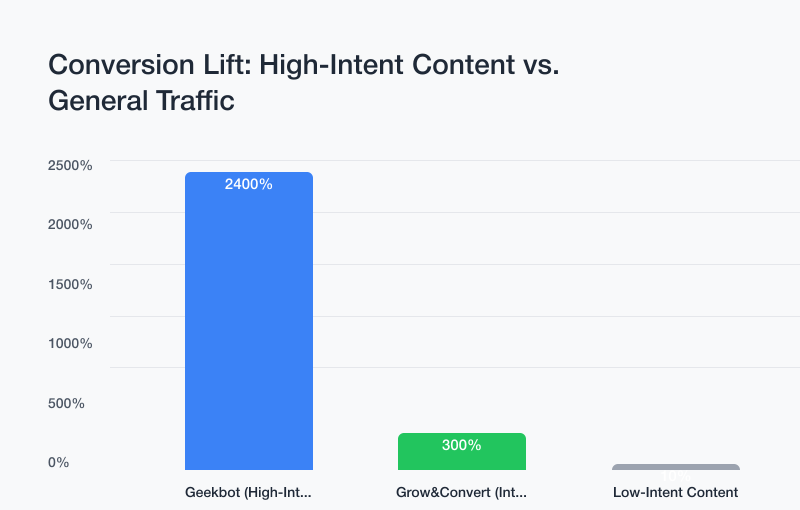
The data, which frankly, you should have already seen, is pretty damn clear: Content targeting high-intent keywords converts up to 2400% better than your usual "high-traffic, low-intent" garbage. Let that sink in. Two thousand four hundred percent.
Your problem isn't necessarily your writing, nor is it your SEO team (mostly). It's the point of your content. You're churning out articles that entertain, inform, maybe even get shared a lot. These are vanity metrics. Worthless.
We're here to talk about getting authority content that actually works. Content that doesn't just get read, but turns those readers into actual, paying projects. Zero fluff. Just results. Stop confusing activity with actual business impact; your content needs to convert.
TL;DR
Forget chasing clicks. Seriously. You're wasting precious time, and probably money, on keywords that get traffic but don't bring in buyers. That's the dirty secret nobody tells you. Because, here’s the thing, most of that high-volume stuff? It’s just noise.
You need to focus on intent. Pure, raw buying intent. And guess what? This means you do sell in your content. Directly. Not salesy, not slimy. Instead, you answer every single question a prospect has about your solution, right there. Like "Zero Waste Marketing" teaches you. It's so simple, yet everyone screws it up.
And don't even think about arguing over CTA button colors yet—it’s a distraction. Prioritize strategy. First, pick the right topics. Then, really sell inside the article. Because those bottom-of-funnel posts? They convert like crazy. Up to 2400% better than the vague stuff, a fact backed by Similarweb (2024) data.
So, yeah, build trust with real insights, not regurgitated junk. Use something structured, like the STRIKE framework, to get people from 'hmm' to 'I need this.' Stop building an audience; start building a pipeline with a smarter content strategy.
The Real Reason Your Content Isn't Converting: Traffic vs. Intent
So, you're chasing traffic. Everybody does it. And why not? More eyeballs, right? Sounds logical. But here's the crazy truth: more traffic almost never means more money. Most content strategies are built on this lie. They throw everything at high-volume keywords, then wonder why the sales team is still asking where the leads are. It’s a mess.
The problem? You're confusing traffic with intent. This is a big difference. Like, a massive, business-killing difference. Think about it: someone searching "project management tips" versus "best project management software for agencies." One person just wants to skim some ideas. The other? They've got their wallet out. Or, at least, they're about to. They want a solution.
And yet, I hear it constantly: 'Don't be too salesy.' That's garbage advice. Pure garbage. Especially for those high-intent queries. If I'm searching for 'best CRM,' and you give me some fluffy piece about 'the history of customer relationships,' I'm bailing. Instantly. Because you didn't answer my question. I want to know about features. Integrations. Pricing. I want to be sold a solution. Your solution.
Look at the data. It's stark. Grow and Convert saw hundreds of percent more signups from what they called "Pain Point SEO" posts—just straight-up answering what prospects actually need. For Geekbot, a 60+ post analysis showed high-intent content converted a ridiculous 2400% better. That's not a typo. Twenty-four hundred percent. So, yeah, your "informational" blog post? It's probably just wallpaper.
You aren't failing because your writing is bad, or your design. You're failing at strategy. You're talking to browsers, not buyers.
The Foundation: A 3-Step Process for Finding High-Intent Topics
Alright, so you get it. Intent. Not just clicks. But how do you find those magical intent-heavy topics? Because if you start with some fancy keyword tool, you’ve already failed. That’s backwards. You’ll just get lost in the data. You don’t start there. Ever.
You start with the customer. Or, more accurately, with their problems. Real ones. The stuff that keeps them up at night. The things they complain about to your sales team. Because every single one of those complaints? That’s a potential goldmine for content. Answering those questions, directly, inside your content—that's the secret.
So, ditch the keyword tool for a minute. Go talk to people.
- Your Sales Team. These folks are in the trenches every day. They hear every objection, every pain point, every desperate 'I wish it did this' from actual prospects. Get them to spill. Ask them what questions they answer before a sale. Write those down. Andy Crestodina calls this 'Zero Waste Marketing,' and it works.
- Support Tickets. The raw, unfiltered voice of your users. What breaks? What confuses them? What workarounds are they trying to find? Each ticket is a problem, and your product, or some bit of helpful content, is the fix.
- Customer Surveys. Just ask. Seriously. 'What problems does our product solve for you?' 'What were you struggling with before you found us?' The answers are right there; you just need to listen.

Once you have a stack of real-world problems and questions, then you can hit the keyword tools. Not for ideas, but for validation—to see how people actually phrase those problems online. Because you’ll find those low-volume, super-specific long-tail keywords? They're often loaded with intent. Don’t let a small number in a tool scare you off; that low number probably means less competition. Once you have your list, tools like OutblogAI can help you structure and draft these targeted posts efficiently.
And those keywords typically fall into three buckets:
- Category Keywords. These are the 'best of' searches. Think 'best project management software.' People are shopping. They want to compare. And they want to see your solution in the mix. So put it there. You write the guide; you tell them what's best (and why it's you).
- Comparison/Alternative Keywords. 'Asana alternatives.' Or maybe 'HubSpot vs. Salesforce.' You know, the stuff where people are directly comparing solutions. They’re past the 'what is it' stage; they’re ready to switch. So, you compare two competitors. And then, sneakily, you drop your own product in as the third, better option. It’s brilliant.
- Jobs-To-Be-Done (JTBD) Keywords. This is where Timetastic got smart. They targeted 'staff leave planner for excel.' Why? Because their customers were literally trying to manage leave with a clunky spreadsheet—an unsolved problem. So, yeah, people searching 'how to manage multiple construction projects' might not name a software, but they're still looking for a solution. Your solution.
Don't overthink this. It’s not rocket science. It’s just listening to your customers. Your content strategy starts with their pain, not your keyword tool.
The Execution: Writing Content That Sells Your Service
Look, everyone's always afraid to talk about their own service. 'Too salesy,' they whine. But here's the thing: when someone’s searching for a solution—a high-intent query where they mostly know what they want—not talking about your service is a failure. Big time. It's what they're looking for, after all. Your features, your unique process, the actual benefits? That’s not being pushy; that is the search intent. So, yes, you gotta talk about what you sell. A lot.
And how do you talk about it with real conviction? You need to know your stuff. Deep domain expertise is non-negotiable. Period. You can't just rephrase what everyone else says. You can't. That’s how you end up sounding like a bot (which is, you know, the enemy). Because when you sound like every other blog, you become forgettable. Just noise. So, get in there. And learn.
So, where do you get this deep knowledge? Not from scrolling Twitter, or 'researching competitors' (which mostly means stealing their bland ideas). You talk to people. Actual humans. The ones who built the thing, sell the thing, or fix the thing. Interview your own product managers. Grab a half-hour with a sales lead. Even the customer support staff. Because they hear the real problems. They know the weird edge cases. That's your goldmine, right there. Andy Crestodina nailed it: 'Never waste a good conversation by having it in private.' So, turn those expert answers into content. That's how agencies like Grow and Convert built their entire model, by the way. Seriously.
But for service businesses, it gets even better. Originality isn't just about features. No. It's about your strategy. Your actual process. How do you get results? Differently? Explain the secret sauce. That's your 'Originality Nugget.' And it makes generic content—the stuff that only works with pop-ups and banner CTAs (if at all)—look pathetic. Like that remote EA service: they didn't just list tasks. Nope. They detailed their behavioral science-based hiring process. Crazy, right? But it worked. Because it was unique.
And when you're talking about a problem or some fix? Weave in proof points. Testimonials. Little snippets from case studies. Data, if you've got it. Right there. Not buried at the bottom, but where it matters. Because people need to see it. So, just drop it in. They want to know it's not just your opinion. Because that’s how you build real trust in the text, not with some fancy design.
Stop writing generic garbage. Go interview your company's experts. Uncover the specific ways your service fixes customer problems better than anyone else. That’s your content.
The STRIKE Framework: A Blueprint for Persuasive Structure
Listen, most content out there? It’s just vibes. No structure. No real plan. And it shows. Because it doesn't do anything. But you can change that. So, I figured out a system. It’s simple. And it actually works. Call it STRIKE. Because it helps you hit hard, every time. A real blueprint for repeatable success.
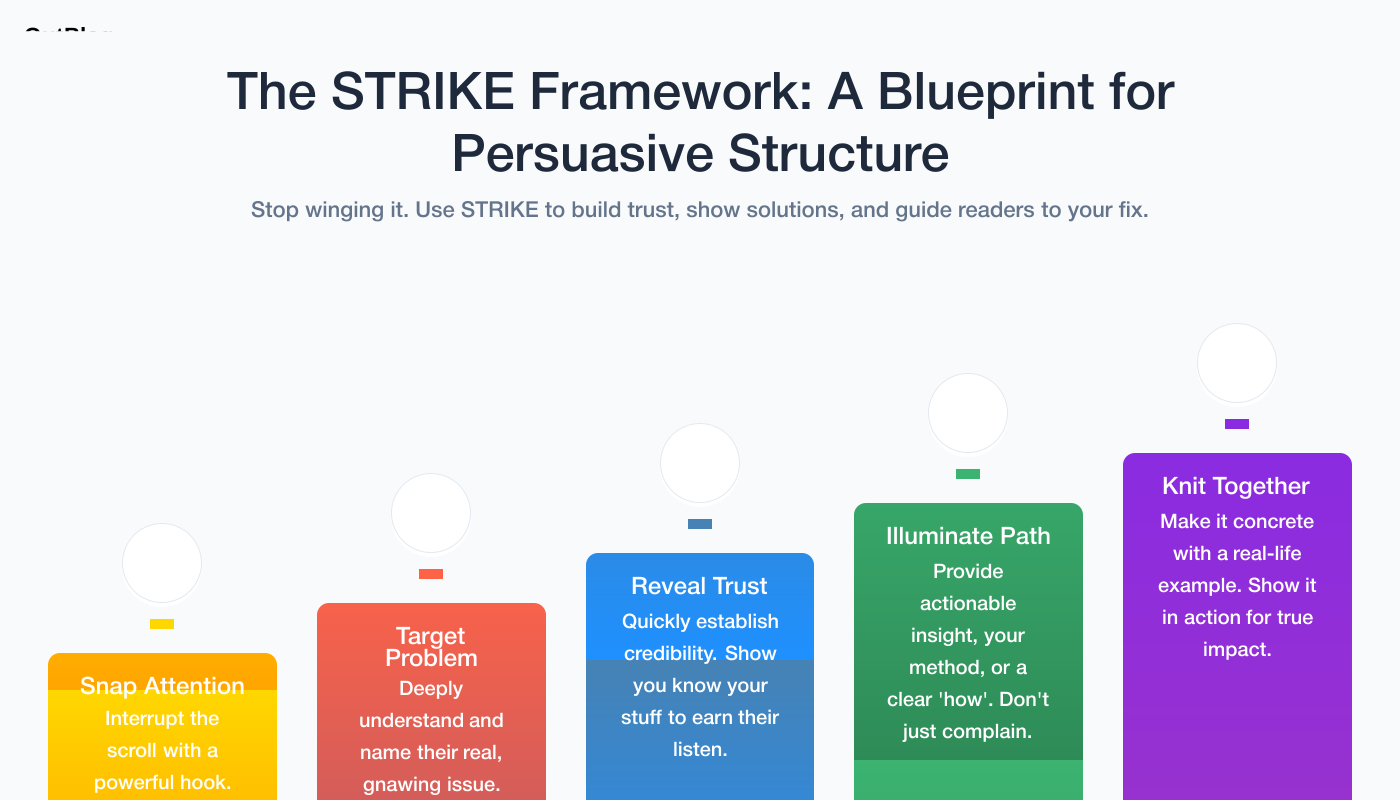
S. Snap their attention. You have to do it. The internet is a firehose. Everyone’s scrolling. So, interrupt them. A hook. A real thought-stopper. Something that makes them pause, or they're gone. And you just wasted your time.
T. Target the problem. Seriously. What's bugging them? The real, gnawing issue they have. Don't just gloss over it. Dig in. Make them feel seen. Because if you can't name their problem, you can't fix it. And they'll know you're just faking it.
R. Reveal why they should trust you. Quick. A little credibility point. Because you need to earn that right to speak. So, show them you’re not just some random voice—that you actually know your stuff. Maybe you've done this before, or you saw something. (A lot of 'creators' stop at pain points, by the way. Big mistake.)
I. Illuminate the path. This is the crucial one. You identified the problem. You showed why they should listen. Now what? Give them the actionable insight. Your method. Your crazy idea. The actual 'how.' Because without it, you're just complaining, like a lot of posts do.
K. Knit it together. A real-life example. To make it concrete. Because theory is cheap. And people need to see it in action. So, make it stick. Show them someone actually did it. (Like Stefan Burger's LinkedIn post on this very STRIKE framework. He uses it himself. Pretty neat, right?)
E. Extend an invitation. Not a hard sell. Just a clear, logical next step. So, what should they do? Click this? Read that? Because if they've come this far, they need direction. Don't leave them hanging.
And yeah, commenter feedback on this stuff always praises the clarity. So, structure. Clarity. It always beats 'posting vibes.' Every single time.
Stop winging it. Use the STRIKE framework. Systematically build trust, show a real solution, and guide readers straight to your fix.
Frequently Asked Questions (FAQs)
Okay, look. People always have these predictable questions. So, I’ll just hit 'em quick.
Content length?
Longer is better, mostly. Don't write fluff. But if it takes 1,500 words to actually say something valuable, then write 1,500 words. Because HubSpot's own research (even those guys) showed their 'Deep Tactical' stuff—the long-form pieces—generated killer traffic. So, don't skimp.
Publishing frequency?
Not daily. Stop. That's a myth. It just creates a pile of generic crap. So, just focus on quality. You might even go bi-weekly, or once a month, if it's really good. Grow and Convert does it, and it works.
Low-volume keywords?
Go for 'em. Totally. Everyone freaks out when keyword tools show 'zero search volume.' But those tools? They lie. Or, they don't get it. They underestimate long-tail, high-intent stuff. Because people search for weird, specific problems, and when they do, you want to be there. So, don't be scared. It’s an opportunity, not a problem.
Prioritize quality and intent over quantity and vanity metrics in all your content decisions.
Forget the traffic numbers. Seriously, ditch 'em. If your content isn’t bringing in actual business, it’s just noise—a vanity metric parade. This whole 'authority content' thing isn't about being fancy (or following some SEO guru's latest trick); it’s about solving genuine problems for people who desperately need what you sell. That’s where the power lies.
Here’s the real deal, plain and simple:
- Quit chasing ghosts. Stop targeting broad, high-volume terms that only attract tire-kickers. Focus your precious energy on those ugly, specific keywords your ideal clients punch into Google when they’re hurting and actively seeking a fix. That’s the strategic goldmine.
- Build a direct path, not just a pretty sign. Your content must do more than just answer questions. It needs to implicitly (and sometimes explicitly) lay out your solution as the undeniable answer, all without sounding like a sleazeball. Show, don't just tell, exactly how you make their particular pain go away.
- Strategy trumps everything else. You cannot, and I mean cannot, optimize button colors or headline variations before you even understand who you're talking to or what specific action you're trying to get them to take. Nail your intent-driven topic selection and in-content selling first. Then, and only then, obsess over superficial tweaks.
Look, the choice is simple. Either you keep churning out generic blog posts that collect dust, or you build a real asset that actually fills your pipeline. With the right approach, this can become the cornerstone of your entire inbound marketing effort.
So, stop reading this. Right now. Go find one high-intent keyword your actual customers are using right this second. Write content for them. Don't overthink the first draft; just execute. Get it done. Your pipeline doesn't care about clicks; it cares about conversions.