'Beyond the Gig Economy: A Freelancer''s Guide to Attracting High-Value Clients with a Blog'
Many freelancers are trapped in a cycle of chasing low-paying gigs and competing on price, leading to inconsistent income and burnout. This feast-or-famine reality isn't sustainable. The key to breaking free is a strategic shift from being a 'hired hand' to a 'sought-after expert.' This guide outlines how to build and leverage a professional blog as an inbound marketing engine. A well-executed blog doesn't just showcase your skills; it builds authority, pre-qualifies leads, and consistently attracts high-value clients who see you as a strategic partner, not just another contractor. It's your most powerful tool for creating a sustainable, high-income freelance business on your own terms.

Listen up. If you're stuck in the endless freelance cycle – bidding low, doing rush jobs, living project-to-project (and maybe ramen-to-ramen) – I've got news. That 'hustle' you're so proud of? It’s probably keeping you broke. Or, at least, wildly inconsistent. You're a hired hand, right? And hired hands get paid whatever the market dictates, which usually ain't much.
But what if you could change that? Not by working harder. By fundamentally changing how clients see you. We’re talking about shedding the 'contractor' label and becoming a sought-after expert. Someone they chase. Someone they pay premium rates for.
And no, this isn't some fluffy 'thought leadership' seminar. It’s practical. It’s strategic. It’s your exit from the gig economy's miserable race. And it starts with the most underrated tool in your arsenal: your blog. Your own damn inbound marketing machine.
Your blog isn’t just a tool; it’s your strategic exit from the race to the bottom.

The Problem: Why the Traditional Freelance Grind Is Unsustainable
The freelance world often paints a picture of freedom and flexibility, but for many, it quickly devolves into a desperate race to the bottom. You're constantly under pressure to lower your rates, take on undesirable projects, and work excessive hours just to keep a shaky income stream flowing. This reactive approach leaves you feeling less like a business owner and more like a perpetually available commodity, at the mercy of market whims and fickle clients. It's a cycle designed for burnout, not sustainable growth or financial security.
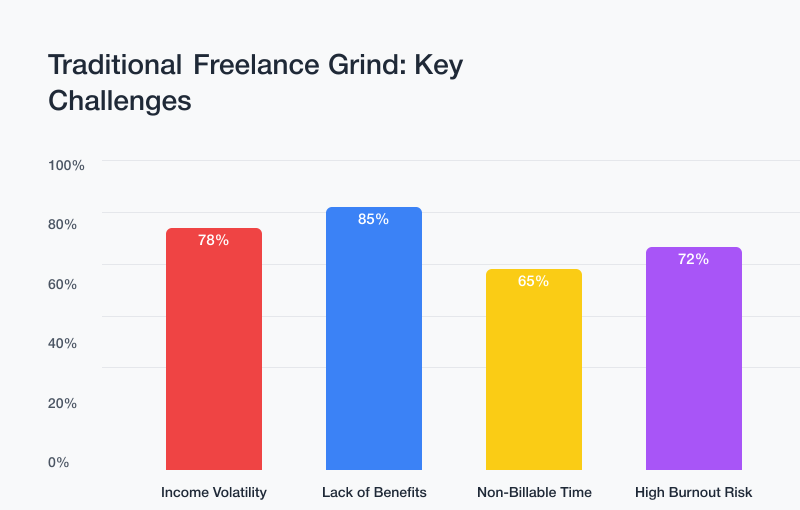
The traditional freelance model traps you in a cycle of undervalued work and instability.
Step 1: Building Your Foundation for High-Value Clients
Before you even think about writing a single blog post, you need to lay a rock-solid foundation. This isn't about casting a wide net; it's about defining precisely who you want to serve and why you're uniquely qualified to help them. Identify your ideal client profile – their industry, their challenges, their aspirations. Then, pinpoint your niche: what specific problem do you solve better than anyone else? What unique methodology or perspective do you bring? Clarity here is paramount, as it informs every piece of content you'll create and ensures you attract clients who value (and pay for) specialized expertise, not just a pair of hands.
Attracting premium clients starts with a crystal-clear understanding of your niche and the unique value you deliver.
Step 2: Creating Content That Sells Your Expertise
This isn't about writing a diary or posting generic industry news. Your blog content must be a strategic asset designed to demonstrate your authority and solve specific problems for your ideal clients. Think of each post as a mini-consultation, offering valuable insights, frameworks, or actionable advice that addresses their pain points head-on. Showcase your unique perspective, share case studies (even if hypothetical to start), and reveal your process. The goal is to make readers think, "This person gets my problem, and they clearly know how to fix it." When you consistently provide this level of value, your content doesn't just inform; it pre-sells your expertise, turning casual readers into qualified leads eager for your solutions.

Your content must strategically solve your ideal clients' biggest problems, positioning you as the undeniable expert.
Step 3: Amplifying Your Content to Reach High-Value Clients
So, you wrote a thing. Great. You hit "publish." And you sat there. Waiting. For the phone to ring. For the email inbox to explode with high-paying clients. Crickets, right? Because just hitting publish? That's barely half the battle. Maybe not even a quarter. It’s the biggest damn mistake new freelancers make. That "if you build it, they will come" nonsense? Pure fantasy. A lie. Because nobody's coming if they don't even know you exist. And getting seen? That takes work. Dirty, gritty work.
Here's the real talk. Your content, no matter how brilliant, is pointless if it’s just collecting dust on your obscure little corner of the internet. You gotta drag it out there. Force it in front of the right eyes. Not just any eyes, either. The ones attached to the wallets you want.

Social Media. Look, you don't need to be everywhere. That's a fool's errand. And a waste of precious time. Just pick one. Or two, tops. Where do your actual ideal clients spend their time? Not where you like to scroll. So, if you're chasing B2B contracts, you live on LinkedIn. Period. If it’s tech, maybe Twitter (or X, whatever they call it now). And you show up. You share your stuff. You talk to people. Consistently. Even Similarweb (2024) data tells you to go where your audience actually is. Don't try to make Facebook your main channel if your clients are all doing deals on LinkedIn. That's just stupid.
Guest Blogging. Yeah, it’s a grind. Finding sites, pitching ideas, writing for someone else’s audience. But guess what? They already have an audience. A big one, probably. So you tap into that. You steal a little bit of their authority. A single guest post on a popular industry blog, if it's the right one, can drive a flood of referrals. And leads. Real ones. It's like borrowing a megaphone from someone with a stadium full of fans. It helps. A lot.
Online Communities. Stop just lurking. Or worse, spamming your links. That's the fast track to getting booted. Instead, jump into Slack groups. Industry forums. Like Superpath, for writers. You actually engage. You answer questions. You offer helpful insights. From your articles, sure. But not just a link dump. Be useful. Because active participation in these niche communities? That can lead directly to high-paying jobs. Not next month. But eventually. It works.
Your blog isn't a magical lead magnet. It's a tool. And you have to actually use it. Aggressively. Or nobody will ever know you exist.
Step 4: Converting Readers into Profitable Partnerships
So, you finally got eyeballs on your stuff. Great. High-fives all around. But now what? Are they just... reading? Traffic alone is a vanity metric. A number for your ego. It doesn’t pay the rent. If those readers aren't turning into actual, paying clients, then you're just running a charity. Or a hobby blog. Which is fine, if that's your goal. But I'm guessing it’s not.
You need a system. A clear, simple path. To guide those interested readers straight from your killer blog post into your sales process. Not some complicated, multi-step funnel. Just a path.
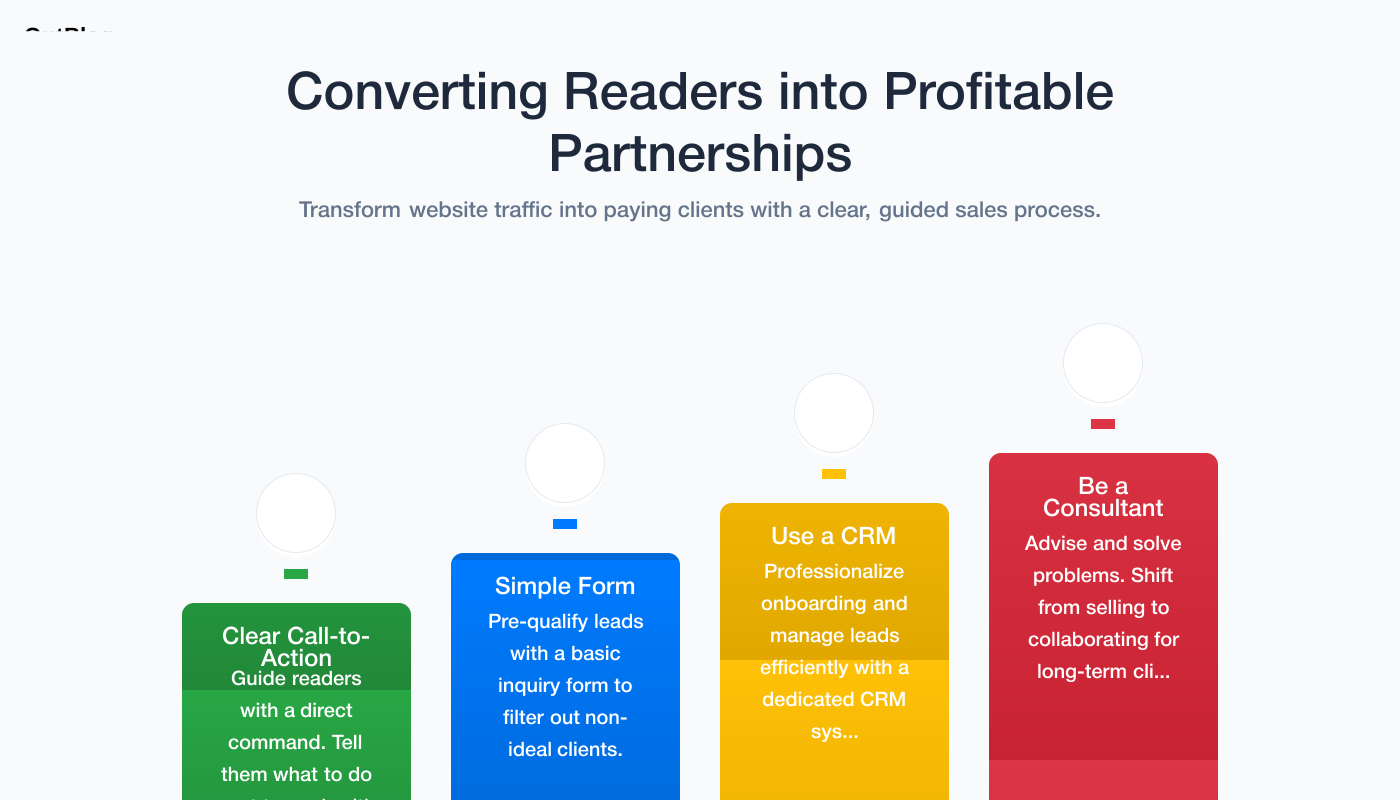
Clear Call-to-Action (CTA). Every single damn blog post. It needs one. Not a suggestion. A command. What do you want them to do next? "Contact me for a quick consultation." Or "Download my free checklist on X." Something. Anything. You spent all that time writing. So tell them how to work with you. How to give you money. Don't make 'em guess.
Simple Inquiry Form. Forget the endless email back-and-forth. That's for amateurs. Use a basic form on your website. Just enough to pre-qualify them. What kind of project? What's their budget? (Even if it’s a range, saves you grief.) Gather the essential info. It saves you so much time filtering out the tire-kickers. Or the ones who think "content" means "free." A simple form filters out clients who just aren't a good fit. Instantly.
CRM. Use one. Yeah, like Dubsado. Because managing leads on sticky notes or a spreadsheet from 2003? That's a mess. A professional client onboarding experience? It makes you look like you know what the hell you're doing. It helps close new clients. Makes you seem less like some random freelancer and more like a real business. And it means less chasing paper. Or emails.
Consultant, Not Salesperson. Look, your blog already did the heavy lifting. It proved you know your stuff. It did the initial selling. So when they come knocking, you're not selling. You're advising. You
’re solving their problems. You
’re a partner. Not someone trying to push a product. This shifts the whole damn dynamic. From a transaction to a collaboration. And that
’s how you build long-term relationships. That
’s how you keep getting paid.
Don't just get traffic. Convert it. Or you're just shouting into the void.
Frequently Asked Questions (FAQs)
Building a blog as an inbound engine for high-value clients can feel like a massive undertaking, and it's natural to have questions. Here are answers to some common concerns:
- Q: How long until I see results from my blog? A: This isn't a get-rich-quick scheme. Building authority and organic traffic takes consistent effort, typically 6-12 months to see significant inbound leads. However, early wins from direct outreach and community engagement can happen much faster.
- Q: Do I need to be a great writer to have a successful blog? A: You need to be able to communicate clearly and compellingly. While professional writing skills are a plus, authenticity and valuable insights often outweigh perfect prose. If writing isn't your strength, consider hiring an editor or content strategist.
- Q: What if my niche is too specific? A: The opposite is often true. A highly specific niche allows you to become the undeniable expert, attracting high-value clients who desperately need your specialized solutions and are willing to pay a premium for them. Generalists compete on price; specialists command it.
Addressing common questions proactively builds trust and removes barriers to engagement.
Look, the gig economy treadmill? It's designed to keep you running, not earning what you're truly worth. You're constantly chasing, competing on price, burning out. That's not a sustainable business; it's a glorified job you made for yourself. But here
’s the thing: you can break that cycle. You must.
Your blog isn
’t some optional marketing extra; it
’s the strategic switch from 'hired hand' to 'sought-after expert.' It transforms your entire client acquisition game, turning your website into an inbound powerhouse. A force multiplier, if you will.
So, let's distill it down to what actually matters:
- This isn't about showcasing services; it
’s about establishing genuine authority. Your blog becomes the filter, automatically pre-qualifying the clients who see you as a strategic partner, not just another contractor. It repels the tire-kickers before they waste your time. - Don't just publish. Educate. Solve real problems. Give away enough value that prospective clients think, "If their free stuff is this good, imagine what their paid work delivers." That's how you build trust and demand.
- Your blog is your single most potent asset for creating a sustainable, high-income freelance business. It
’s an engine, always running, constantly attracting. Treat it like the foundational investment it is, not a pet project you fit in when you're "inspired."
Yeah, building this takes grit. It takes consistent effort. But weigh that against the soul-crushing alternative of perpetual price wars.
Now, stop deliberating. The roadmap's clear. Start building your content strategy. Get those initial pillar posts live. And if the sheer, ongoing demand for high-quality, SEO-optimized content feels overwhelming, know there are automated content engines like OutblogAI purpose-built to scale that kind of strategic output for you. But first, you start. Today.