Blogging as a Freelance Funnel: From Posts to Paid Work
A guide for freelancers on how to move beyond unpredictable platforms and build a sustainable client acquisition system using a strategic blog. This article breaks down the three core stages of a freelance sales funnel—Acquisition, Nurturing, and Conversion—providing a clear roadmap to turn readers into high-quality, long-term clients.

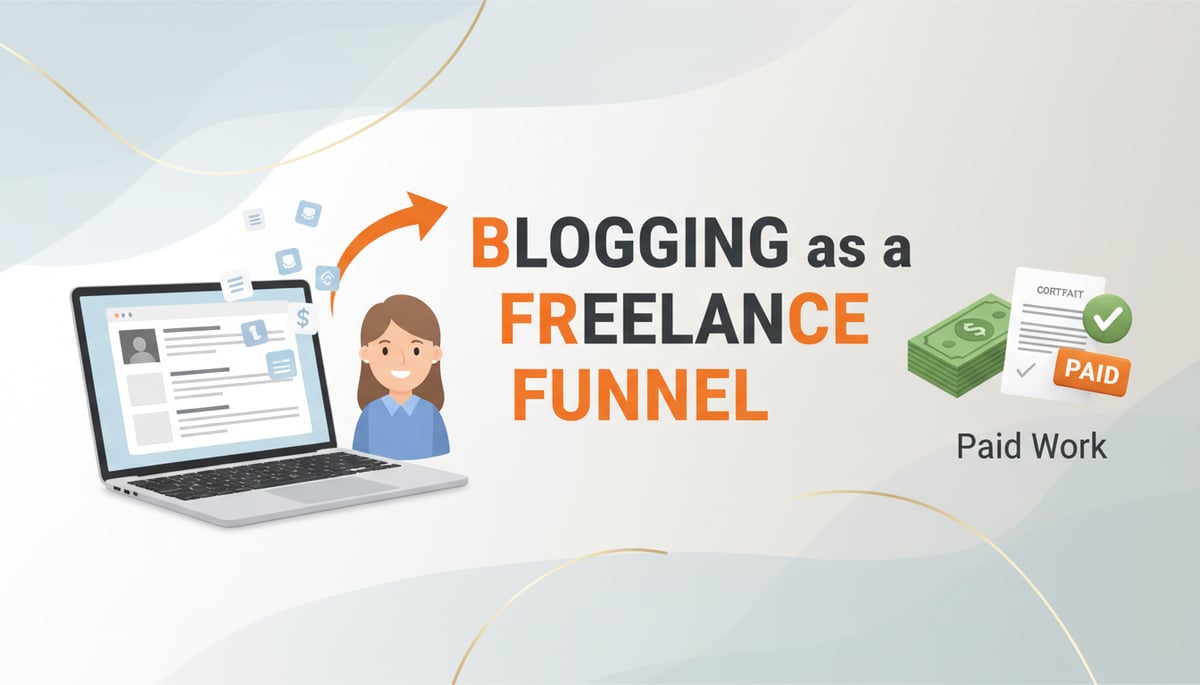
Still refreshing those gig platforms, hoping someone — anyone — picks your pitch from a pile? Wasting hours on proposals that go nowhere? That's not building a business, friend. That’s just a hamster wheel with a monthly fee attached.
And look, the internet isn’t just for endless scrolling. It’s a powerful client-generating system. You just need to build your own.
Forget those feast-or-famine cycles. We're talking about a predictable flow. A client acquisition funnel built right on your blog.
This isn’t about hoping. It’s about strategy: how to turn casual readers into high-quality, long-term clients who seek you out. We'll map out the entire process – Acquisition, Nurturing, Conversion. From blog post to paid work, without the platform middleman.
TL;DR
Freelance marketplaces? A scam. And you're just begging for crumbs there. You need your own client thing. A real funnel. So, start with blog posts. Good ones. Ones that actually solve problems for your ideal folks (not just vague fluff, I mean). They pull people in. Then, a freebie. Give 'em something genuinely useful. Something that proves you know your stuff. So they trust you. Next, a tiny, low-risk service. A quick win. That turns leads into paying clients. But some aren't ready right away. Keep 'em warm with consistent, valuable emails. Because that builds serious long-term trust. Look, this whole setup. It gets you clients. Real, steady clients. Makes you the go-to expert. Stop chasing gigs. Build your own damn business.
Brief
This brief lays out the raw truth of client acquisition.
The Freelance Funnel Framework: A High-Level View

So, you’re sick of the rollercoaster, right? The feast or famine cycle. One month, you're drowning in work. The next? Tumbleweeds. And that's not how you build a business. It’s how you burn out.
But what if you didn't have to guess? What if you had a clear path for every potential client? That's what a sales funnel is. Not some corporate jargon. It's just a strategic system. A roadmap. It guides people. From "who the hell is that?" to "here's my money." It’s the difference between hoping for clients and actually making them appear. Your business lives and dies by it. Because you need to move prospects. Through stages. Addressing what they need, exactly when they need it.
For you, the freelancer? It breaks down into three simple, brutal stages.
- Acquisition. This is the top of the funnel. ToFu, they call it. Getting attention. Catching an eye. Drawing them in. Without sounding like every other clown out there. Your blog. That's your primary engine here. It's where you show off. For free.
- Education. Then it's middle-of-the-funnel time. MoFu. This is where you build trust. You don't just pitch. You teach. You solve problems before they even become paying clients. Maybe a free guide. Or a short email series. You show them you know your stuff. You make them want to work with you. You make them feel like you get it. (Because you do, right?)
- Conversion. Finally, the bottom. BoFu. This is the moment. The pitch. But it's not a cold pitch. They're warmed up. Educated. They know you. They trust you. So you offer a clear next step. A small, initial paid service. Something low-risk. Just to get their foot in the door. So you can prove yourself. Again. It's how you stop guessing and start building a predictable client stream.
Stage 1: Acquisition via Strategic Blogging
Your blog. It’s not your digital scrapbook, okay? That’s a rookie mistake. Thinking it’s just some online portfolio or a place to dump your thoughts. No, this thing? It’s a goddamn magnet. For the right clients, I mean. Your ICP. The people who actually pay.
But you gotta use it right. So, you write about what people are actually searching for. Not what you think they want, or some weird abstract concept that makes you feel smart. I’m talking about their actual problems. Their pain points. The questions they type into Google at 2 AM because they can’t sleep. You answer those. And you answer them better than anyone else. Because if you don’t, someone else will.
And yeah, SEO. You still need it. That’s how these folks, the ones actively looking for a fix to their mess, find you. So you gotta structure your posts, hit those keywords. Make it easy for Google to put you front and center. It’s not rocket science, but it’s not optional either. And trust me, writing blog post after blog post when no one’s reading? Demoralizing. That's a fast track to quitting. So you need a strategy.
Because here's the thing: you can't just sit there, pumping out articles, waiting for Google to notice you. That's a pipe dream. A lot of folks waste years doing that. So you gotta get out there. Borrow other audiences. Guest post on sites your target audience already reads. Or get yourself on a podcast. It’s a dirty job (sometimes), but it drives traffic back. To your funnel. Even Similarweb (2024) shows that borrowing audiences is crucial when you're starting. And B2B social media leads on LinkedIn can be as high as 80%, so use that.
Every single one of these blog posts needs a point. A job. It’s not just content; it’s a sales tool. So at the end of every damn piece, you tell them what to do next. A clear call-to-action. No, not "buy my stuff." Not yet. A freebie. A lead magnet. Something easy. Like a checklist or a short guide related to the problem you just helped them understand. Because this is Stage 1. This blog? It’s your front door to making actual money, but only if you guide them inside.
Stage 2: The 'Freebie' Offer to Build Trust

So you’ve got someone on your blog. Reading your stuff. Maybe nodding along. Cool. But that’s public property. You don’t own that relationship. Not yet. What you need is a freebie. Yeah, I said freebie. Because it’s exactly what it sounds like. Something free. But loaded with value. An email course. A checklist. A whitepaper, if you’re feeling fancy. Something that actually teaches them something. And fast.
The whole point? Make them better off. Period. Before they even think about paying you a dime. You gotta deliver immediate value. Right away. Builds trust, right? Or it's just a waste of everyone's time. And your bandwidth. But a lot of people mess this up. They think it's just about getting an email address. Crazy. It’s about earning that email address. With genuine help.
And this freebie? It's not some random junk. Nope. But it needs to be a natural extension of whatever problem you just talked about on your blog. Seamless. Because you just gave them a problem. Now you give them a bite-sized fix. Or at least the next step. So they can try to fix it themselves. This stuff isn't for the dude with a project ready today. No. It's for the one who might have a problem. The one who’s looking. Kicking tires. And you show 'em you get it.
This is the real game. Moving them from your blog—public space, remember?—to your email list. Your private club. Where you control the conversation. And the follow-up. It's yours. All yours. And it’s the bridge. The crucial one. Because they just came from a topic you own. They’re thinking about it. They’re primed.
But don't just dump them in there. That's weak. Ask 'em a question. Right after they sign up. “What’s the ONE thing you need this course to help you with?” Yeah, just like that. Or, “What’s bugging you most about [problem] right now?” Because you get answers. And you learn. So much research. For free. And this data? It’s gold. Because very few people wake up wanting "project management software," but loads of people want to be better project managers. See the difference? Even Similarweb (2024) shows that it's the transformation people crave.
The freebie isn't a trick. It's proof. Proof you can help. And it’s how you build real authority, one email at a time.
Stage 3: The Initial Service Offering to Get Paid
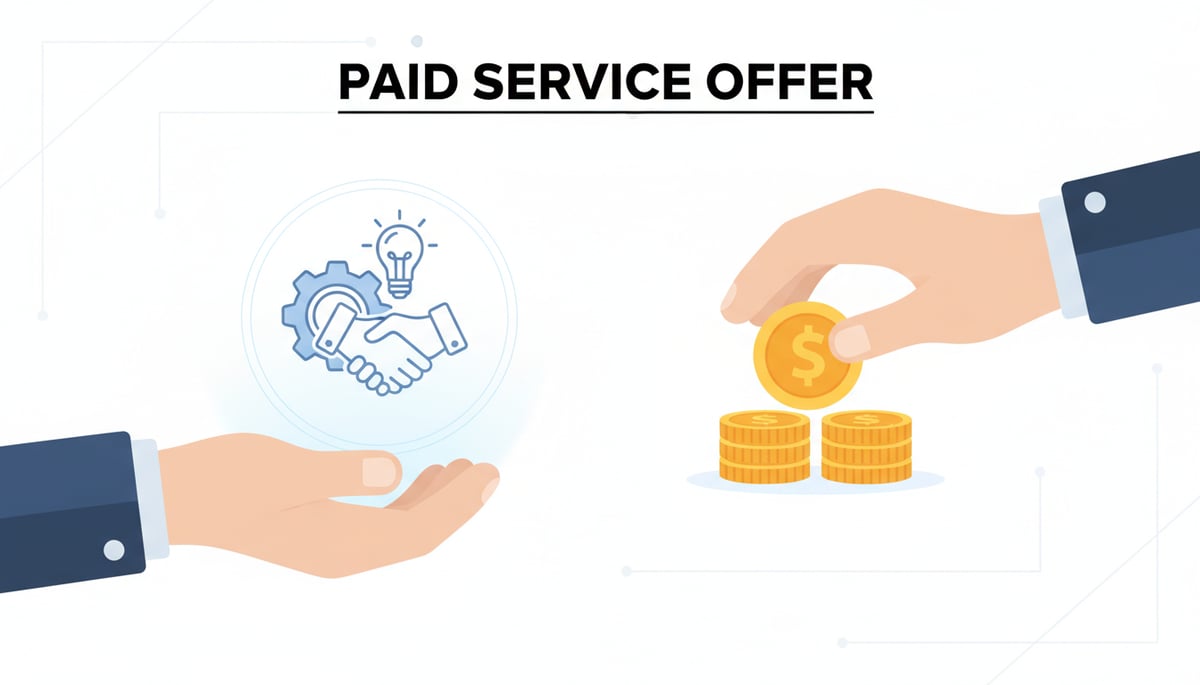
This section details how to turn interest into immediate revenue.
Nurturing the 99%: How to Stay Top-of-Mind
Okay, so you dropped that freebie. Felt good, right? A quick win. But then what? Crickets, probably. And look, that’s just how it goes. You gotta expect it. Because here’s the cold, hard truth, the real numbers: 99% of people who grab your free stuff? They ain't buying your initial offer right then. Not a chance. Maybe they’re swamped. Too busy. Or not ready for the next step, not yet. Some just aren't interested. But that doesn't mean they're gone forever.
So, you just quit? Throw up your hands? Nah. That’s for amateurs. That's how you lose. Because this isn't about the instant hit. It's about the long game. And I'm telling you, it's the only game worth playing if you want real strategic advantage. Your email list? That's not just a bunch of addresses. It’s a goldmine. A future revenue stream. A referral engine (a real growth flywheel, if you want the fancy talk). It's how you build an army of potential clients.
And how do you work this messy magic? Simple. You keep sending them good stuff. Valuable content. Not just sales pitches, because that’s the fastest way to get marked spam. Never just sales pitches. Because if someone actually learned something from your freebie, if you dropped some knowledge on them, they will want more from you. Maybe not today. Maybe not tomorrow. But when they're finally ready, or their boss throws a project on their desk, you better be the first name that pops into their head. Or someone else's.
You don't need to churn out a novel every week, either. Come on. Who has the time for that? Or the budget? Just curate. Find some killer articles out there (not always yours, actually). Read 'em. Digest 'em. Add your cynical, veteran take. What do you think is the real story? That's how you build genuine authority. That’s how you show them you're not just some fly-by-night operation. But it needs to be regular. Consistent. A drumbeat. An expectation.
Then, at the end of every single one of those emails? Don't just sign off like a robot. Ask something. A pointed question. Not a broad, lazy "How can I help?" nobody answers that. Instead, hit 'em with, "So, what's your next move with X problem?" Or, "What’s the biggest mess you're trying to fix this week?" Because you're looking for projects. You want to spark individual discussions, right? So, make them talk. It’s the only way to turn a maybe into a payday.
Next Steps
Look. You wanna fix this? Stop reading. Start doing. Here's what you tackle. Today.
1. Define Your Niche. Seriously. Who do you help? With what, specifically? Jonathan Stark’s formula. You know it. "I help X with Y." Figure it out. It's not complicated.
2. Brainstorm Your First 'Freebie.' What's a super quick win you can give away? A checklist? A short email course? Something you can whip up in a week. No budget? No problem. It's about value. Not polish.
3. Outline Your First Three Blog Posts. Think about your ideal client's biggest pains. Their top three crazy problems. And then outline posts that solve them. Tools like OutblogAI can help streamline this entire content creation process. Give away the damn farm. It builds trust.
4. Create a Simple 'Initial Service Offering.' What's a small, fixed-price project? A one-hour strategy call? A quick five-page website review? Something easy for them to say "yes" to. Something that gets them in the door. Now go build this thing.
Alright, so we’ve pulled back the curtain. You’re done playing roulette with those freelance platforms, right? Good. Because frankly, that’s a fool’s game. This whole system—your blog as a funnel—it’s not some fluffy marketing fad. It’s a machine. You build it, you feed it, and it spits out clients. Predictable ones, high-quality ones. The kind that actually pay on time and respect what you do. (Imagine that for a change.) Zero ad spend. That’s the goal.
Here's the bottom line, what you really need to get through your thick skull:
- Forget the platforms. Seriously. Stop begging for scraps. Build your own damn table. Your blog is your turf, where you control the rules, the prices, and the client journey.
- Content isn't just words on a page. It's a magnet, a digital handshake. It’s the bait for your ideal client, solving their problems before they even know they need you. And it proves your expertise without you having to pitch, endlessly.
- The money isn’t in the posts themselves. It’s in the offers, the conversion points. From that valuable freebie that hooks them, to the initial service that proves you’re worth every penny. You move them from passive reader to engaged lead to paying client. That's the sequence.
It takes work. A lot of it, actually. And some strategy, for once in your career. But guess what? The alternative is more feast-or-famine, endlessly chasing gigs, praying to the algorithm gods. Building a solid freelance business on your own terms is the only way out. You deserve better than that. You’re better than that.
So, shut down the tabs. Stop doom-scrolling those endless job boards. Go outline your next three blog posts—make them count. Then build that freebie. Today. Because nobody else is going to build your predictable client engine for you. Only you can do that.