Master Entity SEO: Future-Proofing Content for AI SERPs in the Answer Economy
AI is transforming search, shifting from keywords to entities and clicks to direct answers. Learn how to adapt your SEO strategy to the new 'Answer Economy,' measure AI visibility, leverage structured data, and ensure your brand remains discoverable and cited by generative AI.


The fundamental architecture of search has fractured. The era of optimizing content solely for keyword matching? It
s definitively over. We
ve not just accelerated; we
ve blasted into the Answer Economy, a new reality where generative AI prioritizes synthesizing direct, authoritative responses over serving traditional blue links. This seismic shift renders outdated optimization strategies obsolete, threatening any brand that fails to adapt its core content infrastructure. Are you positioned to lead in this new environment, or will your expertise become a digital ghost?
Mastering Entity SEO isn't just an advanced tactic anymore; it is the strategic imperative for survival and domination in AI-driven SERPs. This isn't about chasing algorithms; it's about future-proofing your entire content engine by optimizing for concepts and the intricate relationships between them
the precise methodology AI systems utilize to derive truth and deliver answers. Ignoring this transition isn't just a misstep; it
s conceding market share to competitors who understand that intelligence, not mere volume, dictates visibility now.
This definitive guide provides the blueprint for achieving unparalleled authority in this new landscape. We will dissect the architecture powering this transformation, detailing how to decode [Google
s Knowledge Graph](https://www.semrush.com/blog/knowledge-graph/) to ensure your brand is correctly understood. You will learn the critical methodology for measuring the invisible
tracking your brand
s citation rate within AI-generated summaries, a metric far more powerful than traditional rank position. Furthermore, we
ll map the process for implementing robust structured data at scale, effectively embedding your proprietary knowledge directly into the AI
s understanding framework. Prepare to elevate your strategy from mere blogging to systematic conquest of the next frontier of search results.
\
The Rise of the 'Answer Economy': What's Changing in Search?\
A fundamental paradigm shift is actively redefining the digital landscape, propelling us beyond traditional keyword-based search into an AI-driven 'Answer Economy'. This transformative evolution demands a strategic recalibration of how businesses approach organic visibility and engage with their audience. The era of merely ranking on a list is concluding; the future belongs to those who become the definitive answer.
Modern AI search engines prioritize deep contextual understanding, leveraging knowledge graphs and meticulously structured data. They move past simple keyword matching, interpreting connected facts and relationships to deliver direct, authoritative answers. This advanced intelligence means that content engineered with clarity and semantic structure will dominate, as AI systems inherently prefer organized data over unstructured text. Think of it as AI's preference for a well-indexed library over a chaotic pile of books.
This shift has initiated the 'death of the click,' a critical phenomenon impacting organic traffic. Imagine: up to 80% of users now rely on "zero-click" AI results at least 40% of the time. This isn't a minor trend; it's leading to significant drops in organic traffic, ranging from 15-25% for many organizations. Google's AI Overviews, now appearing on approximately 30% of queries, exert a powerful influence, dominating problem-solving searches in about 75% of cases. This prominence drastically reduces click-through rates (CTR) for even the top organic results, with the #1 organic position seeing its CTR fall from around 7.3% to a mere 2.6% in queries featuring an AI Overview.
In this burgeoning Answer Economy, true visibility means being consistently cited in AI-generated responses. Your brand must strive to become an integral part of the AI
s "knowledge voice," not just a ranked link. This positions your organization as a trusted, primary source of information, directly influencing user perception and decision-making. The strategic imperative is clear: AI-referred visitors are not just abundant, they are highly qualified. Research demonstrates that AI-referred visitors convert at an unparalleled 4.4 times the rate of traditional search traffic, underscoring the immense value of appearing within these direct AI responses. Securing a place in the AI's answer is the ultimate conquest for market authority
a direct line to your most valuable customers.
\
Understanding Semantic SEO and Entities: The New Core\
The digital landscape has fundamentally transformed, demanding a strategic pivot from traditional keyword-centric SEO to an advanced, entity-driven approach. Semantic SEO represents this evolution, optimizing content not just for isolated keywords, but for comprehensive topics, intricate user intent, and the profound relationships between concepts. This strategic shift isn't optional; it's imperative for market dominance in an AI-first search environment.
Google
s algorithms have undergone a remarkable evolution, moving beyond simplistic keyword matching to interpret meaning and context with human-like precision. Landmark updates such as Hummingbird (2013), RankBrain (2015), BERT (2019), and the powerful MUM (2021) have collectively redefined how relevance is determined. These AI-powered systems now prioritize understanding the semantic connections and underlying intent behind queries, making content analysis far more sophisticated. In essence, Google's algorithms now focus on entities and their attributes, rather than just keywords, to gain a deeper context
they want to understand the "what" and the "why" behind your words.
At the core of this transformation are entities, which Google defines as "a single, well-defined thing or concept." Think of them as the nouns of the internet
identifiable concepts like people, places, organizations, products, or events that search engines recognize and connect across the vast web of information. For example, when "Phoenix" appears alongside "state capital" and "desert," AI discerns the city, not the mythical bird, based on established entity relationships. It's about disambiguation and contextual understanding.
Relying solely on keyword-focused content now presents significant limitations. Such content often struggles with ambiguity, failing to provide the depth and contextual understanding that modern AI systems demand. This leads to poorer performance and diminished visibility in today's sophisticated search landscape. Conversely, entity-based content empowers search engines to separate multiple meanings of the same word, forge connections between related concepts even with varied terminology, and accurately determine content relevance. This structured, organized data is precisely what AI prioritizes, ensuring your content is not just found, but profoundly understood and, critically, cited.
\
Google's Knowledge Graph: Powering AI's Understanding\
Google's Knowledge Graph isn't merely a database; it stands as the monumental engine driving AI's profound understanding in modern search. Imagine it as Google
s collective brain, an unparalleled network now encompassing an astounding 800 billion facts about 8 billion entities. It meticulously maps the intricate relationships between concepts, people, organizations, and products, forming the bedrock upon which AI-driven search results are constructed. This comprehensive web of knowledge allows Google to move beyond simple keyword matching, enabling true semantic understanding
it's how AI truly "gets" the world.
A strategic cornerstone of the Knowledge Graph is the assignment of a unique ID to each entity. This distinct identifier empowers Google to seamlessly connect and reconcile information across myriad diverse sources and languages, ensuring a unified and coherent understanding of every concept. It's the digital equivalent of a unique social security number for every piece of knowledge. Google's algorithms then prioritize these entities based on critical signals: their relatedness to other established entities, their notability (evidenced by frequent mentions and authoritative links), their demonstrable contribution to a topic, and the inherent associated value they offer to users. This intelligent prioritization ensures that only the most credible and pertinent information fuels AI responses.
Key entity types that command significant influence within the Knowledge Graph include People, Organizations, Places, Products, Events, and Creative Works. Entities possessing clear definitional boundaries and robust, verifiable relationships to other established entities are particularly crucial for driving AI recognition. To strategically elevate your content and secure its recognition as a distinct entity, a multi-faceted approach is imperative. This involves building an undeniable and consistent brand identity across all digital touchpoints, ensuring absolute consistency in published information, and, most critically, leveraging comprehensive schema markup. Google explicitly emphasizes that structured data provides the precise, machine-readable clues AI needs to interpret your content's meaning, ensuring your brand achieves unparalleled visibility and authority in the evolving landscape of AI-powered search. It's essentially speaking AI's native language.
\
Measuring the Invisible: Tracking AI Visibility\
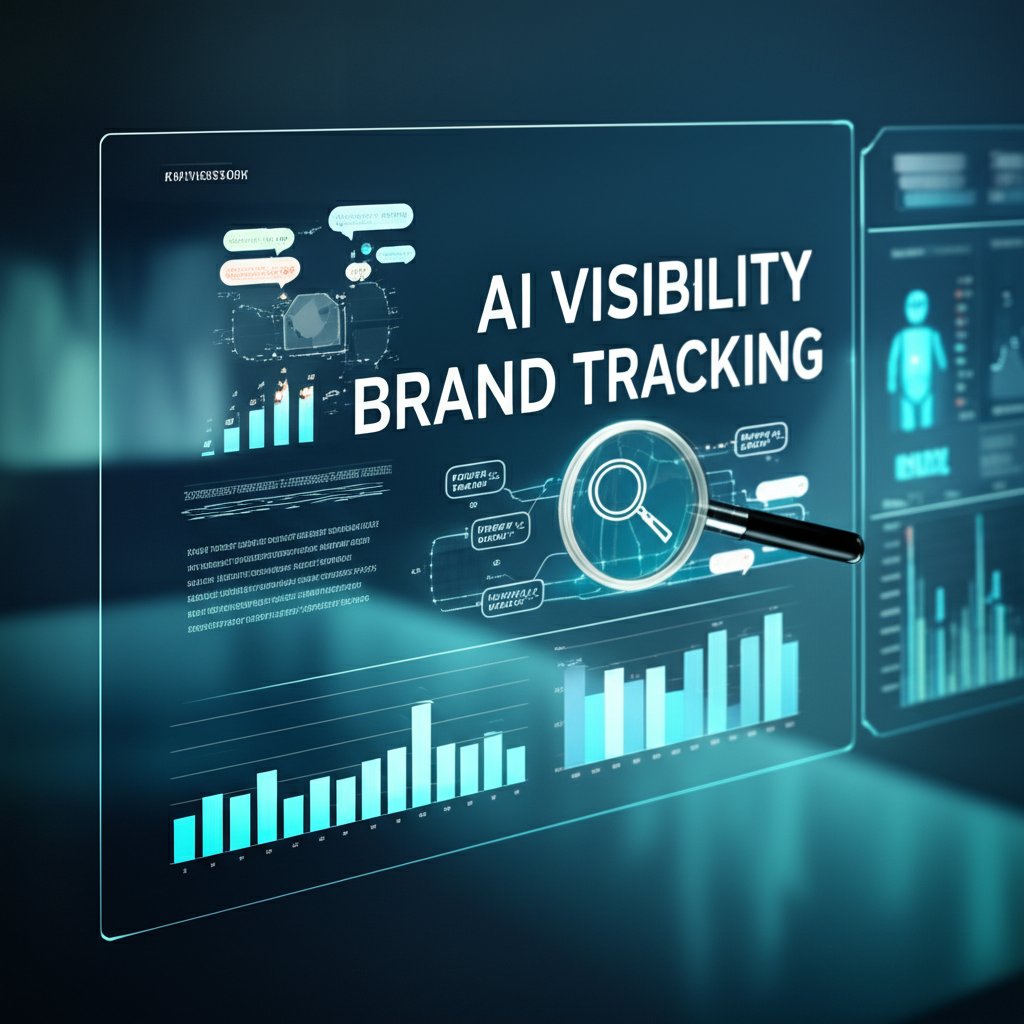
The digital landscape has fundamentally transformed, moving beyond the era where traditional clicks served as the sole measure of online engagement. With generative AI now delivering direct answers, the old click-through model is rapidly diminishing. Brands must pivot to quantifying "AI visibility," a critical new metric encompassing mentions, citations, and recommendations within generative responses. This shift demands sophisticated analytics to truly understand and elevate your brand's presence, because if you can't measure it, you can't improve it.
Leading the charge in this new measurement paradigm, OpenAI has begun integrating foundational analytics. ChatGPT's outgoing links now append UTM codes, such as utm_source=chatgpt.com, enabling direct tracking of AI-driven referrals within existing analytics platforms. This initial step provides crucial data, making AI traffic "visible" and allowing for performance segmentation
finally, we can see where the AI leads our audience.
Beyond basic referrals, specialized SEO platforms are deploying advanced AI visibility toolkits. Solutions from powerhouses like Semrush, alongside innovative platforms such as Otterly and Writesonic GEO, offer unparalleled insights. These tools track your brand's share-of-voice across major Large Language Models (LLMs), analyze sentiment, and quantify direct mentions and citations. For instance, Semrush
s AI SEO toolkit provides AI-specific KPIs like brand mentions, sentiment, and AI rankings, while Otterly offers a proprietary "Brand Visibility Index." These aren't just fancy dashboards; they're your new compass in the Answer Economy.
To proactively secure this vital visibility, a dual approach combining manual audits and automated crawling is essential. Brands can conduct manual audits by directly prompting LLMs with key industry queries to observe where their content is cited or conspicuously absent. (Pro tip: Be specific and natural in your prompts!) Complementing this, automated crawling tools, like those offered by Writesonic GEO and Rankscale, continuously identify brand mentions across various AI "search engines" at scale. The ultimate strategic objective is to synthesize these diverse data streams into a robust 'AI Visibility Dashboard.' This powerful tool will provide a comprehensive, real-time view of how often and precisely where your brand surfaces in AI answers, transcending the limitations of traditional SERP rankings and driving informed content strategy. Welcome to the new era of performance tracking.
\
Beyond the Blue Links: Multimodal, Local, and Personalized AI Search\
The era of AI-driven search transcends mere text results, demanding a comprehensive, multimodal approach to content optimization. Modern AI assistants are intelligent engines, capable of interpreting and generating responses across text, images, video, and audio. To achieve unparalleled visibility and secure market domination, SEO strategies must now optimize every content type. This means high-quality alt text for images (making them "readable" for AI), robust transcripts for video (unlocking spoken content), and clear metadata for all media assets. As industry experts confirm, AI search is inherently "multi-modal," integrating diverse data forms to deliver truly comprehensive answers. Your visual and auditory content is no longer secondary; it's a primary source for AI.
AI answers are also profoundly localized and personalized, a strategic dimension that tailors responses based on a user's geographical context and language. This level of precision elevates the importance of local SEO to a critical new echelon. AI assistants heavily cite local listings, drawing intelligence from platforms like Google Business Profile, Yelp, and Foursquare to provide highly relevant, location-specific information. BrightLocal's analysis underscores this, revealing that Yelp pages contribute to approximately one-third of local AI answers, with ChatGPT leveraging Foursquare for 60-70% of its local place results. If you run a local business, this is your immediate priority.
To dominate localized AI answers, businesses must ensure their local citations are accurate, consistent, and meticulously updated across all relevant directories. This isn't just good practice; it's non-negotiable for AI visibility. Furthermore, providing multilingual content is no longer optional; it is essential for appearing in tailored AI responses that cater to diverse linguistic user bases. Imagine AI instantly translating and serving your content to users worldwide! Future-proofing visibility demands a broader analytical scope, with emerging metrics likely to include 'image answer' or 'voice answer' visibility, pushing teams to track performance across every modality. This integrated approach transforms your content into an intelligent asset, ready for AI-driven conquest
no matter how or where the user asks the question.
\
The AI Visibility Playbook: Practical Steps for Future-Proofing SEO\
The shift to an AI-first search landscape demands a decisive pivot in your SEO strategy. To secure undeniable visibility in the burgeoning Answer Economy, businesses must move beyond traditional keyword tactics and embrace a comprehensive playbook designed for AI-driven discovery. This actionable roadmap empowers your brand to dominate the new digital frontier, ensuring your expertise is consistently cited and recommended by intelligent systems. It
s time to stop reacting and start leading.
Here are the strategic imperatives for future-proofing your content and establishing AI authority:
\
- Audit Your AI Presence: Begin by testing major Large Language Models (LLMs) such as ChatGPT, Gemini, and Bing Chat with your industry's core queries. This crucial audit reveals where your brand or content is currently cited and, more importantly, identifies critical gaps. Semrush defines AI visibility as "how often your brand is mentioned, cited, or recommended in AI-generated responses," making this baseline assessment non-negotiable for understanding your current standing. Know where you stand before you can move forward.
\ - Shift Content Strategy from Keywords to Questions: The Answer Economy prioritizes direct answers. Transition your content approach from merely targeting keywords to explicitly addressing user questions. Structure your pages with clear Q&A sections and robust FAQ schemas, making your content effortlessly extractable for AI models seeking concise, authoritative answers. This ensures AI can easily parse and present your information. Think like a curious human, not a search bot.
\ - Implement Comprehensive Structured Data: Structured data is the bedrock of machine-readable content. Systematically deploy schema markup (e.g.,
Organization,Product,Article,FAQPage) across your entire website. Google explicitly leverages schema markup to enhance its LLMs' understanding of content, making it an indispensable tool for AI recognition and citation. This direct communication channel minimizes ambiguity for AI systems. Speak AI's language fluently.
\ - Build Powerful Brand Signals: Cultivate a strong digital footprint that encourages unlinked mentions. Actively seek inclusion in authoritative directories, pursue impactful editorial coverage, and forge strategic partnerships. AI models prioritize credible sources and consistently cited brands. Every reputable mention acts as an "AI citation," reinforcing your brand's authority within the AI's knowledge base, often outperforming traditional backlinks in this new paradigm. Become undeniably noteworthy.
\ - Ensure Local and Multilingual Relevance: AI answers are increasingly localized and personalized. Maintain accurate and comprehensive local listings (Google Business Profile, Yelp, Foursquare) to ensure your business appears in geographically tailored AI responses. BrightLocal research confirms LLMs heavily draw on these local citations. Furthermore, provide multilingual content to capture localized AI answers, enabling global domination through instant translation and broader reach. Be present, everywhere and for everyone.
\ - Monitor AI Referrals with Precision: Establish a robust system for tracking AI-driven traffic. Utilize UTM tracking parameters (e.g.,
utm_source=chatgpt.com, which ChatGPT now automatically appends) to segment AI-sourced visitors in your analytics. This allows for clear baselining of AI visibility and precise measurement of ROI, especially given that AI-referred visitors convert at a significantly higher rate (up to 4.4x) than traditional search traffic. Measure what truly matters.
\ - Elevate E-E-A-T (Experience, Expertise, Authoritativeness, Trustworthiness): As AI models consistently prioritize credible, reliable sources, enhancing your E-E-A-T signals is paramount. Invest in demonstrating profound experience, showcasing verifiable expertise, building undeniable authoritativeness, and fostering unwavering trustworthiness, particularly for Your Money or Your Life (YMYL) topics. This strategic focus ensures your brand is consistently recognized and cited as a leading authority, guaranteeing AI models confidently recommend your content. Become the trusted source AI can't ignore.
By systematically implementing this playbook, your business will not merely adapt but thrive, transforming your content into an automated engine for AI visibility and securing your position as an undeniable authority in the evolving Answer Economy. Every piece of content must be architected not just for human consumption, but as an intelligent data point that AI models recognize and trust. For tools that help you achieve this, OutblogAI can streamline your content creation and optimization process.
\
Industry in Transition: How AI Search Impacts Key Sectors\
The advent of AI-driven search is not a uniform shift; its impact reverberates uniquely across diverse industries, demanding tailored strategies for market conquest. Businesses must recognize these specific implications to secure an undeniable advantage in the Answer Economy. This isn't a "one size fits all" challenge.
For retailers, AI shopping is already transforming the customer journey. ChatGPT now integrates product recommendations, underscoring the critical need for brands to optimize product feeds and e-commerce sites for AI consumption. This mandates meticulous product schema implementation (name, price, availability) and ensuring full crawlability by AI agents like OAI-SearchBot, removing any robots.txt blocks that hinder visibility. OpenAI actively encourages merchants to submit product catalogs, positioning this as a direct pipeline to future sales. Don't just sell to humans; sell to AI.
Healthcare providers face a heightened imperative for trust and authority. Patients increasingly consult AI chatbots for medical guidance, yet these models preferentially cite authoritative sources like the CDC or WHO over generic content. Healthcare organizations must align all content with established medical guidelines and rigorously adhere to E-E-A-T principles. Presenting complex information in clear, concise Q&A formats, mirroring patient queries such as "How can I lower my blood pressure?", and consistently citing reputable research will elevate content in AI answers. Be the verifiable authority, not just a voice.
Financial firms must engineer content for multi-step, intelligent dialogues. AI search platforms, like OpenAI
s upcoming "SearchGPT," provide direct answers to complex finance questions, often with cited sources. This conversational format allows users to drill down from basic explainers to niche topics. Therefore, financial content should be authoritative, structured to facilitate these dialogues, beginning with foundational explanations and progressively deepening, while consistently citing reputable financial publications to bolster AI recognition. Guide the AI through complex financial landscapes.
Local services depend on unparalleled data accuracy. For queries like "best pizza near me," AI assistants heavily draw upon local listings and directories. Hyper-accurate Name-Address-Phone (NAP) information and robust review profiles across platforms such as Google Business Profile and Yelp are paramount. BrightLocal research confirms that AI models frequently cite these local sources, meaning inconsistent or incomplete data will lead to invisibility in crucial 'near me' queries. Your local presence is your AI presence.
Crucially, every industry shares a foundational requirement: prioritizing data consistency and structured content. This ensures that valuable information effectively feeds AI systems, transforming raw data into authoritative answers and securing a dominant presence in the evolving AI SERPs. Without this bedrock, even the most brilliant content risks being overlooked.
The seismic shift toward the Answer Economy is complete. Traditional keyword matching is obsolete; the new competitive frontier is defined by entities, semantic authority, and AI citation. To secure your position in this evolving landscape, mastery of Entity SEO is non-negotiable. We have established that success in the AI-driven SERP hinges on two critical mandates: optimizing content to clearly define entities and their relationships, and leveraging structured data at scale to serve as the authoritative knowledge base for generative models.
Your strategic imperative now is clarity and consistency. Abandon fragmented tactics and pivot toward a systematic workflow designed to build undeniable topical authority. The metric for true success is shifting from page rank to AI visibility
your brand
s frequency and prominence within synthesized AI responses. This requires comprehensive entity mapping and a relentless focus on enriching your first-party data ecosystem. Every piece of content must be architected not just for human consumption, but as an intelligent data point that AI models recognize and trust. It's time to build your content to be truly AI-native.
The window for adaptation is narrow, and frankly, it's closing. Those who continue to operate within the outdated paradigm of keyword optimization will be relegated to the background noise of the zero-click experience, their expertise rendered invisible. Accelerate your evolution now. By integrating these advanced Entity SEO strategies, you are not merely future-proofing your content; you are deploying a proprietary engine engineered for market domination. Seize this unfair advantage and architect your ascent to authority in the age of AI search. For a comprehensive solution to manage your content and SEO strategies, visit OutblogAI. Your future starts here.