Lightning Fast SEO: Unlock Unbeatable Google Rankings Now
Accelerate your Google rankings with Lightning Fast SEO. Learn key website speed optimization techniques and master Core Web Vitals for superior user experience.



Lightning Fast SEO: Unlock Unbeatable Google Rankings Now
A considerable number of enterprises frequently underestimate the critical importance of their website's loading velocity. Yet, compelling research consistently demonstrates that even a fractional improvement – as little as a tenth of a second shaved off page load times – can profoundly elevate conversion rates, with some analyses suggesting an impressive surge of up to seven percent. This seemingly minor technical detail has quietly evolved into a foundational element of successful search engine optimization strategies, exerting a direct and powerful influence over the visitor's journey and, consequently, a site's visibility in search results. In our rapidly moving digital era, where user attention spans are notoriously fleeting, unlocking the latent potential of a lightning-fast website is no longer merely advantageous; it stands as an absolute strategic mandate for any entity striving to establish and maintain a leading position in their respective market.
The Unseen Ranking Factor: Why Speed Dominates SEO
Moving beyond mere user convenience, the velocity at which your website renders is a core indicator that search engines, especially the omnipresent Google, meticulously examine during their content assessment processes. Snappier websites inherently deliver superior user experiences, a characteristic that Google's sophisticated algorithms are progressively engineered to favor and elevate. Conversations among seasoned web developers and SEO specialists frequently underscore a universal truth: visitors are highly improbable to linger on a digital property that demands more than a fleeting moment to appear fully functional, a phenomenon particularly acute on mobile devices or within regions plagued by sluggish internet connectivity. This effect transcends fleeting first impressions; it directly correlates with vital user engagement metrics such as dwell time – the duration a user spends on a page – and bounce rate, which measures how many visitors leave after viewing only one page. Both of these metrics subsequently provide critical feedback that profoundly shapes search engine rankings. While some might view website speed as merely a technical optimization, a 'behind-the-scenes' tweak, its strategic implications are far-reaching, extending deep into the realms of user satisfaction, brand reputation, and ultimately, your bottom line.
User Experience: The King's Demand
At its heart, the internet thrives on immediate gratification. Users expect websites to load instantaneously, presenting information and functionality without delay. A sluggish site, conversely, is a digital turnstile, pushing visitors away before they even engage with your content. Think of it as a physical storefront: if the doors are jammed and the lights flicker, potential customers will simply move on to the next shop. Online, this translates into lost opportunities and a higher bounce rate, signaling to search engines that your site might not be delivering a satisfactory experience. A superior user experience, powered by speed, encourages longer visits, deeper exploration of your content, and a greater likelihood of achieving your business objectives.
Google's Algorithm: Rewarding Efficiency
Google's mission is to provide its users with the most relevant and high-quality results. Since user experience is paramount, it logically follows that websites offering a smooth, fast loading experience are inherently favored. Google explicitly uses page speed as a ranking factor, especially with the introduction of its Core Web Vitals metrics. These metrics quantify aspects of user experience and directly influence how your site performs in search results. Sites that perform well on these metrics are seen as more user-friendly, and thus, more deserving of prominent placement.
The Mobile-First Imperative
The shift to mobile browsing is not a trend; it's the dominant reality. A significant majority of internet traffic now originates from smartphones and tablets. Mobile users, often on varying network conditions, are even less tolerant of slow-loading pages. Google's algorithms have also adopted a mobile-first indexing approach, meaning the mobile version of your site is primarily used for ranking. If your mobile site is a laggard, your overall SEO performance will suffer dramatically, regardless of how fast your desktop version might be.
Beyond Rankings: The Business Impact of a Speedy Site

The benefits of a fast website extend far beyond merely climbing the search engine results pages. They permeate every aspect of your digital business strategy, directly influencing profitability and brand perception.
Conversion Rate Optimization (CRO)
As the opening statistics highlighted, even marginal improvements in load time can yield significant upticks in conversion rates. Whether your goal is to sell products, generate leads, or gather email subscribers, a slow site introduces friction into the conversion funnel. Every millisecond of delay offers an opportunity for a potential customer to abandon their cart, close a form, or simply navigate away. Conversely, a rapid, seamless experience fosters confidence and encourages users to complete their desired actions, directly boosting your return on investment.
Brand Perception and Trust
A fast, responsive website projects an image of professionalism, efficiency, and reliability. It tells your visitors that you value their time and that your business is meticulous and well-managed. A slow, clunky site, on the other hand, can inadvertently convey an impression of outdated technology, neglect, or even untrustworthiness. In an era where digital presence is often the first point of contact, your website's speed directly shapes initial brand perception and builds foundational trust with your audience.
Ad Spend Efficiency
For businesses investing in paid advertising campaigns (PPC), website speed plays a crucial role in maximizing ad spend. If you're paying for clicks to drive traffic to a slow landing page, a percentage of those clicks will inevitably be wasted as users abandon the page before it loads. This diminishes your Quality Score in advertising platforms, potentially increasing your cost-per-click and reducing the overall effectiveness of your campaigns. A fast landing page ensures that your paid traffic has the best possible chance to engage and convert, leading to a much better return on your advertising investment.
Identifying Your Speed Bottlenecks: How to Diagnose Your Website
Before you can make your website sprint, you need to understand what's holding it back. Diagnostic tools and a clear understanding of key metrics are essential for effective optimization.
Essential Tools for Performance Analysis
Several powerful tools are available to help you pinpoint performance issues:
- PageSpeed Insights: This free tool from Google analyzes your website's content and generates suggestions to make that page faster. It provides scores for both mobile and desktop versions and offers actionable recommendations.
- Google Search Console: Beyond helping you monitor your site's search traffic and performance, Search Console offers a dedicated "Core Web Vitals" report that highlights specific pages with poor performance, allowing you to prioritize fixes.
- Browser Developer Tools: Most modern web browsers include built-in developer tools that allow you to inspect network requests, identify large files, and analyze rendering performance in real-time.
- Ahrefs: While primarily an SEO tool for backlink analysis and keyword research, Ahrefs also offers site audit features that can help identify technical SEO issues, including aspects related to page speed.
Key Metrics: Understanding Core Web Vitals
Google's Core Web Vitals are a set of three specific metrics that measure real-world user experience:
- Largest Contentful Paint (LCP): This measures the perceived load speed by marking the point when the page's main content has likely loaded. A good LCP score is under 2.5 seconds.
- First Input Delay (FID): This quantifies the responsiveness by measuring the time from when a user first interacts with a page (e.g., clicks a button) to the time when the browser is actually able to respond to that interaction. A good FID score is under 100 milliseconds.
- Cumulative Layout Shift (CLS): This measures visual stability. It quantifies the amount of unexpected layout shift of visual page content. A good CLS score is less than 0.1.
Understanding and optimizing for these metrics is crucial for both user experience and SEO.
Common Culprits: What Slows Your Site Down
Typically, website slowness can be attributed to several common factors:
- Unoptimized Images: Large, uncompressed images are often the biggest culprits.
- Excessive JavaScript and CSS: Bloated or poorly optimized code can block rendering and delay interactivity.
- Slow Server Response Time: Your hosting provider's performance and server configuration play a vital role.
- Lack of Caching: Without proper caching, your server has to do more work for every returning visitor.
- Too Many External Requests: Integrations with third-party scripts (analytics, ads, social widgets) can add significant overhead.
- Inefficient Font Loading: Web fonts can be large and cause "Flash of Unstyled Text" (FOUT) or "Flash of Invisible Text" (FOIT).
Turbocharging Your Site: Actionable Strategies for Speed Optimization
Once you've diagnosed the issues, it's time to implement solutions. Here's a playbook for significant speed improvements:
1. Image Optimization
- Compress Images: Use tools (online or plugins) to reduce file size without significant loss of quality.
- Lazy Loading: Defer loading images that are not immediately visible in the viewport until the user scrolls down.
- Next-Gen Formats: Convert images to modern formats like WebP, which offer superior compression.
- Responsive Images: Serve different image sizes based on the user's device and screen resolution.
2. Minify CSS, JavaScript, and HTML
- Remove Unnecessary Characters: Minification involves removing whitespace, comments, and other non-essential characters from your code files.
- Combine Files: Reduce the number of HTTP requests by combining multiple CSS or JavaScript files into one where appropriate.
3. Leverage Browser Caching
- Set Cache-Control Headers: Instruct users' browsers to store static assets (images, CSS, JS) locally, so they don't need to be re-downloaded on subsequent visits. This dramatically speeds up returning visitors' experience.
4. Choose a Fast Hosting Provider and CDN
- High-Quality Hosting: Invest in a reputable hosting provider known for speed and reliability. Shared hosting can be cheap but often compromises performance.
- Content Delivery Network (CDN): A CDN stores copies of your website's static files on servers located across the globe. When a user requests your site, content is served from the closest server, reducing latency.
5. Implement Server-Side Optimizations
- Enable GZIP Compression: Compress web pages and assets before sending them to the user's browser, reducing transfer size.
- Use HTTP/2 or HTTP/3: These newer protocols offer significant performance advantages over HTTP/1.1, especially for concurrent requests.
- Optimize Database Queries: For dynamic sites, ensure your database interactions are efficient.
6. Prioritize Critical CSS and Defer Non-Critical JavaScript
- Critical CSS: Extract the minimum amount of CSS needed to render the content visible above the fold and inline it directly in the HTML. Load the rest of the CSS asynchronously.
- Defer JavaScript: Load non-essential JavaScript after the main content of the page has rendered. This prevents scripts from blocking the initial page load.
7. Consider Progressive Web Apps (PWA)
- For a truly next-level experience, explore transforming your website into a Progressive Web App. PWAs offer app-like experiences directly from the browser, including offline capabilities, push notifications, and significantly faster load times, often feeling instantaneous after the first visit.
Monitoring and Maintaining Speed: The Ongoing Journey
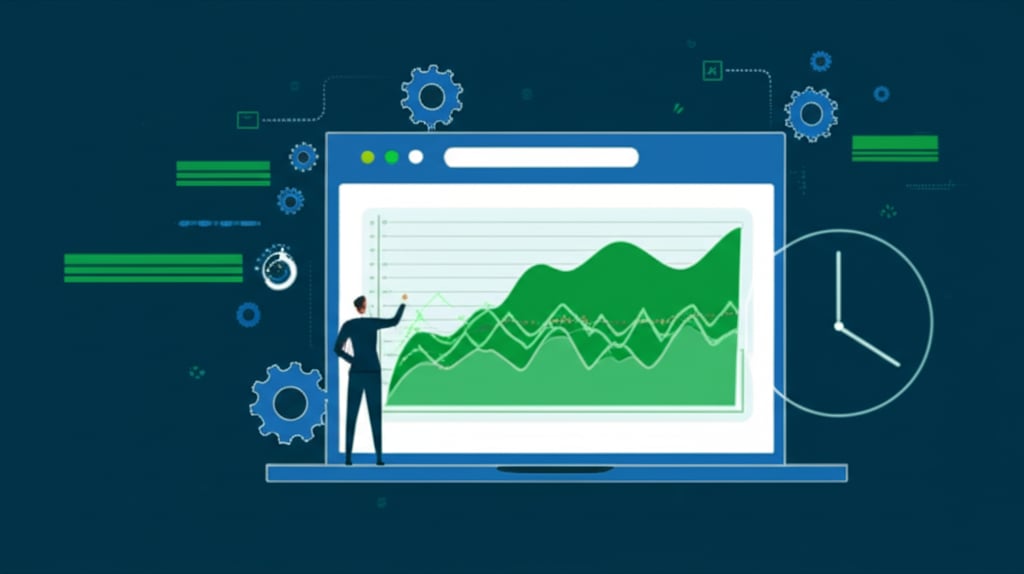
Website speed optimization is not a one-time task; it's an ongoing commitment. New content, plugins, or third-party integrations can inadvertently introduce new performance bottlenecks.
Regular Audits
Make it a habit to regularly run your site through PageSpeed Insights and monitor your Google Search Console Core Web Vitals reports. Schedule quarterly or monthly performance audits to catch issues before they impact your rankings or user experience significantly.
User Feedback
Pay attention to any user complaints about site slowness. Qualitative feedback can sometimes highlight real-world performance issues that automated tools might miss.
Staying Updated with Google's Guidelines
Google frequently refines its algorithms and introduces new recommendations for web performance. Staying informed about these changes will ensure your optimization efforts remain aligned with best practices.
The Digital Foundation for Unmatched Performance
In the competitive digital arena, every advantage counts. Platforms committed to delivering exceptional web performance, much like the offerings from a leading platform for digital excellence, understand that speed is not just a feature, but a fundamental building block of success. By building your online presence on a foundation designed for blazing-fast loading and seamless user experiences, you're not just optimizing for search engines; you're optimizing for your customers and for sustained business growth.
Conclusion: Your Fast Track to Digital Dominance
The era of slow websites is firmly behind us. In today's digital landscape, speed isn't merely a technical nicety; it's a non-negotiable prerequisite for visibility, user satisfaction, and ultimately, commercial success. By understanding its profound impact on SEO, conversion rates, and brand perception, and by diligently implementing the right optimization strategies, you can transform your website from a digital bottleneck into a high-performance engine. Embrace the philosophy of lightning-fast web experiences, and you won't just unlock unbeatable Google rankings; you'll pave your fast track to enduring digital dominance.