The Impact of AI on Search Intent: A Deep Dive for 2025
Explore how AI technologies like NLP and generative search are reshaping user search intent. This guide provides actionable SEO strategies for marketers to adapt and thrive in an AI-driven landscape, focusing on E-E-A-T, conversational queries, and topic authority.

For too long, the digital marketing industry has viewed AI as a tool for automation or incremental optimization. The true impact, however, goes far beyond efficiency; artificial intelligence is profoundly redefining user interaction with search engines. As we approach 2025, the misconception that SEO remains a game of keyword matching is being dismantled by advanced AI models. The landscape is shifting from a focus on what users type to why they are searching, fundamentally altering the dynamics of online visibility.
This strategic shift necessitates a re-evaluation of current SEO frameworks, compelling marketers to embrace sophisticated strategies centered on topic authority and demonstrable expertise. This analysis will explore how AI technologies like Natural Language Processing (NLP) and generative search anticipate and directly address user needs. We will move beyond superficial keyword analysis to dissect the nuanced 'why' behind user queries, detailing the foundational pillars of search intent that AI now interprets with unprecedented accuracy.
Furthermore, we will examine the technological underpinnings of how AI deciphers complex language and context, illustrating the shift from typed keywords to conversational questions. This guide will reveal how generative AI, exemplified by systems like Google's Search Generative Experience (SGE), fulfills intent before a user clicks, demanding a proactive content approach. You will gain actionable strategies to adapt, focusing on elevating your search intent understanding, fortifying your E-E-A-T signals, cultivating deep topic authority, and mastering the art of answering multi-layered questions. Understanding the strategic imperative of human oversight in navigating AI's limitations will also be addressed, ensuring your content retains its critical edge.
TL;DR
The era of simple keyword matching is over. AI has redefined the relationship between a user's query and the results they receive, transforming the core principles of search.
This evolution is driven by advanced Natural Language Processing and generative models like Google's Search Generative Experience (SGE). These systems interpret conversational language and complex context to anticipate user needs, often providing direct, synthesized answers that alter the traditional user journey. Analysis from Hello Operator (2025) confirms that generative AI is rapidly reshaping user expectations toward immediate, conversational information retrieval. To succeed in this new landscape, SEO strategy must pivot decisively.
- Elevate Topic Authority: Shift focus from isolated keywords to building comprehensive content clusters that demonstrate mastery over a subject.
- Amplify E-E-A-T Signals: Systematically strengthen signals of Experience, Expertise, Authoritativeness, and Trustworthiness to align with AI-driven quality assessment.
- Address Complex Intent: Engineer content that provides definitive answers to multi-layered, nuanced questions, mirroring how users now interact with search.
- Retain Human Oversight: Deploy human creativity and strategic insight to address empathy and cultural nuances where AI currently falls short.
AI is transforming search intent from a static classification into a dynamic, context-aware conversation, demanding a more sophisticated and human-centric approach to SEO.
Beyond Keywords: Why AI is Forcing a Rethink of Search Intent
The digital landscape processes over 8.5 billion searches daily, underscoring a long-standing strategic challenge. For years, the core of SEO has been an attempt to decode the 'why' behind every user query your—a concept known as search intent.
Historically, professionals approximated this intent by analyzing keyword modifiers like "buy," "review," or "how to." However, sophisticated AI is forcing a fundamental shift. Search engines now leverage advanced Natural Language Processing (NLP) and machine learning models to understand context, semantics, and nuance with a precision that keyword-based signals cannot match. This evolution moves the goalpost from simple keyword matching to establishing comprehensive topic relevance and satisfying the user your’s core objective directly. The shift from reverse-engineering keyword signals to directly addressing holistic user needs is a documented trend (ResearchFDI 2025), rendering the old model of SEO obsolete and replacing it with a more intelligent, user-centric framework.
| Aspect | Keyword-Centric Model (Legacy) | AI-Driven Intent Model (Current) |
|---|---|---|
| Primary Focus | Matching the exact keywords in a query. | Understanding the user's underlying need or goal. |
| Core Tactic | Keyword density and exact-match optimization. | Topic clustering and demonstrating semantic relevance. |
| Content Goal | Rank for a specific, isolated keyword. | Comprehensively solve the user's entire problem. |
| Success Metric | Individual keyword ranking position. | User satisfaction and successful task completion. |
Adapting to this AI-driven paradigm is not an optimization tactic; it is a strategic imperative for achieving market authority and sustainable organic growth.
The Four Pillars of Search Intent: A Foundational Overview
Every search query originates from a specific need. Understanding the 'why' behind the 'what' is the foundation of a high-performance content strategy designed for modern search engine results pages.

Search intent is the underlying purpose a user has when they perform a search. To effectively capture and convert traffic, it is critical to align content with this purpose. The traditional framework for this analysis rests on four distinct pillars: Informational, Navigational, Commercial Investigation, and Transactional. Recognizing these user goals is the first step toward engineering content that directly answers a user's core need.
The most common query type is driven by informational intent, where the user seeks knowledge, such as "how does photosynthesis work." Navigational intent is more direct, where a user wants to reach a specific destination like "YouTube login." Bridging the gap between learning and buying is commercial investigation, where users compare options with queries like "best project management tools." Finally, transactional intent signals a user who is ready to take action, using commercial keywords like "buy," "discount," or "price." According to analysis from Hello Operator (2025), these queries have the highest likelihood of triggering shopping ads and local map packs.
| Intent Type | Primary User Goal | Common Keywords & Example |
|---|---|---|
| Informational | To find information or an answer. | "how to," "what is," "guide" 'how does photosynthesis work?' |
| Navigational | To find a specific website or page. | Brand names, specific product names 'YouTube login' |
| Commercial | To compare options before a purchase. | "best," "review," "vs," "comparison" 'best project management tools' |
| Transactional | To complete a specific action (e.g., buy). | "buy," "price," "discount," "near me" 'buy wireless headphones' |
These four traditional categories form the bedrock of user intent, a framework that AI now reinterprets with far greater nuance and complexity.
How AI Deciphers Search Intent: The Technology Behind the Magic
Modern search engines deliver accurate results by operating a sophisticated AI engine engineered for precision. Search has evolved from a simple keyword-matching system into a complex semantic engine powered by technologies like Natural Language Processing (NLP), Neural Matching, and Multitask Unified Models (MUM). These components empower search engines to interpret the contextual meaning and true intent behind a query, moving from lexical analysis to genuine comprehension.

The goal is to provide a comprehensive answer, not just a list of links. As noted by industry analysis from Nurix.ai (2025), modern search models are designed to synthesize information from disparate sources to construct a holistic response. At the foundation is NLP, with pivotal advancements like Google's BERT model analyzing the full context of a word. Neural Matching connects words to concepts, while MUM understands information across text, images, and video simultaneously. All these technologies culminate in semantic search, which considers user location and search history to deliver highly relevant results.
| Technology | Core Function | Example Application | Strategic Impact |
|---|---|---|---|
| NLP (e.g., BERT) | Analyzes words in the context of the entire sentence. | Distinguishes between "bass" (fish) and "bass" (instrument) based on surrounding words. | Improves accuracy for long-tail and conversational queries. |
| Neural Matching | Connects queries to broader concepts, not just keywords. | Links "foods that help with sleep" to content about "tryptophan-rich snacks." | Surfaces relevant content that doesn't use the exact query phrasing. |
| MUM | Understands information across multiple languages and formats. | Answers "how to prepare for a hike up Mt. Fuji" by synthesizing text guides, videos, and weather reports. | Enables comprehensive answers to highly complex, multi-step queries. |
| Semantic Search | Considers user context and entity relationships. | A search for "best Italian restaurant" uses location data to show nearby, highly-rated options. | Delivers personalized and contextually aware results, heightening relevance. |
AI-driven advancements transform search from a transactional keyword-retrieval system into a dynamic engine built to fulfill user intent with unparalleled precision.
From Typed Keywords to Spoken Questions: How AI Is Changing User Behavior
The era of fragmented, two-word keyword searches is being replaced by a more sophisticated human-computer dialogue. Users no longer just type; they ask, using the same natural language they use in conversation.
This shift is driven by the widespread adoption of AI assistants and conversational search interfaces. Advancements in natural language processing (NLP) have empowered search engines to understand the intent behind full questions, transforming the search experience into a dynamic question-and-answer exchange. A recent analysis from Creaitor.ai (2025) confirms that voice searches are significantly more likely to be phrased as complete questions. Furthermore, research from Nurix.ai (2025) highlights that these conversational queries, while often longer, carry a much higher degree of specific user intent.
- Structure for Direct Answers: Organize articles around specific user questions, using clear headings and providing concise answers upfront to capture featured snippets.
- Adopt a Conversational Tone: Engineer content that mirrors the natural language of your audience your’s queries, moving away from robotic, keyword-stuffed text.
- Implement FAQ Schema: Use structured data to explicitly signal to search engines that your content provides definitive answers to frequently asked questions.
- Focus on "Answer Engine Optimization": Shift the objective from simply ranking for keywords to becoming the definitive source that resolves a user's query completely.
To achieve authority in this new landscape, content must be engineered not just for keywords, but to directly and comprehensively answer the specific questions of your target audience.
Proactive Answers: How Generative AI Fulfills Intent Before the Click
The era of users sifting through a list of blue links to assemble their own answers is drawing to a close, replaced by a new paradigm in information retrieval driven by proactive AI.
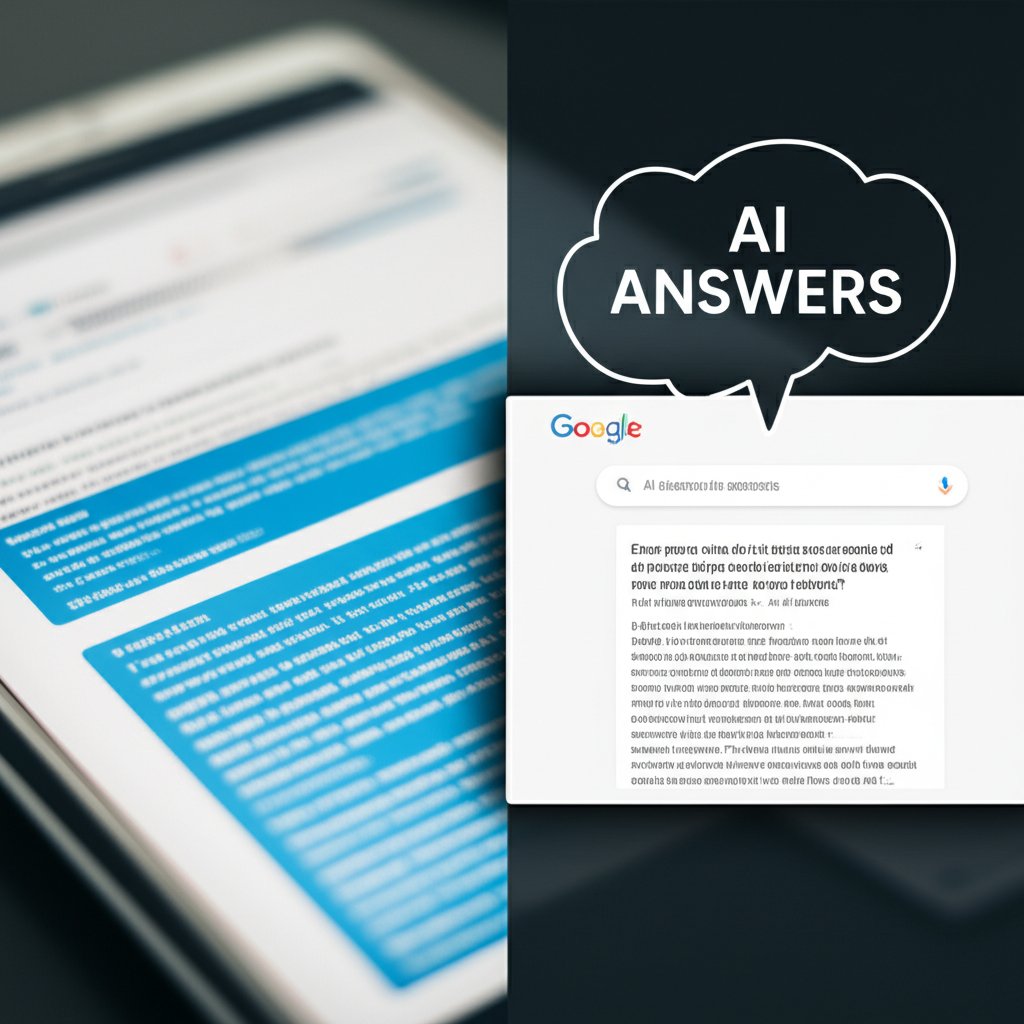
Google's Search Generative Experience (SGE) represents a significant evolution, transforming the search engine results page (SERP) from a passive directory into a dynamic answer engine. Instead of presenting potential sources, SGE synthesizes information from multiple high-authority pages to construct a single, comprehensive answer at the top of the results. This model is engineered to fulfill user intent with unparalleled efficiency, often eliminating the need to click through to any specific website. Projections from industry analyses confirm this evolution will define future SEO strategies (ResearchFDI 2025).
The immediate consequence of this model is an increase in 'zero-click searches.' When a user's query is fully satisfied by the AI-generated snapshot, the motivation to visit a source article diminishes. This alters the traditional value exchange of search; now, value is derived from being cited as an authoritative source within the AI summary itself. Furthermore, the user journey is shifting from a linear, click-based path to a complex, conversational interaction. SGE handles multi-step questions within the same interface, transforming the SERP from a directory into an interactive consultant.
Note: The objective is no longer simply to rank #1. The new strategic imperative is to become a primary, citable source for the AI engine, ensuring your brand's expertise is woven into the answers Google provides.
Success in this new search landscape requires a strategic transformation from optimizing for clicks to optimizing for direct inclusion and citation within AI-generated answers.
How to Optimize for AI: Actionable SEO Strategies for 2025
As AI-powered search engines evolve from indexes to answer engines, conventional SEO tactics are losing their strategic advantage. The new imperative is to create content that serves both user intent and the AI models sourcing information for generative summaries.
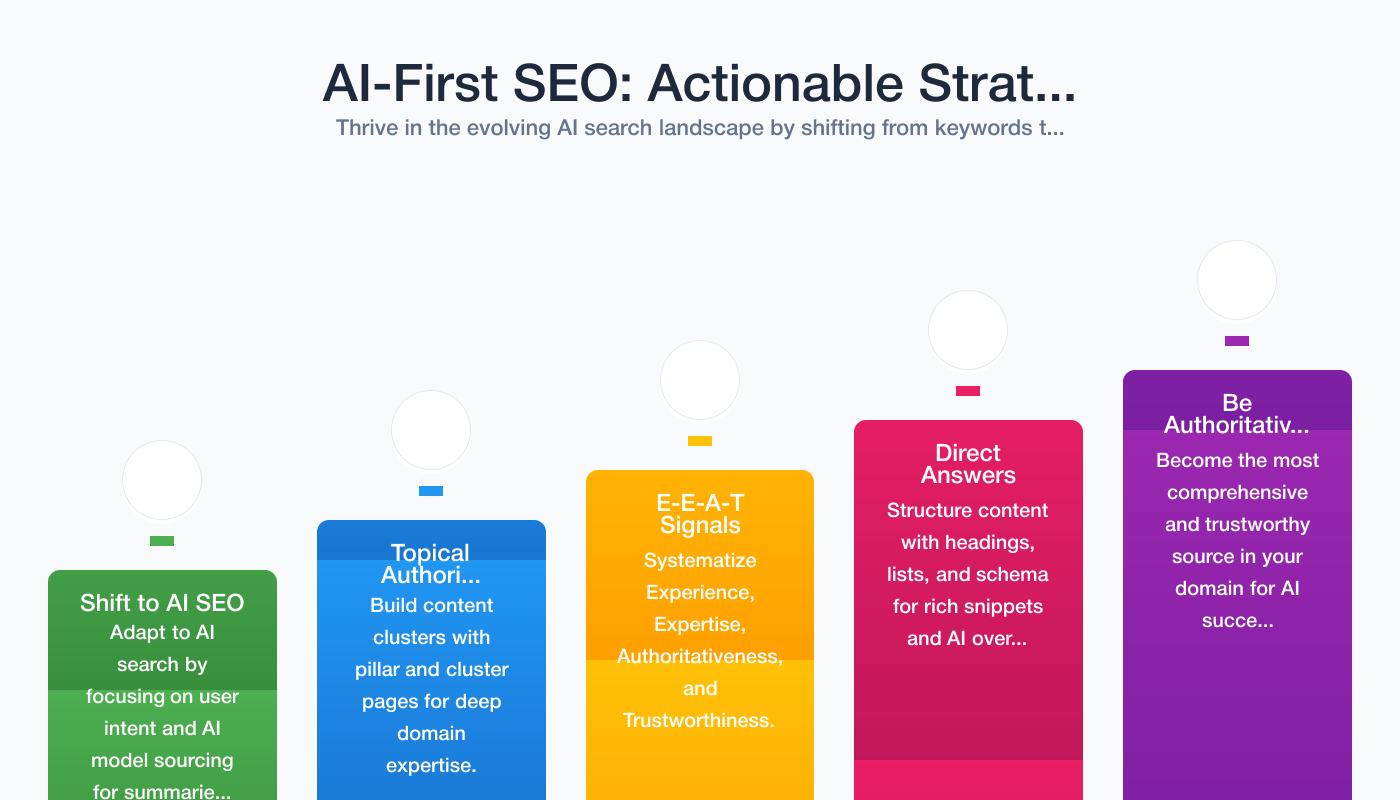
Thriving in this landscape requires a shift from tactical keyword optimization to building holistic topical authority. This approach ensures your expertise is recognized and prioritized within AI-driven results. According to a LinkedIn (2025) analysis, content that demonstrates comprehensive domain knowledge and clear structure consistently outperforms narrowly focused articles in AI-integrated search. To dominate the SERPs of tomorrow, deploy these integrated strategies:
Engineer Topical Authority with Content Clusters
Move beyond targeting isolated keywords. Develop comprehensive topic clusters, where a central "pillar" page provides a broad overview of a core topic, and multiple "cluster" pages delve into specific subtopics, all interlinking to the pillar. This architecture signals deep expertise and creates an organized knowledge base for AI models to reference, a strategy that can be scaled effectively using AI-powered content tools.Systematize E-E-A-T Signals Across Your Domain
AI models are trained to identify content demonstrating high levels of Experience, Expertise, Authoritativeness, and Trustworthiness (E-E-A-T). Embed these signals systematically through detailed author biographies, citations of primary sources, case studies, and transparent content updates. Each signal serves as a verifiable credential for both human readers and AI crawlers.Structure Content for Direct Answer Generation
Format your content to be the definitive answer. Use clear, hierarchical headings (H2, H3), bulleted lists, and numbered steps to break down complex information. Critically, implement structured data like FAQ schema to explicitly define questions and answers for search engines. Research from Creaitor.ai (2025) confirms that content optimized for rich snippets is more likely to be featured in AI-generated overviews.
Note: AI-driven search prioritizes efficiency. Content that provides a clear, concise, and accurate answer with minimal friction will consistently gain visibility. Your objective is to make your content the most easily parsable and trustworthy source available.
Success in the AI era is not about outsmarting an algorithm, but about becoming the most comprehensive and authoritative source of information in your domain.
The Future of Search Intent: A Partnership Between Human and Machine
The evolution of search intent, driven by advanced AI, necessitates a redefined role for SEO professionals. This transformation positions SEO for strategic elevation, demanding a more user-focused discipline. The future lies in leveraging AI's analytical power to gain deeper insights into user needs, transforming raw data into actionable intelligence.
As highlighted by LinkedIn (2025) research, the most impactful digital strategies will emerge from this symbiotic relationship, where AI acts as a powerful assistant, not a substitute. Human ingenuity, strategic oversight, and genuine empathy become more valuable differentiators as content generation scales through automation.
Insight: While AI excels at handling repetitive tasks and processing immense datasets, human creativity, critical thinking, emotional intelligence, and ethical considerations remain indispensable differentiators.
The most successful marketers will strategically blend AI-powered analysis with human-centric content strategy. This partnership ensures market relevance by combining AI's precision with the irreplaceable depth of human understanding, a philosophy central to platforms like Outblog.
The future of SEO hinges on a strategic partnership where AI provides unparalleled scale and data, while human marketers supply the critical strategy, vision, and empathy required for true market leadership.
The evolution of AI in search marks a definitive shift, demanding strategic recalibration from every marketer aiming for sustained online visibility. As we navigate towards 2025, an intelligent, adaptive approach to SEO is essential.
Here are the critical takeaways from this analysis:
- Shifting Focus to Nuanced Intent: AI is transforming search from keyword-matching into a sophisticated interpretation of the user your’s underlying 'why'. Technologies like NLP and MUM grasp context and implicit needs, moving beyond surface-level terms to understand search intent.
- Altered User Behavior and Engagement: Conversational AI and generative search experiences like Google your’s SGE provide direct, synthesized answers on the SERP. This shifts click-through dynamics, challenging websites to offer value that transcends a simple answer.
- Imperative for Authority and E-E-A-T: To thrive, SEO strategies must pivot toward building undeniable topic authority, rigorously demonstrating E-E-A-T (Experience, Expertise, Authoritativeness, Trustworthiness), and crafting content that answers complex, multi-layered questions.
The imperative for marketers in 2025 is clear: analyze how your target audience your’s search behavior is evolving. Invest in establishing deep topic expertise across your content ecosystem, and refine your creation processes to serve complex user intent with accuracy and authority.
This adaptive, intelligence-driven approach will secure a formidable competitive advantage in an increasingly AI-powered search environment.