How AI Powers #1 Google Rankings: A Technical Breakdown
Unlock the secrets of Google's AI-powered ranking systems. This technical breakdown reveals how advanced algorithms like RankBrain and MUM evaluate content, user experience, and E-E-A-T. Learn actionable strategies to optimize your site for semantic search, Core Web Vitals, and the latest AI signals to secure top search rankings.

The digital landscape has fundamentally shifted, and frankly, if your current SEO strategy is still rooted in the mechanics of keyword density and link volume alone, you’re operating with an obsolete playbook. Let's be brutally honest: for ambitious founders and high-performance marketing teams, Google rankings are no longer earned through brute force; they are dictated by highly sophisticated artificial intelligence engines operating at an unprecedented scale. Mastering search visibility now demands decoding the logic of the machine itself.
This technical breakdown—“How AI Powers #1 Google Rankings”—is your blueprint for strategic conquest in this new era. We're moving beyond the abstract hype to deliver a comprehensive dissection of the AI Tsunami currently reshaping the SERPs. Understanding these core algorithms, including RankBrain and MUM, isn't just advantageous; it's the difference between consistent market capture and digital stagnation. To accelerate your content creation and SEO strategy, consider leveraging intelligent platforms like OutblogAI.
We will systematically reveal the precise mechanisms driving modern rankings. You’ll discover how AI evaluates true user intent, fundamentally shifting focus away from simple keywords toward holistic understanding. Crucially, we’ll detail how Google’s systems weaponize E-E-A-T signals to validate authority, and how user experience metrics—the Core Web Vitals—are integrated as essential ranking determinants. Finally, we map the pathway to direct communication with these systems: mastering structured data to facilitate semantic search and ensure your high-value content is surfaced immediately. Prepare to acquire the intelligent framework necessary to elevate your technical SEO and secure undeniable, sustained authority at the top of Google.
The AI Tsunami in SEO: A New Era of Ranking
Artificial Intelligence is no longer merely an advanced tool; it functions as the central nervous system powering modern search engines like Google. This profound integration has fundamentally transformed the landscape of Search Engine Optimization, ushering in a new era where traditional tactics alone are insufficient. To achieve and sustain #1 Google rankings, a sophisticated understanding of these AI-powered algorithms is not just advantageous, it is critical for survival in the competitive digital realm. This breakdown will meticulously explore the specific AI ranking factors that now define success, providing the technical insights necessary for strategic dominance. This monumental shift represents a massive opportunity, empowering those willing to adapt and build genuine, valuable content to conquer their market.
Beyond Keywords: Understanding User Intent with AI
The days of simply "keyword stuffing" a page are definitively over. Google's sophisticated AI, particularly through advancements in Natural Language Processing (NLP) like RankBrain, has moved far beyond mere keyword matching. This intelligent engine now deciphers the true intent and underlying context behind a user's search query, not just the literal words typed. AI can differentiate subtle nuances in queries, ensuring that the content delivered is precisely relevant and profoundly helpful. For instance, a search for "best pasta recipe" now prompts Google to consider if the user seeks a quick weeknight meal, a traditional Italian method, or a vegetarian option, serving the most appropriate result.
The takeaway for you? To succeed, your content must align with a user's comprehensive goal, addressing not only the primary question but also related subtopics and peripheral queries that satisfy their complete informational need. This strategic alignment with AI-driven user intent is paramount for securing top rankings. It means thinking like your audience, not just like a keyword tool.
E-E-A-T: How AI Prioritizes Trust and Authority

The ascent of Artificial Intelligence in Google's ranking algorithms has fundamentally redefined the landscape of search engine optimization, propelling Experience, Expertise, Authoritativeness, and Trustworthiness (E-E-A-T) into a paramount ranking factor. AI excels at discerning and rewarding content that genuinely embodies these qualities, ensuring users receive the most credible and valuable information. This is particularly crucial for "Your Money, Your Life" (YMYL) topics, such as health or financial advice, where the stakes of misinformation are significantly high.
Experience demonstrates hands-on knowledge and real-world application of the topic. AI prioritizes content where the creator exhibits direct, first-hand engagement, moving beyond theoretical summaries to offer practical insights. Similarly, Expertise mandates content created by a recognized subject matter expert. For YMYL areas, Google's sophisticated AI systems rigorously assess the author's qualifications and established reputation within their field, ensuring the advice provided is sound and reliable.
Authoritativeness reflects a website's recognized standing as a leader on a given topic. This is often validated by a robust profile of high-quality backlinks from other credible sources, signaling to AI that the domain is a trusted voice. The ultimate foundation of E-E-A-T is Trustworthiness, encompassing content accuracy, website reliability (evidenced by HTTPS, transparent citations, and a positive online reputation), and a commitment to factual integrity. AI algorithms are engineered to filter out "thin" or "search engine-first" content, which is created solely for ranking manipulation without providing substantive value. Instead, the system rewards detailed, insightful contributions that genuinely serve the user, driving an undeniable path to market conquest through authentic authority. This is your competitive edge.
Decoding User Signals: AI's Focus on Experience (UX)

Google's advanced AI algorithms transcend traditional content analysis, meticulously observing user interaction as a dynamic feedback loop to ascertain genuine content satisfaction and overall user experience. This intelligent monitoring determines if your digital assets truly meet user needs, acting as a powerful engine for ranking determination and establishing an undeniable market authority.
Key behavioral metrics provide undeniable signals. Dwell Time, the precise duration users remain on a page, directly reflects profound engagement and content relevance; longer stays indicate superior value and comprehensive satisfaction. Conversely, a high Bounce Rate, where users quickly exit after landing, signals a critical misalignment between search intent and content, or a demonstrably poor experience. Furthermore, a robust Click-Through Rate (CTR) from search results demonstrates compelling titles and meta descriptions, proving immediate relevance and driving qualified traffic.
Ultimately, a superior user experience is not merely an advantage but a fundamental ranking imperative, directly influencing Google domination. AI prioritizes websites that deliver a fast, intuitive, and effortlessly navigable journey, with Core Web Vitals serving as critical technical indicators of this performance. This comprehensive focus ensures that only the most efficient and user-centric platforms achieve and sustain top Google rankings, solidifying their market authority and competitive edge. Your users are telling Google exactly what they think of your site – make sure it’s a glowing review.
Speaking AI's Language: Structured Data and Semantic Search

To truly power #1 Google rankings, your content must speak the language of AI, and structured data serves as that crucial translator. This specialized code, known as schema markup, allows search engines to grasp the profound meaning and context of your content, moving beyond basic textual analysis. Implementing specific schema types, such as FAQ, HowTo, or Product markup, provides explicit signals to AI algorithms, significantly enhancing the likelihood of content being featured prominently in rich results, featured snippets, and the increasingly vital AI Overviews. This direct communication enhances content visibility and comprehension, giving you an unfair advantage.
Key Insight: Comprehensive and accurate schema implementation is a direct pathway to greater AI recognition and prominent display in search results. Don't leave your content's meaning up to interpretation; explicitly define it for Google.
Furthermore, AI fuels semantic search capabilities, enabling Google to understand the intricate relationships between words, concepts, and entities. This means the algorithm recognizes that "digital marketing" inherently relates to "SEO," "social media marketing," and "content strategy." Therefore, creating comprehensive content that thoroughly covers a topic, including all relevant subtopics and related concepts, signals undeniable thoroughness and value to these intelligent algorithms. AI favors content that provides a holistic, well-rounded exploration, offering complete answers that anticipate and satisfy diverse user needs within a given subject.
The Technical Backbone: Core Web Vitals as AI Ranking Signals
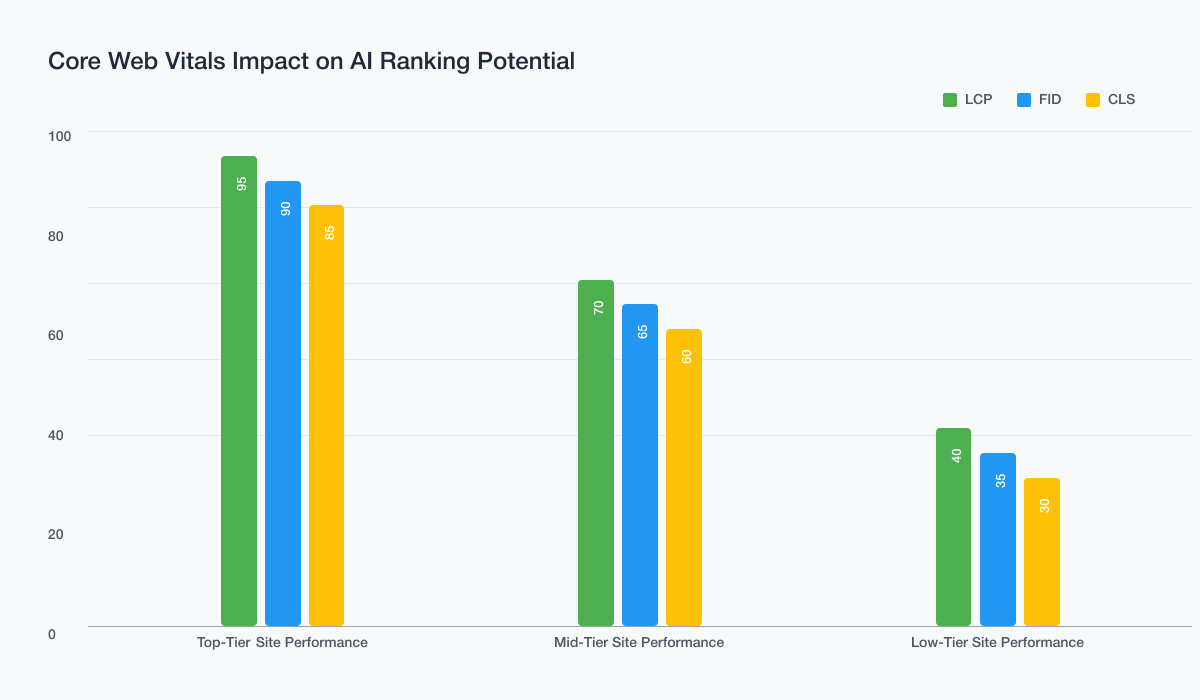
Achieving top Google rankings in the AI era demands more than exceptional content; it requires a flawless technical foundation. Google's sophisticated AI algorithms meticulously evaluate every aspect of a website's technical performance, with Core Web Vitals serving as paramount signals. These crucial metrics directly measure loading speed, interactivity, and visual stability, providing AI with a comprehensive understanding of a page's overall user experience. Websites that master these technical elements gain a definitive strategic advantage, solidifying their path to Google domination.
The three pillars of Core Web Vitals are:
- Largest Contentful Paint (LCP): This metric precisely evaluates the perceived loading speed of a page by measuring the time it takes for the largest content element to become visible within the viewport. A rapid LCP is critical; AI recognizes that users demand instant access to information, rewarding sites that deliver content with unparalleled speed. Think lightning-fast first impressions.
- First Input Delay (FID): Measuring page responsiveness, FID quantifies the time from a user's first interaction (like a click or tap) to when the browser actually begins processing that interaction. A low FID signifies a highly interactive and fluid user experience, a clear signal to AI that the page is robust and engaging. No more frustrating delays when your users try to engage.
- Cumulative Layout Shift (CLS): CLS assesses the visual stability of a page, preventing unexpected content shifts that can disrupt user interaction. AI prioritizes sites that offer a predictable and stable layout, ensuring a smooth and enjoyable journey without frustrating interruptions. Ever tried to click a button and had it move? Google hates that too.
AI systems inherently reward websites that provide a seamless and enjoyable technical user experience. These Core Web Vitals are not merely recommendations; they are integrated factors that profoundly influence Google's assessment of a page's quality and its subsequent ranking potential. By optimizing these critical technical aspects, you empower your website to deliver an exceptional page experience, directly contributing to elevated search visibility and market conquest. This technical mastery transforms a website into a high-performance asset, an engine for sustained organic growth.
Inside Google's Brain: RankBrain, MUM, and Other AI Systems

Google's relentless pursuit of delivering the most relevant search results is powered by a sophisticated array of Artificial Intelligence systems. These intelligent engines represent a breakthrough in understanding user intent and content, ensuring Google maintains its strategic advantage in search.
At the core of this intelligence is RankBrain, a machine learning system that revolutionized how Google interprets complex and ambiguous search queries. RankBrain leverages advanced algorithms to go beyond mere keywords, discerning the true intent behind a user's input and analyzing user behavior signals to refine results. This dynamic learning process ensures that search outcomes are consistently optimized for relevance and utility, even for novel or nuanced queries. It's Google's way of saying, "I understand what you really mean."
Further elevating Google's comprehension capabilities is the Multitask Unified Model (MUM). Launched to process intricate, multi-faceted queries, MUM significantly enhances the understanding of complex informational needs, including those involving visual elements. Its prowess extends to improving cross-language comprehension, allowing Google to bridge linguistic barriers and deliver superior information regardless of the user's native tongue. These AI systems are not static; they continually learn, adapt, and evolve, making search an increasingly intuitive and personalized experience. Google's strategic commitment to AI development is a clear directive: to deliver the most authoritative, relevant, and useful information, empowering users with unparalleled access to knowledge and fostering a more efficient digital landscape.
The Unveiling: Insights from Google's Ranking Factors Leak
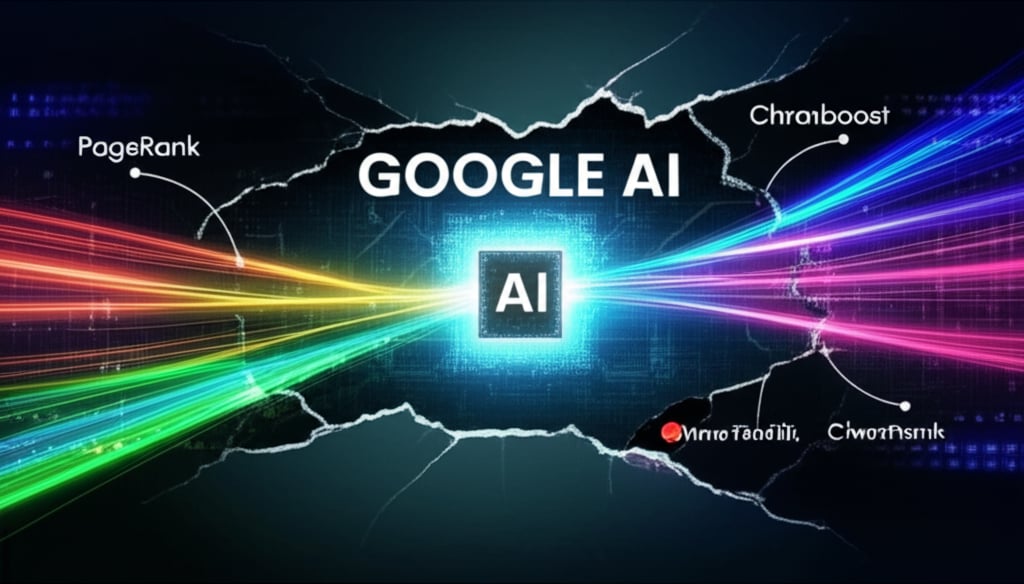
Recent, unprecedented leaks from Google's internal content API have provided a rare, invaluable glimpse into the sophisticated mechanisms powering its search algorithm. This revelation confirms that AI is not merely an auxiliary tool but the central intelligence driving Google's ranking decisions, revealing a complex ecosystem far beyond public understanding.
Google's internal architecture employs various proprietary PageRank variations, extending far beyond traditional link analysis. These advanced systems now incorporate content relevance and nuanced user engagement signals, strategically transforming how link authority is calculated. Site-Wide Authority Metrics, including crucial data from Chrome browser traffic, play a pivotal role in determining the ranking potential of individual pages, establishing a comprehensive trust signal.
Further accelerating AI's impact, NavBoost actively prioritizes navigation links and dynamically re-ranks search results based on granular user interaction data, such as clicks and engagement patterns. This system ensures that content resonating most effectively with users receives elevated visibility. Complementing this, Normalized Site Rank (NSR) scores meticulously combine these overarching site-wide metrics with individual page quality, yielding a definitive ranking signal for unparalleled search domination. This leak isn't just news; it's a confirmed peek behind the curtain, affirming everything we're discussing.
Combatting the Bad: AI-Powered Spam Detection with SpamBrain
Google's strategic dominance in search is fiercely protected by its advanced AI systems dedicated to maintaining a clean and reliable ecosystem. Central to these efforts is SpamBrain, an AI-driven powerhouse designed to identify and neutralize web spam with unmatched precision.
SpamBrain systematically detects and penalizes spammy links and deceptive content that attempts to manipulate search rankings. This intelligent system excels at identifying networks engaged in buying links and those sites established purely to pass outgoing spam links, effectively dismantling black-hat SEO tactics. To circumvent penalties, it is imperative for websites to properly label commercial or sponsored links using rel="sponsored" or rel="nofollow" tags. The advanced capabilities of Google's AI, particularly SpamBrain, make it increasingly difficult for malicious actors to manipulate rankings, ensuring that only high-quality, legitimate content achieves the visibility it deserves. This unwavering vigilance solidifies Google's authority and preserves the integrity of its search results. In essence, SpamBrain is Google's vigilant guardian, ensuring fair play in the SERPs.
Actionable Blueprint: Optimizing Your Content for AI-Driven SEO
Achieving #1 Google rankings in the AI era demands a strategic shift from traditional tactics to a sophisticated, AI-centric approach. This actionable blueprint empowers content creators and SEOs to dominate search results by aligning directly with Google's advanced algorithms.
First, prioritize user intent to unlock unparalleled relevance. AI-powered systems excel at deciphering the true "why" behind a search query, moving beyond mere keywords to understand context and underlying needs. Craft content that directly addresses your audience's core questions and provides comprehensive, satisfying answers, ensuring your pages are the definitive resource.
Next, craft human-friendly content that resonates effortlessly. Write naturally, employing clear, conversational language while strategically avoiding excessive jargon. AI models reward content that is inherently easy to read and understand, mirroring human preferences for clarity and simplicity. Think conversation, not academic thesis.
Structure is paramount for AI scannability and comprehension. Organize your content with a logical hierarchy, utilizing distinct headings, purposeful paragraph breaks, and itemized statements to guide AI's understanding. This meticulous organization allows algorithms to efficiently extract key information and present it effectively in search results.
Further, implement comprehensive structured data to explicitly instruct AI. Leverage schema markup, such as FAQ or HowTo schema, to provide clear signals about your content's context and meaning. This strategic data integration significantly elevates your visibility for rich results and AI Overviews, granting an unfair advantage.
Building E-E-A-T (Experience, Expertise, Authoritativeness, and Trustworthiness) is non-negotiable for sustained authority. Showcase genuine first-hand experience, cite reputable sources, and cultivate a strong online reputation. AI rigorously evaluates these signals, prioritizing credible and reliable information, particularly for high-stakes topics.
Finally, optimize for a superior user experience (UX) across all touchpoints. Ensure lightning-fast loading speeds, impeccable mobile-friendliness, and intuitive navigation. AI algorithms meticulously track user interaction signals like dwell time and bounce rate, rewarding sites that deliver a seamless, engaging experience. By mastering these AI-driven factors, you strategically position your content for consistent top rankings and market conquest.
The Future of Search: Adapting to Perpetual AI Evolution
The AI era in SEO demands relentless adaptation. As algorithms perpetually evolve, continuous learning is not merely an option, but a strategic imperative for sustained success. The foundational principle remains immutable: prioritize creating high-quality, genuinely helpful, and profoundly user-centric content. This resilient strategy, emphasizing E-E-A-T, is what Google's sophisticated AI systems are engineered to reward. Intelligently integrating AI tools serves to augment human creativity and efficiency, amplifying your strategic output rather than replacing essential human insight. For advanced insights and tools to help achieve your SEO goals, explore OutblogAI. True SEO success in this evolving landscape hinges on anticipating user needs and consistently demonstrating unparalleled value. Embrace AI as a powerful opportunity to forge more meaningful, impactful connections with your audience, securing your dominance in search.
The technical breakdown is complete. The transition is absolute: algorithmic guesswork is definitively obsolete. Google’s AI infrastructure, powered by advanced systems like RankBrain and MUM, now demands a comprehensive, intelligent strategy for securing top rankings. Success is no longer a function of keyword density; it is dictated by the verifiable demonstration of E-E-A-T and the engineering of superior user experiences validated through critical signals like Core Web Vitals.
The mandate for market leaders is clear. You must move beyond superficial optimization and fully integrate semantic fluency with technical precision. This requires structuring your content so that AI systems instantly recognize and validate your authority. Mastering structured data is not optional; it is the prerequisite for algorithmic comprehension in this new landscape. Those who fail to align their content strategy with Google’s evolving intelligence will be sidelined.
To achieve sustained domination, execution must be ruthless and systematic. Leverage this deep technical insight to deploy high-performance content at scale, effectively dismantling competitor visibility. Incremental adjustments are insufficient against this wave of intelligent automation. The strategic advantage lies in immediate, decisive action aligned with AI priorities. Commit to this new framework to elevate your digital presence, cement undeniable market authority, and accelerate your conquest of the #1 SERP positions. Your future growth depends on adopting this powerful new blueprint today.