9 Proven AI Strategies for Rapid Content Scale & Quality
Discover 9 actionable AI strategies to exponentially scale your content production while maintaining exceptional quality. Learn to leverage AI tools for ideation, writing, and personalization, ensuring your brand's voice remains authentic and authoritative in a crowded digital landscape.


A common misconception in content marketing is that scale inevitably compromises quality. Many organizations operate under the assumption that accelerating content production inherently dilutes a brand's authenticity and erodes market trust. This traditional viewpoint, however, overlooks the transformative capabilities of strategically implemented artificial intelligence, which redefines the parameters of content creation. This new wave of generative AI offers unprecedented scale. The modern content imperative demands both unprecedented velocity and an unyielding commitment to quality. The perceived tension between these objectives is no longer a barrier but a strategic opportunity.
This guide reveals how to achieve both rapid content scale and uncompromised quality through intelligent AI integration, establishing your brand as an authority in a competitive digital landscape.
Within this blueprint, you will discover a framework for integrating AI across the entire content lifecycle, from ideation and research to drafting, personalization, and quality control. We will explore the critical role of establishing a robust human-in-the-loop workflow, ensuring human expertise consistently guides and refines AI-generated output to preserve an authentic brand voice. You will learn to engineer effective prompts and build detailed content frameworks that align with your strategic objectives. This guide also shows how to leverage specialized AI tools to accelerate ideation, multiply content assets across various formats, and personalize engagement for different audience segments. This approach ensures every piece of content is not just produced efficiently, but is engineered for maximum impact, driving measurable return on investment and a decisive competitive advantage.
TL;DR
Scaling content production is a primary objective for market leaders, but maintaining quality and brand integrity is non-negotiable. The strategic fusion of AI for efficiency and human oversight for quality is the path to achieving both. This Human-in-the-Loop model is essential for maintaining the authenticity required for market authority, a framework validated by reporting from thinklikeapublisher.com (2023). This approach transforms content from a manual effort into a high-performance engine for growth.
- Establish Strategic Oversight: Implement a Human-in-the-Loop workflow where experts guide ideation, refine AI drafts, and provide final approval to ensure brand alignment and factual accuracy.
- Systemize AI Inputs: Develop a robust prompt library and a detailed brand style guide. These assets serve as the control mechanism for the AI, ensuring consistent tone, voice, and quality.
- Utilize Specialized Tools: Deploy a suite of specialized AI tools for each stage of the content lifecycle—from keyword research and outlining to drafting, optimization, and repurposing. Some platforms like OutblogAI integrate these capabilities into a single workflow.
- Implement Quality Control: Create a multi-stage review process that combines automated checks for SEO and grammar with human verification for nuance, strategic messaging, and originality.
- Measure Performance: Continuously track the performance of AI-assisted content against key business metrics to refine prompts, optimize workflows, and demonstrate a clear return on investment.
Successfully scaling content requires a disciplined framework where human strategy directs the power of AI automation to achieve unparalleled results.
The New Content Imperative: Scaling Without Sacrificing Soul
Modern content teams face an unprecedented demand for high-quality content across all digital channels. This escalating velocity requirement often collides with the imperative to maintain a distinct brand identity and authoritative voice.
While AI offers a powerful solution for increasing content volume, it introduces a significant risk: the dilution of brand authenticity. In a digital landscape saturated with generic text, a unique and trustworthy brand voice emerges as a critical competitive advantage. Without proper strategic oversight, unedited AI content risks triggering algorithmic penalties and eroding customer trust.
Note: Poor quality, unedited AI content can suffer reduced visibility in critical AI-powered search results. As Bliss Drive (2023) highlights, the future demands hybrid content workflows that blend AI efficiency with human editorial quality to prevent sounding robotic or off-brand.
In the age of AI, the primary challenge is not just to produce more content, but to scale production intelligently while preserving the unique brand voice that connects with human audiences.
Strategy 1: Establish a Human-in-the-Loop Command Center
While the promise of fully autonomous content creation is compelling, market leaders understand that strategic human oversight is the key to unlocking AI's true potential. This is not about replacing human creativity but augmenting it for increased scale.
The Human-in-the-Loop (HITL) model is a command structure where AI executes the heavy lifting—research, data synthesis, and first-draft generation—while human experts direct strategy and refine the final output. This hybrid approach ensures that content scales efficiently without sacrificing the nuance, empathy, and strategic insight that AI alone cannot replicate. It transforms the content process from a linear, manual task into a powerful, collaborative system.
This operational framework is essential for maintaining brand integrity and velocity. According to an analysis by thinklikeapublisher.com (2024), integrating AI introduces new review and approval steps that demand a formal project management function to prevent bottlenecks. A dedicated manager is required to orchestrate the workflow and maintain quality at scale.
To implement this command center, establish clear human intervention points:
- Strategic Prompt Engineering: A content strategist or SEO specialist defines the core objective, target audience, keywords, and unique angle. This initial directive governs the trajectory of the AI's output.
- First-Draft Triage & Enhancement: An editor reviews the AI-generated draft, focusing on narrative structure, logical flow, and core messaging to ensure the foundation is strategically sound.
- Subject Matter Expert (SME) Verification: An expert in the field validates all factual claims, data points, and technical assertions. This step is non-negotiable for building authority and trust.
- Final Brand Voice & Polish: A copyeditor or brand manager performs the final review, meticulously aligning the tone, style, and vocabulary with established brand guidelines.

Implementing a structured Human-in-the-Loop command center is the foundational requirement for transforming AI from a simple tool into a strategic engine for market leadership.
Strategies 2 & 3: Master Prompts and Build Your Content Framework
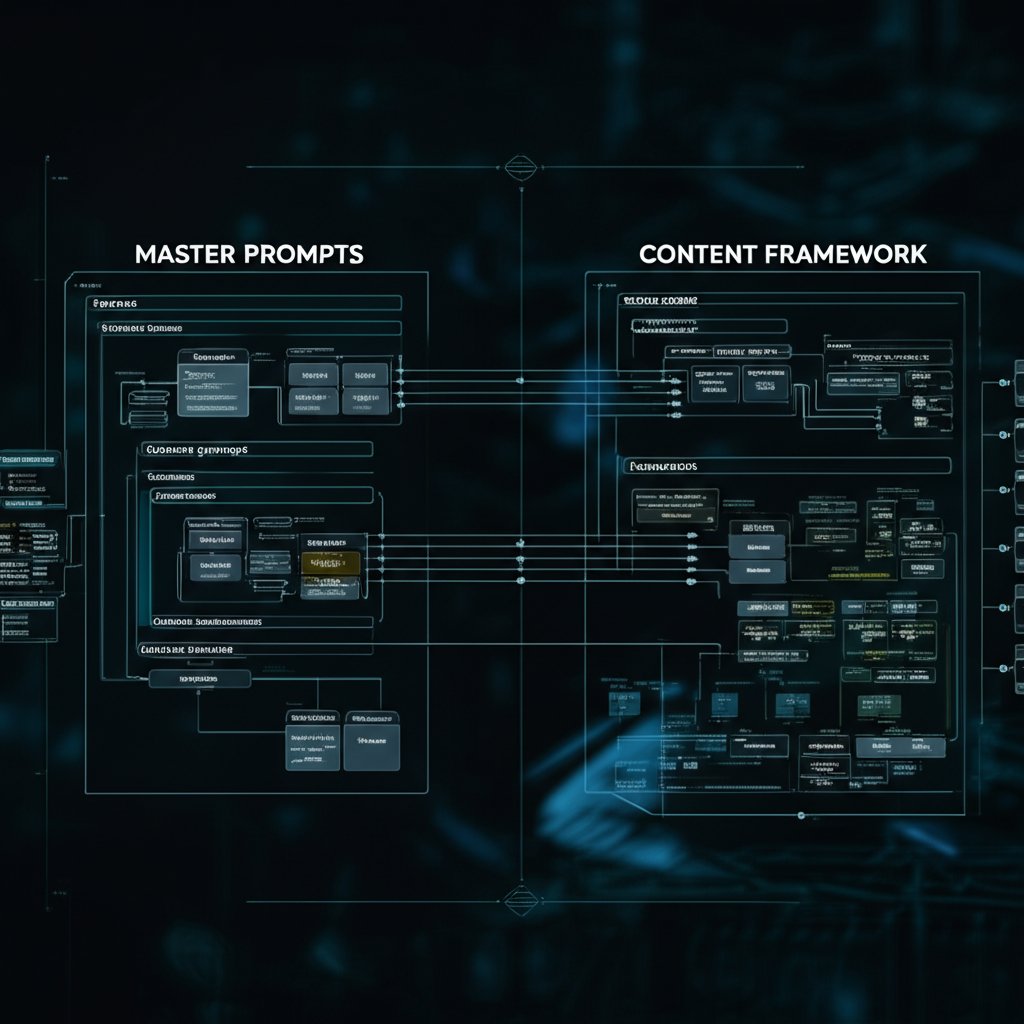
Generic AI outputs are the direct result of generic instructions. To achieve market-leading quality at scale, you must architect the AI’s inputs with strategic precision.
This is driven by two integrated strategies. The first is developing master prompts—detailed, reusable templates that specify the target audience, desired tone, key benefits, and required content structure. The second is establishing a comprehensive content framework by documenting your brand’s complete style guide and configuring your AI tools with these foundational rules.
Investing in this foundational setup yields significant returns. As noted by industry experts at thinklikeapublisher.com (2023), successful AI configuration requires detailed input on brand voice and structure derived from a brand's most successful content. An upfront investment of two to four days in meticulous configuration can reduce downstream editing time by more than half.
This level of detailed instruction removes ambiguity and forces the AI to operate within the precise guardrails of your brand and content strategy.
# Master Prompt Template: Article Section

Role: "Act as an expert B2B marketing strategist with 15 years of experience in enterprise [SaaS](https://www.salesforce.com/saas/)."

Topic: "Explain the strategic value of integrating [CRM data](https://solutionsreview.com/crm/2025/01/05/best-crm-companies-to-know-about/) with [marketing automation platforms](https://digitalmarketinginstitute.com/blog/the-ultimate-guide-to-marketing-automation)."

Audience: "Marketing VPs at mid-market tech companies (200-1000 employees). They are technically savvy but time-poor, focused on ROI and team efficiency."

Tone: "Authoritative, professional, and strategic. Avoid overly casual language or marketing hype. Focus on tangible business outcomes."

Structure:
  - Start with a compelling statistic about data integration ROI.
  - Explain 3 core benefits (e.g., hyper-personalization, improved lead scoring, streamlined reporting).
  - Conclude with a forward-looking statement on the future of integrated data strategies.

Constraints:
  - Do not use the terms "game-changer" or "synergy."
  - Keep sentences under 25 words on average.
  - Ensure all claims are backed by logical reasoning.
Ultimately, the quality of AI-generated content is a direct reflection of the quality and detail of human instruction, making sophisticated prompts and documented frameworks non-negotiable for achieving market authority.
Strategies 4 & 5: Supercharge Ideation and Multiply Content Assets

Strategies 6 & 7: Personalize at Scale and Specialize Your Toolkit
Strategy 8: Implement a Rigorous Multi-Stage Quality Control Process
Scaling content production with AI is a strategic imperative, but unchecked automation introduces significant brand risk. Market leadership is achieved only when velocity is matched by verifiable quality.
A multi-stage quality control process is the non-negotiable framework for mitigating these risks. It systematically combines the efficiency of automated checks with the nuanced judgment of expert human reviewers to refine AI-generated drafts into authoritative assets. This disciplined process ensures every article is factually accurate, on-brand, and editorially polished.
This layered approach integrates automated tools with specialized human reviews for technical accuracy and brand alignment, reflecting a best practice for enterprise-level content operations, as highlighted in analyses by firms like Bliss Drive.
- Stage 1: Automated Triage. The initial AI draft is processed through a series of automated checks to enforce baseline standards. This includes plagiarism detection, grammar and syntax checkers, and custom style guide adherence tools to filter out fundamental flaws before consuming human resources.
- Stage 2: Specialized Human Review. Content that passes the automated check advances to a parallel review process by human experts. A subject-matter expert (SME) validates all technical claims and data against a factual accuracy checklist. Concurrently, a brand strategist reviews the piece for tone, voice, and strategic alignment.
- Stage 3: Executive Override for High-Stakes Content. For any content touching on sensitive or regulated topics—such as financial, legal, or health advice—a senior stakeholder must have final sign-off authority. This human override policy is a mandatory failsafe to protect the organization from liability and reputational damage.
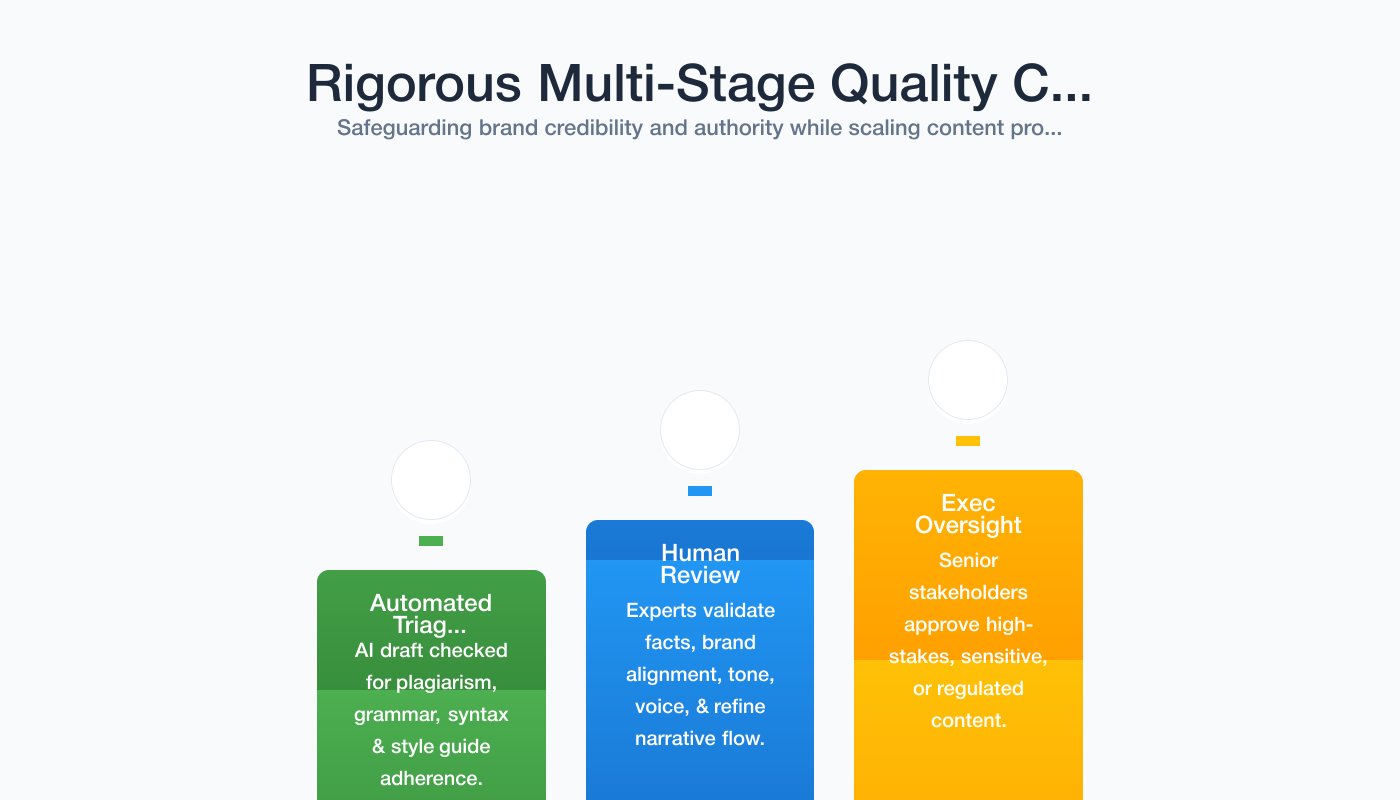
A systematic quality assurance workflow is the critical control system that transforms raw AI output into a strategic engine for building market authority.
Strategy 9: Measure Performance, Analyze Insights, and Iterate
A robust AI content strategy demands a continuous, data-driven feedback loop to validate its efficacy and demonstrate a tangible return on investment. Scaling production is only a strategic success if engagement and quality metrics are consistently maintained or improved.
It is crucial to track both the volume of content produced and its direct performance. This involves comparing key metrics such as time on page, conversion rates, and share rates between AI-assisted content and fully human-created pieces. Calculating the ROI of your AI investment requires tracking cost reductions, efficiency gains—often a 3-10x production increase per person—and the measurable impact on revenue.
- Track Key Metrics: Monitor engagement metrics like click-through rate, time on page, and conversion rate to identify what resonates with your audience.
- Benchmark Performance: Compare the performance of AI-assisted content against human-created benchmarks to isolate the impact of automation.
- Calculate ROI: Quantify the financial impact through content cost reduction (potentially 60-80% savings) and overall efficiency gains.
- Refine & Optimize: Use performance data to identify patterns in top-performing content, refining prompts and optimizing the balance between human and AI involvement.
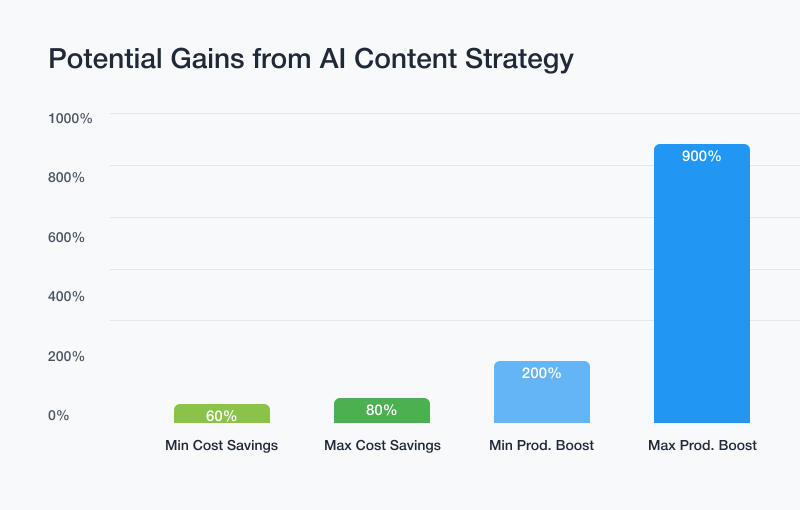
Continuously measuring content performance and calculating ROI transforms an AI content program from an experiment into a predictable, optimizable business driver.
The strategic integration of AI is a strategic imperative for any entity aiming for rapid content scale and uncompromised quality. By systematically deploying the methodologies outlined, organizations can transform their content operations and establish an authoritative presence in the digital sphere.
Key takeaways from these strategies include:
- Establish a Human-in-the-Loop Workflow: Maintain strategic human oversight to guide and refine AI outputs, ensuring content remains authentic, accurate, and aligned with your brand’s voice and objectives.
- Master Prompts and Frameworks: Develop comprehensive prompt libraries and detailed brand style guides. These foundational elements are critical for training AI to generate consistent, high-quality content that adheres to specific stylistic and strategic parameters.
- End-to-End AI Integration: Leverage AI across the entire content lifecycle—from ideation and research to drafting, personalized delivery, and rigorous quality control. This holistic application accelerates production while elevating strategic impact.
The future of content leadership resides in leveraging AI as a strategic partner, not merely as a tool. The true competitive advantage emerges when these powerful capabilities are meticulously orchestrated within a cohesive, integrated framework. By adopting this approach, organizations can move beyond fragmented efforts and harness AI's transformative power to turn expertise into authority, which is the core mission behind our AI content strategies.