A Simple Blogging System for Time-Strapped Small Business Owners
Businesses with active blogs generate 67% more leads, but finding the time feels impossible for most small business owners. The problem isn't a lack of hours; it's the lack of a system. This article provides a straightforward, three-part system for busy entrepreneurs to plan, create, and publish high-impact blog content consistently, without the overwhelm. We'll move beyond a simple list of tools to a repeatable process that turns your blog into a reliable growth engine, even with just a few hours to spare each week. This is your roadmap to stop 'winging it' and start seeing measurable results.


Imagine boosting your leads by an astounding 67%. That's the measurable impact an active blog delivers, yet for many small business owners, consistent blogging feels like an impossible dream. The allure of increased visibility and authority is clear, but the reality of limited time often transforms this powerful growth engine into a source of overwhelm.
The truth is, the challenge isn't a deficit of hours; it's the absence of a streamlined, repeatable system. You don't need more time in your day to unlock your blog's full potential; you need a strategic framework. This article will dismantle the myth that powerful content requires endless hours, revealing how to transform your blog into a consistent lead-generating asset.
We're moving beyond superficial tool lists to equip you with a straightforward, three-part system designed for busy entrepreneurs. This process will empower you to consistently plan, create, and publish high-impact blog content, even with just a few hours to spare each week. Consider this your definitive roadmap to stop 'winging it' and start driving measurable results, establishing your undeniable authority in your niche.
A strategic, repeatable system is the key to transforming your blog from an overwhelming chore into a consistent lead-generating asset.
Why Blogging Feels Impossible (And How a System Fixes It)

Many small business owners acknowledge the immense potential of blogging but find it perpetually out of reach. The desire to connect with customers and build authority often clashes head-on with the daily demands of running a business. "Finding the time to blog... can be brutal," as Endeavor Creative aptly puts it, a sentiment echoed by countless entrepreneurs.
Yet, the payoff for consistent blogging is undeniable. Businesses with active blogs consistently generate 67% more leads than those without, a compelling statistic reported by DemandMetric. This isn't just about traffic; it's about converting interest into tangible business growth.
The core challenge isn't a lack of desire or understanding of the benefits. It's the sheer time commitment. A single, high-quality blog post—one that genuinely stands a chance of ranking and engaging—can easily demand eight or more hours to craft. With the average first-page ranking post on Google hovering around 1,890 words (Backlinko), this isn't a task to be squeezed into a spare half-hour.
Note: The perception that you need more time is a common trap. The real breakthrough comes from implementing a smarter, more streamlined approach.
Success isn't about conjuring extra hours in your day. It’s about building a robust system that integrates a clear strategy, effective tools, and an efficient workflow. This article introduces a three-pillar framework designed to transform blogging from an overwhelming chore into a consistent, manageable asset for time-strapped entrepreneurs.
By adopting a simple system focused on strategy, tools, and workflow, even the busiest business owner can turn their blog into a consistent lead-generation engine.
Pillar 1: A Simple Strategy to Ensure Every Post Has a Purpose
The most common stumbling block for small business owners starting a blog is the blank page and the perennial question: "What should I write about?" Without a clear direction, blogging quickly devolves into sporadic efforts that yield minimal returns. This first pillar eliminates that uncertainty by rooting every post in a defined business objective.

Before writing a single word, define your core business goals. Are you aiming to:
- Generate more qualified leads for a specific service?
- Build your brand's authority as an industry expert?
- Educate existing customers to reduce support inquiries?
- Drive traffic to specific product pages?
As Endeavor Creative highlights, "Blogging is a business strategy... if my goal is to get more traffic... I’m only concerned about writing on topics that will help me achieve that goal." Your strategy acts as a filter, ensuring every content effort serves a measurable purpose.
Once goals are clear, shift focus to your target audience. What are their most frequent questions, pain points, or topics of interest related to your business? List the top 10 questions you regularly hear from customers or prospects. This initial list forms the backbone of your content ideas, ensuring relevance and immediate value.
Creating Your Content Calendar
With your goals and audience questions in hand, organize your topics into a simple content calendar. You don't need complex software; a basic spreadsheet works perfectly.
- List Topics: Populate the sheet with your identified audience questions and goal-aligned ideas.
- Assign Goals: For each topic, explicitly state which business goal it supports.
- Set Dates: Plan topics for one month in advance, assigning target publication dates.
- Track Status: Add a column for "Status" (e.g., Draft, Review, Published) to monitor progress.
Note: The aim here is clarity, not complexity. Your entire content strategy should ideally fit onto a single page, providing a bird's-eye view of your blogging efforts. This minimalist approach, using tools like Trello or Asana for organization, helps avoid the paralysis of over-planning and keeps you focused on execution.
Research confirms that a well-defined plan is crucial. "Blogging without a plan makes it very difficult to find the time to do it," according to Endeavor Creative. This structured approach helps ensure your blog becomes a proactive asset, not a reactive time sink.
A goal-oriented strategy is the foundational step to transforming a blog from a time-consuming hobby into a predictable business asset.
Pillar 2: Choosing Your Time-Saving Tech Stack
Navigating the myriad of digital tools can feel overwhelming for any small business owner. The core principle for your blogging system is straightforward: your technology should serve you, not the other way around. The goal is to minimize time spent on technical tasks and maximize your focus on creating valuable content. A lean, effective tech stack removes friction, ensuring you're not constantly battling complicated software.
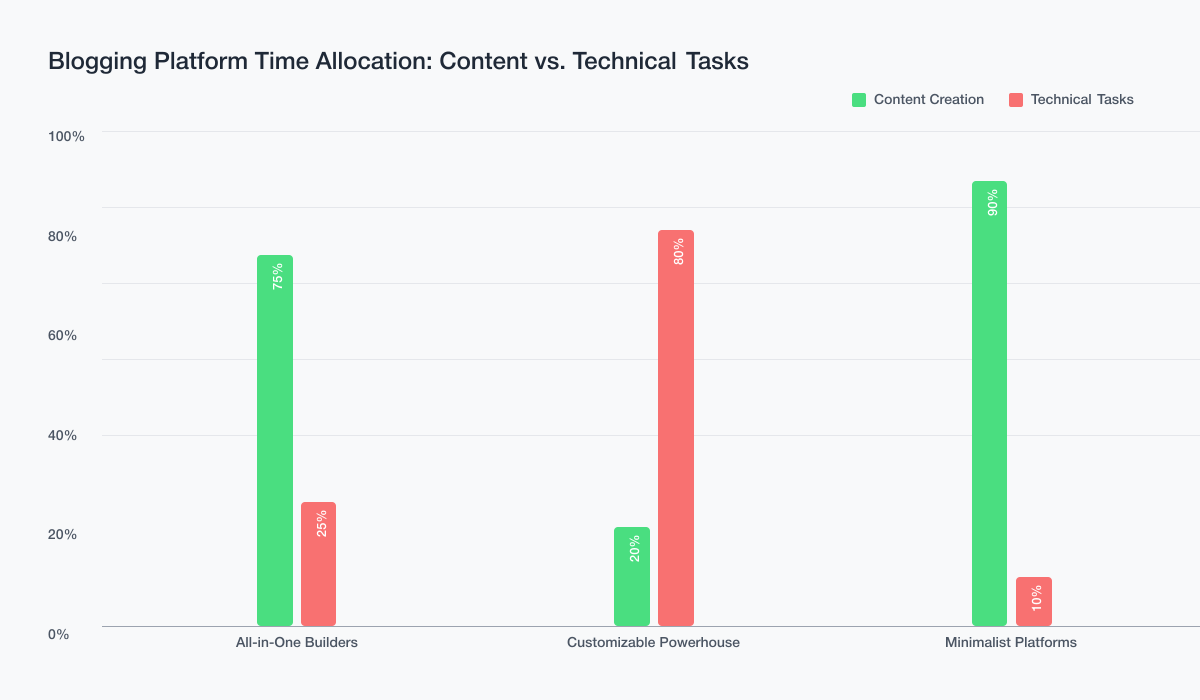
Selecting the right platform depends heavily on your technical comfort and long-term aspirations. We can categorize options into three main types:
| Item | Use Case | Pros | Cons | KPI (Key Performance Indicator) |
|---|---|---|---|---|
| All-in-One Builders | Quick setup, minimal technical skill | Intuitive drag-and-drop, hosting included, integrated SEO | Less customization, potential vendor lock-in | Time to launch, ease of updates |
| Customizable Powerhouse | Scalability, full control | Endless features via plugins, strong SEO capabilities | Steep learning curve, maintenance overhead | Customization potential, community support |
| Minimalist Platforms | Pure writing focus, distraction-free | Super simple, fast loading, no coding needed | Limited features, less design flexibility | Writing efficiency, page load speed |
For most small businesses, All-in-One Builders like Wix or Squarespace offer the ideal balance. They require zero coding knowledge to create professional-looking blogs, as highlighted by Vistaprint. Wix, in particular, hits a sweet spot between powerful features and genuine ease of use (Vistaprint). While WordPress powers 43% of all websites, its extensive plugin ecosystem can sometimes demand 80% of your time fiddling with the site and only 20% writing, a frustration noted by Magherally Lens. Conversely, minimalist platforms such as Mataroa or Bear let you concentrate purely on your words, free from trackers or complex themes (Magherally Lens).
Beyond your core platform, equip yourself with a few essential support tools to polish and promote your content. These typically include an AI writing assistant for refinement, a design tool for visuals, and an SEO plugin for visibility.
- Grammarly: This tool acts as an indispensable editor, catching grammar mistakes, suggesting stylistic improvements, and ensuring your writing is clear and engaging.
- Canva: A drag-and-drop interface makes design accessible to everyone. Canva is a game changer for non-designers, allowing you to create stunning visuals for your blog posts without needing advanced graphic design skills (Crystal Vision).
- Yoast SEO (or similar built-in tools): An SEO plugin guides you in optimizing your content for search engines, helping you choose keywords, improve readability, and manage technical SEO elements effectively.
The key is to avoid 'shiny object syndrome,' where you constantly chase the latest new tool. A simple, integrated stack of 3-4 powerful tools is far more effective than a dozen disconnected ones that add complexity rather than reduce it. Focus on tools that genuinely automate tedious tasks.
Note: Resist the urge to add tools for every conceivable need. Each new piece of software introduces another learning curve and potential integration headache. Prioritize core functionality.
By strategically selecting a minimalist toolset, you automate tedious tasks and remove technical barriers, freeing you to focus on creating truly valuable content.
Pillar 3: A Realistic Workflow That Fits Your Schedule
The persistent challenge for time-strapped small business owners isn't finding time to blog; it's creating it. Rather than waiting for inspiration or a "free" moment, a structured workflow transforms blogging from a daunting, monolithic task into a series of small, manageable habits. This guarantees consistent output and establishes your online authority.
A powerful first step is to implement time blocking. Dedicate specific, recurring slots in your calendar for blogging tasks, treating them as non-negotiable appointments. Research indicates that effective time management for bloggers is all about working with a strategy and using a system (Endeavor Creative). Time blocking is a game-changer for any small business owner, compelling you to commit to your content goals.
Next, embrace 'habit stacking,' a powerful concept popularized by James Clear via Endeavor Creative. Link a small writing task to an existing daily habit. For instance, after your morning coffee, dedicate 15 minutes to outlining. Even 5-10 minutes of focused writing per day, when stacked with another habit, can add up to a significant hour of progress per week (Endeavor Creative). This makes the new behavior almost automatic.
To maximize efficiency, work in batches. Instead of jumping between tasks, dedicate specific blocks of time to similar activities. This reduces context-switching costs and boosts productivity. For example:
- Content Planning: One block to brainstorm 4-6 article titles and core themes.
- Outlining: A separate block to develop detailed outlines for those articles.
- Drafting: Individual blocks dedicated solely to writing the first draft of each post.
- Visuals & SEO: A final block for sourcing images, optimizing for SEO, and scheduling.
This batching strategy breaks down tasks so they’re easily fit-inable, as advised by Endeavor Creative. Here’s a sample weekly workflow to illustrate how this might look:
- Monday (1 hour): Outlining & Research. Begin your week by solidifying content ideas. Focus on mapping out the structure and key points for an upcoming post, along with any necessary data gathering.
- Wednesday (90 minutes): Drafting. With your outline ready, dedicate a focused block to writing the initial draft. Turn off notifications and concentrate solely on getting words onto the page.
- Friday (30 minutes): Editing, Visuals & Scheduling. Wrap up your content week by refining your draft, adding compelling visuals, ensuring SEO best practices are met (e.g., Yoast checks), and scheduling the post for publication.
Note: This structured routine prevents procrastination and ensures steady progress. Your content calendar fills up without the frantic, last-minute rush.
By adopting a structured workflow, you transform blogging from a daunting, monolithic task into a series of small, manageable habits that guarantee consistent output.
Frequently Asked Questions
Even with a streamlined system, common questions often arise, acting as final barriers to consistent blogging. Addressing these directly builds confidence and clarifies expectations, empowering you to move forward.
Q: How much time do I really need per week with this system?
A: With the recommended lean tech stack and structured workflow, you can make meaningful progress with just 2-4 focused hours per week. This might be split into shorter, targeted blocks, making it achievable even for the busiest schedules.
Q: How long does it take to see results from consistent blogging?
A: Patience and consistency are key. You can expect to see increased organic traffic within 3-6 months. The potential for lead generation typically follows this growth. Many businesses leveraging effective blogging strategies can reach $1000/month in revenue from their blog within a year (Crystal Vision).
Q: What's the best platform to start with for a small business owner?
A: For most small businesses focused on ease of use and minimal technical overhead, an all-in-one builder like Wix offers the best balance of professional features and simplicity. While WordPress is widely recognized, Wix is our top recommendation for most small businesses seeking a straightforward setup (Crystal Vision, Vistaprint). Platforms like Wix and Squarespace require zero coding knowledge to create a professional blog (Vistaprint).
Q: How often should I post new content?
A: Consistency is far more important than sheer frequency. To avoid burnout and maintain quality, start with one high-quality, well-researched post every other week. As you gain momentum and efficiency, you can gradually increase frequency, but never at the expense of quality.
Note: While it's possible to switch platforms later, it can be disruptive. Choosing carefully based on long-term needs upfront is always preferable (Vistaprint).
Answering common questions directly removes final barriers to adoption and builds confidence in the proposed system.
Implementing a robust content strategy doesn't require endless hours; it demands a structured, repeatable approach. This system empowers time-strapped small business owners to transform their blogging efforts from an overwhelming chore into a strategic asset that consistently drives business growth.
We've dissected the core components of an effective blogging operation, revealing how a clear system can eliminate overwhelm and unlock your content's true potential. To recap, mastering consistent, high-impact blogging hinges on three pillars:
- Strategic Purpose: Every blog post must serve a defined business objective, ensuring your efforts are always focused on generating measurable results and establishing your market authority.
- Efficient Tech Stack: The strategic selection of time-saving tools streamlines content creation, optimization, and distribution, allowing you to maximize output with minimal time investment.
- Realistic Workflow: Developing a manageable, consistent process that aligns with your available time is crucial for sustained content production, making your blog a reliable growth engine rather than a source of stress.
Consistency, enabled by a clear, well-defined system, is the ultimate driver of organic growth and undeniable authority in the digital landscape. It empowers you to stop 'winging it' and start seeing the tangible return on your content investment.
Take the pragmatic next step: choose one pillar from this system and begin implementing it this week. For those ready to accelerate this transformation and build an undeniable online presence with unparalleled efficiency, explore how advanced content automation technologies like OutblogAI can further optimize your strategy, turning your unique expertise into a consistent, powerful engine for Google domination.