Mapping Blog Content to Sales Funnel Stages: A Practical Guide
According to G2's 2024 Buyer Behavior Report, 69% of B2B buyers engage with salespeople only after they have already made their decision. This means your content is no longer just a top-of-funnel tool; it is your primary salesperson, guide, and trust-builder at every stage. If your content isn't strategically mapped to the buyer's journey, you're not just losing clicks, you're losing deals before you even know they exist. This guide provides a practical framework for creating and aligning content across the entire sales funnel—from initial awareness to post-purchase loyalty—ensuring every piece you publish moves your audience closer to a confident decision.

According to G2's 2024 Buyer Behavior Report, a decisive 69% of B2B buyers engage with salespeople only after their purchasing decision is already made. This seismic shift redefines content's role. Your blog is no longer a mere awareness tool; it is your primary salesperson, your expert guide, and your ultimate trust-builder across every stage of the buyer's journey.
Failing to strategically map your content to these critical sales funnel stages means more than just missed clicks. You are losing crucial deals before they even enter your pipeline, sacrificing market share to competitors who understand this power.
This practical guide provides an actionable framework for creating and aligning content across the entire sales funnel—from initial awareness to post-purchase loyalty. Master this strategy to ensure every piece you publish actively moves your audience closer to a confident decision and accelerates your market conquest.
The Three Core Stages of the Content Marketing Funnel
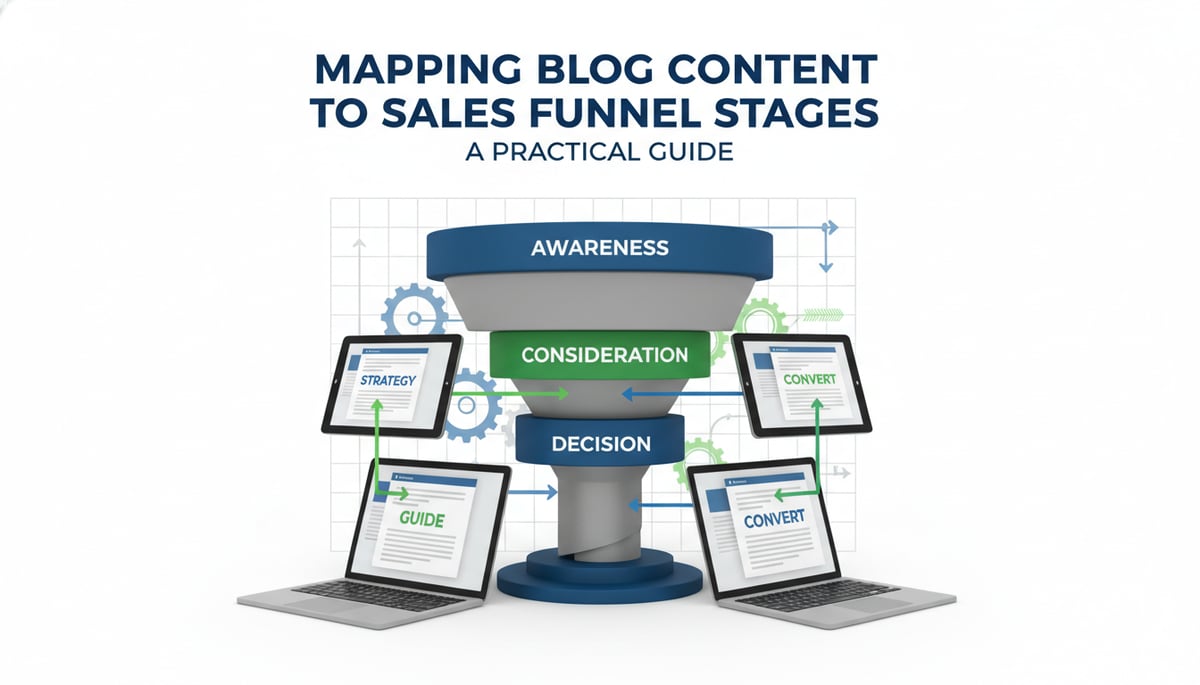
Effective content marketing is a strategic journey, not a series of isolated articles. It fundamentally aligns with the buyer's progression from initial problem recognition to making an informed purchase. Understanding this progression, often modeled as a content marketing funnel, is paramount for deploying resources with precision and impact. This framework ensures every piece of content serves a distinct purpose, nurturing prospects systematically.
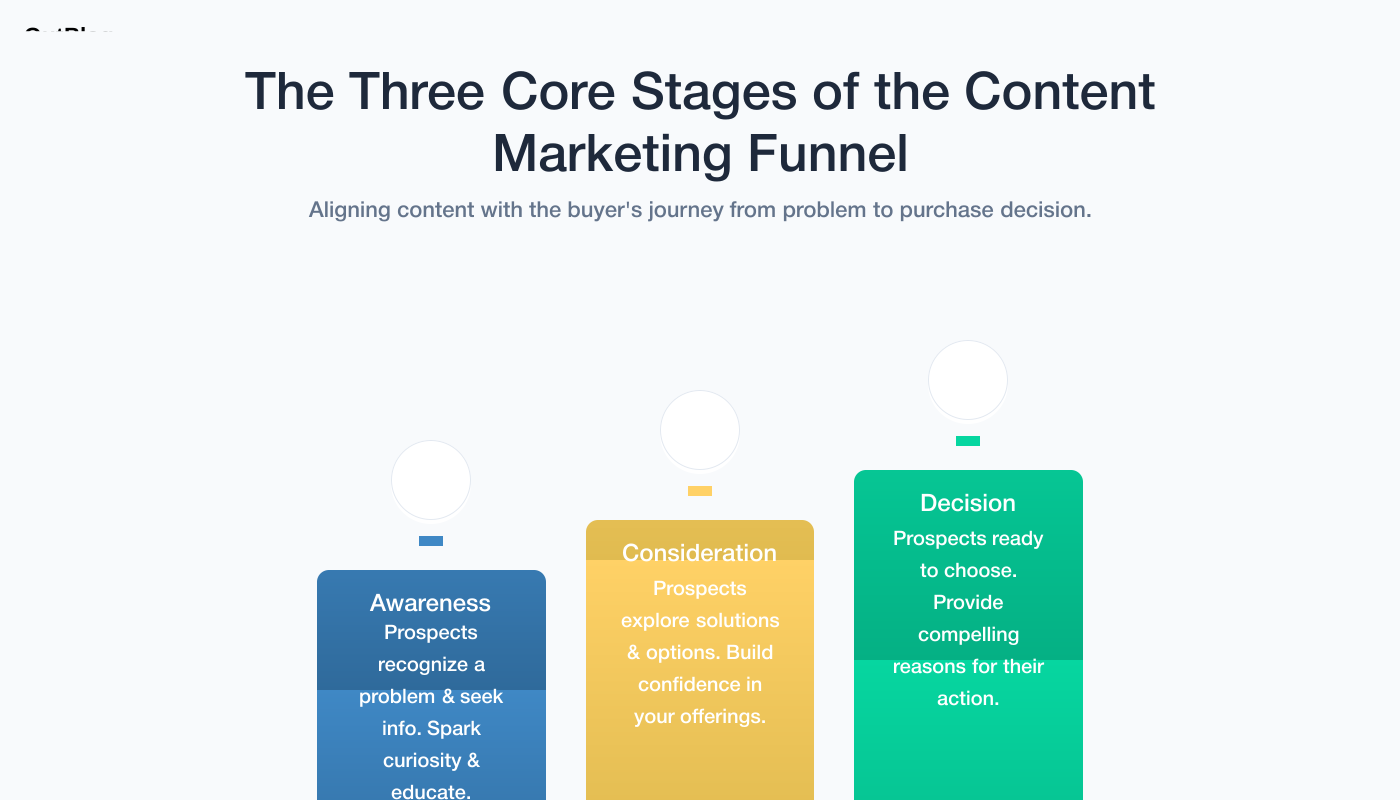
The funnel conceptually divides the customer's journey into distinct psychological states, each demanding a unique content approach. Ignoring these stages leads to content that misses its mark, either too pushy for early-stage buyers or too generic for those ready to decide. Our objective is to guide prospects through their decision process by providing value at every turn.
HubSpot often categorizes these as Awareness, Consideration, and Decision stages, mirroring the Top, Middle, and Bottom of the Funnel (ToFu, MoFu, BoFu). This structure allows marketers to design content that sparks curiosity, builds confidence, and ultimately provides compelling reasons for action (HubSpot, n.d.).
Top of Funnel (ToFu): Awareness
At the ToFu stage, buyers are just recognizing a problem or need. They might not yet have the language to define it precisely, or they might be exploring broad topics related to a challenge they face. Their mindset is one of discovery and learning; they are seeking information to understand their situation better. The marketer's goal here is to attract a broad audience by providing educational, high-value content that addresses these nascent pain points without any sales pressure. Content should be easily digestible and widely shareable.
Middle of Funnel (MoFu): Consideration
Once a buyer has named their problem, they move into the MoFu stage. Here, their mindset shifts to exploring potential solutions or approaches. They are evaluating options and comparing different methodologies, becoming more discerning. They seek deeper insights and data that help them understand how various solutions might address their specific needs. The marketer's goal is to educate these qualified leads about specific solutions, positioning their offerings as a viable and superior choice without outright selling. This stage builds trust and demonstrates expertise.
Bottom of Funnel (BoFu): Decision
In the BoFu stage, buyers have narrowed down their solution category and are now in the critical phase of selecting a specific vendor or product. Their mindset is focused on making a purchase; they are looking for specific details, proof of efficacy, and compelling reasons to choose one provider over another. They need reassurance and specific value propositions. The marketer's goal is to convert these high-intent prospects into customers by offering clear, persuasive arguments and removing any remaining barriers to purchase. This is where direct calls to action are most effective.
Note: The strength of your content strategy hinges on accurately identifying the buyer's intent at each stage. Mapping content effectively ensures resources drive measurable progress through the funnel.
Understanding the distinct psychological states of buyers at the ToFu, MoFu, and BoFu stages is the foundation for creating content that effectively nurtures them toward a confident purchase.
Top-of-Funnel (ToFu) Content: Capturing Attention and Building Awareness
The journey begins at the Top of Funnel, where your primary objective is to capture the attention of a broad audience and build initial brand awareness. This stage is crucial for establishing your authority and helpfulness without any hint of a hard sales pitch. Buyers at this point are often unaware of your brand, or even the specific solution you offer; they are simply seeking answers to their problems.
The strategic imperative for ToFu content is to be exceptionally helpful and to build trust. Instead of promoting your product or service directly, focus intently on addressing the pain points and questions your target audience is actively searching for online. This approach positions your brand as a valuable resource, fostering a positive first impression that resonates. For instance, Traqq, a time-tracking software company, successfully captured their target audience with a blog post on "how to calculate time difference in Excel." This educational piece directly addressed a common user challenge without selling their product, demonstrating value first (Traqq, n.d.).
Effective ToFu content comes in various formats, all designed for broad reach and easy consumption:
- Educational Blog Posts: These are foundational. Focus on "how-to" guides, listicles, ultimate guides, or explanatory articles that demystify complex topics relevant to your audience's challenges.
- Infographics: Visually appealing and highly shareable, infographics simplify complex data or processes, making information digestible at a glance. They excel at conveying quick insights.
- Short Videos: Platforms like TikTok, Instagram Reels, and YouTube Shorts are perfect for engaging educational content. Concise videos addressing common questions or offering quick tips can achieve massive reach.
- Social Media Tips & Discussions: Engaging content on platforms like LinkedIn can significantly broaden your audience. For example, carousel ads on LinkedIn have been shown to beat static formats in engagement, making them ideal for presenting educational content in a dynamic, multi-slide format (LinkedIn, 2023). Given that over 86% of adults are on at least one social platform, these channels are powerful for initial outreach (Pew Research Center, 2021).
Success at the ToFu stage is not measured by direct conversions or sales. Instead, the key performance indicators (KPIs) include:
- Reach and Impressions: How many people saw your content.
- Website Traffic: The volume of new visitors to your site.
- Engagement Rates: Likes, shares, comments, video views, and time spent on page.
- Brand Mentions: How often your brand is discussed online.
By consistently delivering valuable, non-promotional content, you organically attract a relevant audience and establish your brand's credibility.
Effective ToFu content addresses a prospect's problem so well that your brand becomes synonymous with the solution long before they are ready to make a purchase.
Middle-of-Funnel (MoFu) Content: Nurturing Leads and Demonstrating Expertise

At the crucial middle-of-funnel (MoFu) stage, prospects have clearly defined their problem and are actively researching potential solutions. They are no longer just exploring broad concepts but are evaluating specific options, comparing features, and seeking definitive proof of value. This is where your content must shift from problem awareness to solution consideration, strategically positioning your offering as the superior choice.
Your MoFu content acts as the bridge, transforming general interest into genuine buying intent. It's the arena to build undeniable credibility and showcase your profound expertise, providing the evidence-based reasons prospects need to proceed. The objective is to demonstrate not just what your solution does, but how effectively it solves their specific challenges, backed by tangible results.
To cultivate this trust, focus on content formats that provide depth and demonstrate practical application. In-depth guides and whitepapers allow you to dissect complex problems and present comprehensive solutions, establishing your authority. Case studies are exceptionally potent, offering real-world validation of your solution's impact. For instance, the Asana case study with Zoom vividly illustrates concrete results, detailing how their platform saved Zoom's marketing team 667 workdays annually by streamlining workflows. Such quantifiable metrics provide compelling proof.
Consider deploying sophisticated comparison guides that directly address competitive landscapes. While counterintuitive, honesty in these guides—acknowledging trade-offs and specific use cases where a competitor might excel—actually builds significantly more trust than a purely one-sided pitch. This transparency elevates your brand as a reliable advisor. Kevin Dam of Aemorph notably increased sales rates by 30% with a well-structured comparison page that provided balanced, yet persuasive, insights.
Another powerful format is the webinar, offering a dynamic platform to share expertise and engage directly with prospects. Webinars by companies like Canva, often featuring outside industry experts, amplify credibility by associating your brand with recognized leaders. This method not only educates but also creates a direct channel for interaction, addressing specific queries that can accelerate decision-making. MoFu content is about more than just information; it's about empowerment. It equips prospects with the knowledge and confidence to make an informed, strategic decision.
MoFu content is where you prove your value, turning general interest into genuine buying intent by providing clear, evidence-based reasons to choose your solution.
Bottom-of-Funnel (BoFu) Content: Removing Friction and Driving Decision
At the bottom-of-funnel (BoFu) stage, your prospects are poised for action, their intent to purchase is high. They have identified their problem, researched solutions, and are now considering your offering as a viable contender. The critical task here is to eliminate any remaining hesitation, provide final reassurances, and make the decision to commit feel inevitable and intelligent. This content is a direct accelerant for conversion, designed to remove every friction point.
The most effective BoFu content focuses relentlessly on reducing perceived risk and delivering definitive answers to specific product or service questions. Personalization is paramount; a Salesforce study reveals that 52% of customers expect offers to be personalized to their explicit needs and stage. Tailoring your messaging precisely to their evaluated requirements amplifies relevance and drives engagement.
Deploy tools and assets that directly address immediate concerns and demonstrate clear return on investment. Free trials offer a low-risk gateway to experience your solution firsthand, removing theoretical barriers. Live demos provide interactive, tailored insights into how your product directly solves their challenges. Customer testimonials and in-depth case studies offer social proof and peer validation, reinforcing trust.
An exceptional example of reducing friction is the implementation of an ROI calculator. Emma, a cloud management platform, successfully increased demo requests by 35% by providing a tool that allowed prospects to quantify their potential time and cost savings directly (emma, 2023). This concrete visualization transforms abstract value into tangible business benefits.
Consider how your pricing structure is presented. Buffer's pricing page, for instance, effectively leverages a free plan and premium trials, inviting users to engage without immediate financial commitment, fostering a natural progression to paid tiers. Offering clear, value-driven packages reduces decision fatigue. Furthermore, understanding consumer behavior is key: 62% of U.S. consumers actively seek promo codes online (Statista, 2023), indicating that strategic discounts or limited-time offers can provide that final, decisive nudge.
// Example of an embedded ROI Calculator prompt
function calculateROI(currentCost, efficiencyGain) {
  const annualSavings = currentCost * efficiencyGain;
  return `With our solution, you could save approximately $${annualSavings.toFixed(2)} annually.`;
}

// Imagine this integrates with a user input form for 'currentCost' and 'efficiencyGain'
// e.g., calculateROI(10000, 0.30); // 30% efficiency gain on $10,000 cost
Note: Offering an ROI calculator or a personalized savings projection can significantly accelerate the buyer's journey by converting abstract value into tangible financial benefits, directly addressing their bottom-line concerns.
At the bottom of the funnel, the right content removes final hesitations and makes saying 'yes' feel like the easiest and smartest choice.
Beyond the Sale: Using Content for Loyalty and Retention
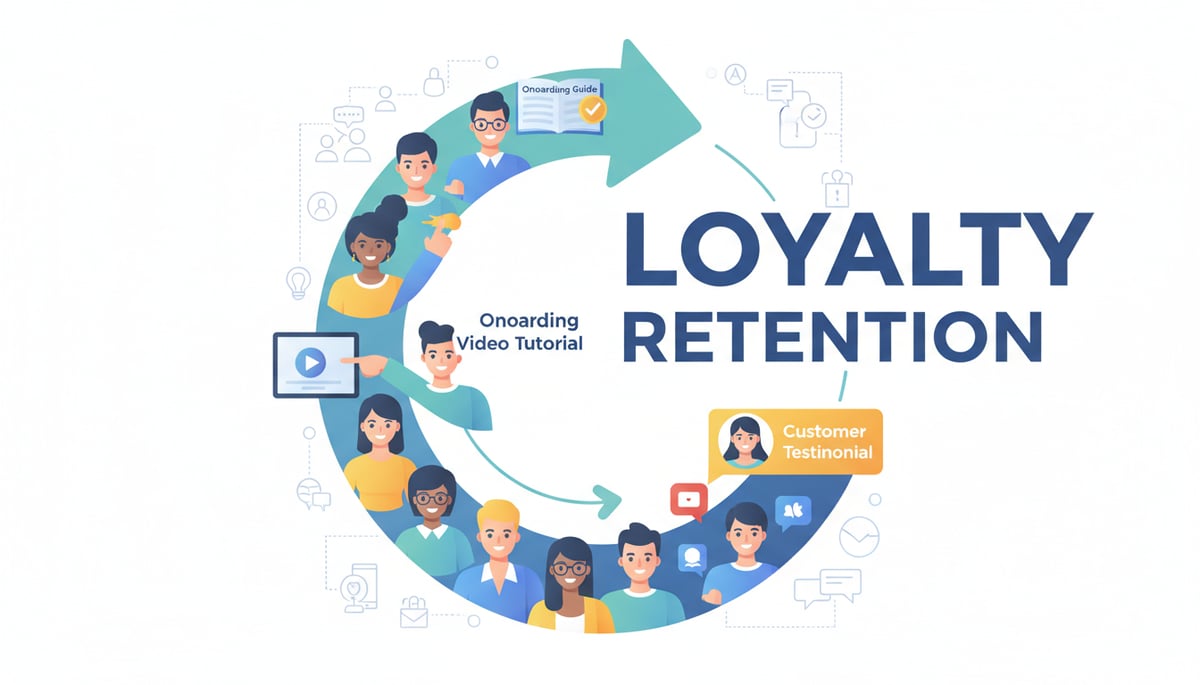
The strategic value of content extends far beyond the point of purchase. To truly establish market domination, the customer journey must evolve into a loyalty loop, where delighted customers not only repurchase but actively become your most effective marketing channel. Retaining existing customers is a profoundly profitable strategy, as a mere 5% increase in customer retention can boost revenue by an impressive 25-95% (Bain & Company, 2001). This underscores the imperative to invest in post-purchase content.
This stage demands content that nurtures continued engagement and maximizes product value. Onboarding guides, advanced user tips, and video tutorials ensure customers fully leverage their investment, preventing churn due to lack of understanding or perceived complexity. Exclusive customer webinars, featuring new feature rollouts or expert Q&A sessions, provide ongoing value and reinforce a sense of community.
Consider content that anticipates future needs and upselling opportunities, subtly guiding customers toward more comprehensive solutions. Loyalty programs, supported by tailored communications, reward continued patronage and foster a deeper connection. A remarkable 91% of customers are more likely to make another purchase after a great service experience (Salesforce, 2021), highlighting the direct link between post-sale experience and future revenue. By consistently delivering valuable content, you transform satisfied customers into brand advocates who generate powerful testimonials and crucial referrals, fueling the top of your funnel with highly qualified leads. This strategic investment in post-purchase content ensures sustained growth and reinforces your authority in the market.
The most valuable content funnels create a loyalty loop, where delighted customers not only buy again but also become your most effective marketing channel.
The data is clear: today’s buyers operate independently, making decisions long before direct engagement. This reality transforms your content from a mere marketing asset into the foundational architect of your sales pipeline. It must guide, educate, and persuade at every turn.
This guide has outlined a strategic imperative for modern digital marketing. To recap the core principles:
- Content's role has expanded beyond top-of-funnel awareness; it is now critical across the entire buyer journey, acting as a primary salesperson and trust-builder.
- Successful content strategies demand meticulous mapping to the three core sales funnel stages: Top-of-Funnel (ToFu), Middle-of-Funnel (MoFu), and Bottom-of-Funnel (BoFu).
- Each stage necessitates distinct content types and approaches—from broad educational pieces to detailed solution comparisons and direct conversion drivers—to effectively move prospects towards a confident decision.
Embracing this holistic view of content ensures that every piece published serves a strategic purpose, building momentum and authority rather than simply occupying space. This is not merely about creating more content, but about generating the right content at the precise moment it is needed.
The strategic advantage lies in implementing a system that transforms this understanding into actionable, high-performance content. Move beyond reactive content creation and toward a systematic approach that proactively addresses buyer needs at each funnel stage. Tools like OutblogAI can help you leverage intelligent frameworks to analyze intent, streamline content generation, and deploy assets designed for optimal conversion. This ensures your content not only engages but consistently drives tangible results, cementing your position as a market leader.