Content Cost Reduction: A Practical Guide to AI Automation for Lean Budgets
Discover how AI-driven automation can slash your content creation costs without sacrificing quality. This guide provides actionable strategies for integrating AI into your workflow, from ideation and research to generation and distribution, for a more efficient, budget-friendly content strategy.


In the pursuit of digital presence, businesses face a common challenge: the need for high-quality, high-volume content is rising, while traditional creation workflows inflate costs and strain resources. Many view this as an unavoidable trade-off, assuming that scaling content requires a proportionally escalating budget. This perspective, however, overlooks a significant opportunity. The challenge is not simply producing more content, but doing so with greater efficiency and strategic precision.
Enter AI automation, a technology poised to reshape the economics of content marketing. Far from being just a text generator, AI is a comprehensive solution that can streamline every phase of the content lifecycle—from ideation and research to generation, repurposing, and distribution. This guide provides a practical framework for leveraging AI automation to significantly reduce content creation costs while elevating quality and output.
We will systematically examine the hidden costs that erode your content budget, revealing where traditional methods leak valuable resources. Our strategic overview will map AI's role across the entire content lifecycle, demonstrating how it functions as an intelligent co-pilot to accelerate generation and refine editing. You will learn actionable strategies for maximizing content value through AI-powered repurposing and distribution, ensuring every piece of content achieves its full potential. Finally, we will provide robust methods for proving AI's tangible impact, enabling you to measure direct cost savings, productivity gains, and performance improvements with quantifiable results.
TL;DR
As demands for content quality and volume escalate, traditional production models are becoming financially unsustainable. This pressure forces lean teams to find more efficient methods for creating and deploying high-impact content.
AI automation presents a strategic solution, moving beyond simple text generation to streamline the entire content workflow. It empowers teams by augmenting human expertise, allowing them to focus on higher-value work more efficiently and at a reduced operational cost. According to a McKinsey report, companies that adopt intelligent automation can reduce operational costs by 20–30%, directly impacting content budgets.
- Lifecycle Automation: AI optimizes the entire content lifecycle, from ideation and research to creation, repurposing, and analysis.
- Human Augmentation: The primary value is in empowering human creativity, enabling teams to focus on high-level strategy while AI manages execution.
- Phased Adoption: Implement AI by starting with low-risk tasks and scaling strategically to ensure successful integration and team buy-in.
- ROI Measurement: Quantify impact by tracking direct cost savings, productivity gains in hours saved, and improvements in content performance metrics.
Ultimately, integrating AI into content workflows is a strategic imperative for reducing production costs while scaling output and maintaining quality.
The Unseen Costs Mounting in Your Content Budget
Businesses face an escalating challenge: delivering high-quality content while navigating increasingly constrained budgets. The traditional model of content production, reliant on extensive manual effort, is no longer sustainable for achieving key market objectives. This growing pressure necessitates a re-evaluation of current content workflows.
The demand for diverse content across multiple formats, from video productions to interactive graphics, continues to grow. Simultaneously, specialized freelance and agency fees for skilled creators are rising, pushing production costs upward. These factors, combined with time-intensive manual processes for research, writing, editing, and optimization, create a significant drain on resources.
The constant need for new content to maintain audience engagement and SEO rankings, often called the content treadmill, exacerbates budget pressures. Organizations frequently encounter inefficiencies that erode their financial capacity. The global AI in enterprise applications market, projected at $62.5 billion in 2024, confirms that cost optimization remains a primary driver, constituting 28% of this market (Statista, 2024).
Note: Inefficient content workflows can lead to significant financial losses, mirroring the principle that organizations can lose up to 30% of their IT budgets due to manual operations.
The traditional, human-intensive model of content production is becoming unsustainable, forcing businesses to seek more efficient and scalable solutions.
AI in the Content Lifecycle: A Strategic Overview
Viewing AI merely as a text generator is a strategic oversight. A truly effective approach requires a more comprehensive, integrated methodology that leverages automation at every stage of the workflow.
The greatest efficiency gains and cost reductions are unlocked by integrating AI across the entire content lifecycle, not just within the creation phase. This strategic deployment transforms a series of manual, disjointed tasks into a streamlined, high-performance operation. By automating each stage, teams can reallocate resources from laborious processes to high-impact strategic initiatives.

This operational shift is validated by research from Kovench Insights, which reports that AI-driven process optimization can lead to a 42% reduction in operational waste and a 38% improvement in resource utilization rates.
- Ideation & Research: Automate the analysis of SERPs, competitor strategies, and audience data to identify high-value content opportunities with precision.
- Creation & Drafting: Generate complete, SEO-optimized first drafts, scripts, and initial visual concepts, accelerating the production pipeline.
- Optimization & Editing: Systematically enhance content for search engine performance, improve readability, and ensure brand voice consistency across all assets.
- Distribution & Repurposing: Automate the creation and scheduling of social media updates and intelligently reformat core content for maximum reach across different channels.
- Analysis & Insights: Continuously track content performance metrics and generate data-driven recommendations to inform and refine future content strategy.
Deploying AI as an integrated engine across the full content workflow is the most effective path to scaling output and maximizing return on investment.
The AI Co-Pilot: Accelerating Content Generation and Editing

The manual process of drafting content has long been the primary bottleneck in scaling marketing efforts. Generative AI redefines this workflow, shifting the paradigm from creation from scratch to curation and strategic refinement. This transforms content production from a linear, labor-intensive task into a dynamic, more automated process.
By integrating AI as a co-pilot, content teams can automate the generation of structured first drafts for articles, emails, and social media posts. This approach accelerates production velocity and systematically reduces the cost per asset. Tools like OutblogAI are designed around this co-pilot principle, freeing human talent to focus on strategic oversight, creative direction, and infusing content with unique brand expertise that machines cannot replicate. The productivity gains represent a significant economic shift. Research from McKinsey (2023) highlights that generative AI can automate tasks that consume a majority of employee time, directly impacting marketing functions by enhancing content creation and personalization at scale.
This operational model introduces a more efficient and strategic content lifecycle:
Initial Draft Generation: Instead of confronting a blank page, teams can direct the AI to produce a comprehensive first draft. This initial output for an article or whitepaper can be generated in minutes, not days, incorporating specified keywords and adhering to a pre-defined outline. This step alone eliminates a significant time expenditure in the traditional content workflow.
Systematic Variant Creation: For performance-critical elements like headlines, ad copy, and calls-to-action, the AI co-pilot can generate dozens of variations for A/B testing. This allows for data-driven optimization at a speed that is difficult to achieve manually, improving conversion rates without increasing creative headcount.
Intelligent Refinement and Polish: The AI can function as an advanced editor, performing grammar checks, ensuring stylistic consistency, and adjusting the tone of voice to match different platforms. It can rephrase complex sentences for clarity or expand on points to add depth, streamlining the revision cycle.
Strategic Human Oversight: With the foundational work automated, the human expert's role becomes more strategic. They are responsible for fact-checking AI-generated content, injecting unique industry insights, adding proprietary data, and ensuring the final piece aligns with business goals. This is the critical final touch that ensures quality and authority.
This framework transforms the content creator's role from a ground-up writer to a strategic editor and director. The focus shifts from the blank page to enhancing an AI-generated foundation, a process known as the human-in-the-loop model. It is a powerful advantage that marries machine efficiency with human intellect.
By automating the most time-intensive aspects of content creation, organizations can reallocate human expertise to high-impact strategic initiatives.
Maximizing Value: AI for Content Repurposing and Distribution
Achieving an optimal return on investment from content requires extending its reach and utility far beyond its initial publication. AI provides a powerful engine for multiplying content value, transforming existing assets into new formats and ensuring their strategic distribution across all relevant channels. This approach maximizes impact without a proportional increase in resource allocation.
AI-powered solutions can automatically adapt long-form content for diverse platforms, extending its lifecycle and audience engagement. This strategic repurposing ensures every piece of content generates maximum utility. By automating these processes, teams can maintain a consistent, high-volume presence across the digital ecosystem.

Here’s how AI transforms content repurposing and distribution:
- Automated Summarization: Generate concise summaries of extensive articles for social media, email newsletters, and internal communications, adapting the message for each platform.
- Video & Audio to Text: Transcribe video and audio content into text, then seamlessly convert these transcripts into comprehensive blog posts, articles, or detailed reports.
- Dynamic Social Scheduling: Create optimized social media post calendars and automate the scheduling of content across various platforms, ensuring consistent audience engagement.
- Impactful Snippet Identification: Leverage AI to identify the most compelling quotes, short video clips, or audiograms from existing content, preparing them for immediate sharing.
Cloud-based automation systems can improve operational efficiency by 40% (Ardem.com), enabling faster content turnaround from creation to publication. AI-powered repurposing allows teams to multiply their content output and channel presence without proportionally increasing their creation efforts or budget.
Proving the Value: How to Measure AI's Impact on Your Budget
Adopting AI for content is a strategic decision, but its true value is only realized when measured against clear financial outcomes. Justifying the investment requires moving beyond anecdotal evidence to a data-driven framework that speaks to the bottom line.
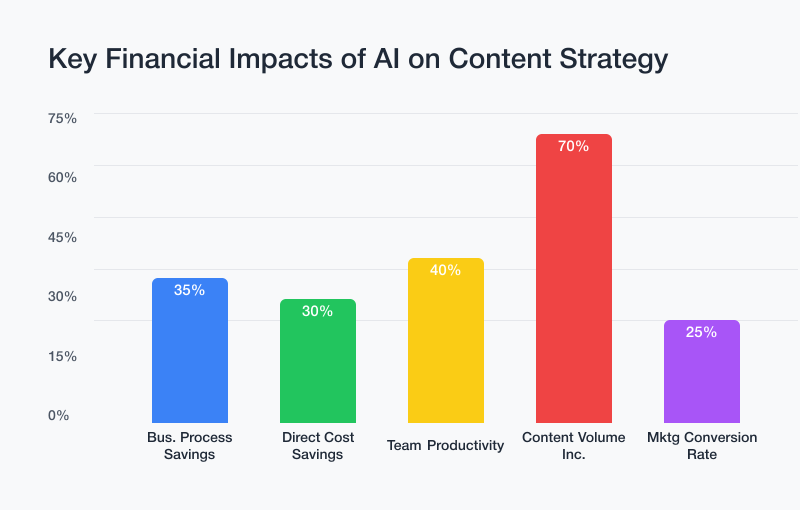
Measuring the ROI of AI in content requires looking beyond subscription fees to include gains in team productivity, output volume, and marketing performance. A comprehensive analysis quantifies how automation directly impacts your budget and accelerates growth. This approach shifts the perception of AI from a simple tool to a strategic asset, providing clear proof of its contribution.
The financial benefits of automation are significant. According to a Gartner report, successful AI projects can generate a powerful 3-7x ROI within two years. This aligns with findings from Kovench Insights, which state that intelligent automation can reduce business process costs by 25% to 40% on average. These figures demonstrate a clear and rapid path to enhanced operational efficiency.
To build a compelling business case, track metrics across four key domains of impact. This model provides a structured approach to quantifying the complete financial advantage of integrating AI into your content workflow. Calculating the fully-loaded cost of employee time is critical for accurately assessing indirect savings.
| Metric Category | Key Performance Indicator (KPI) | Calculation Method |
|---|---|---|
| Direct Cost Savings | Reduced external spend | (Old monthly spend on freelancers/agencies/stock media) - (New spend + AI subscription cost) |
| Time Savings (Indirect) | Person-hours saved per month | (Hours saved on research, drafting, editing) x (Average hourly employee cost) |
| Performance Uplift | Cost Per Lead (CPL) / Conversion Rate | Compare CPL or conversion rates from content-driven funnels before and after AI implementation |
| Output Scaling | Content volume increase | [(Post-AI Volume / Pre-AI Volume) - 1] x 100% |
This disciplined measurement approach provides the necessary evidence to stakeholders, framing AI as a non-negotiable component of a lean, high-performance marketing strategy. A comprehensive ROI analysis transforms the conversation from AI as a cost center to AI as a strategic growth engine.
A Phased Approach to Integrating AI into Your Content Workflow
Integrating artificial intelligence into existing content workflows can seem complex, but a structured, phased implementation minimizes disruption and maximizes long-term success. This strategic approach builds internal confidence and allows teams to gradually harness AI's capabilities, ensuring sustainable adoption and tangible results.
A deliberate integration strategy is crucial for unlocking AI's full potential for cost reduction and efficiency gains. By starting with low-risk applications and progressively scaling capabilities, organizations can avoid common pitfalls and cultivate a culture of innovation. This systematic method empowers teams to adapt to new tools and methodologies effectively.
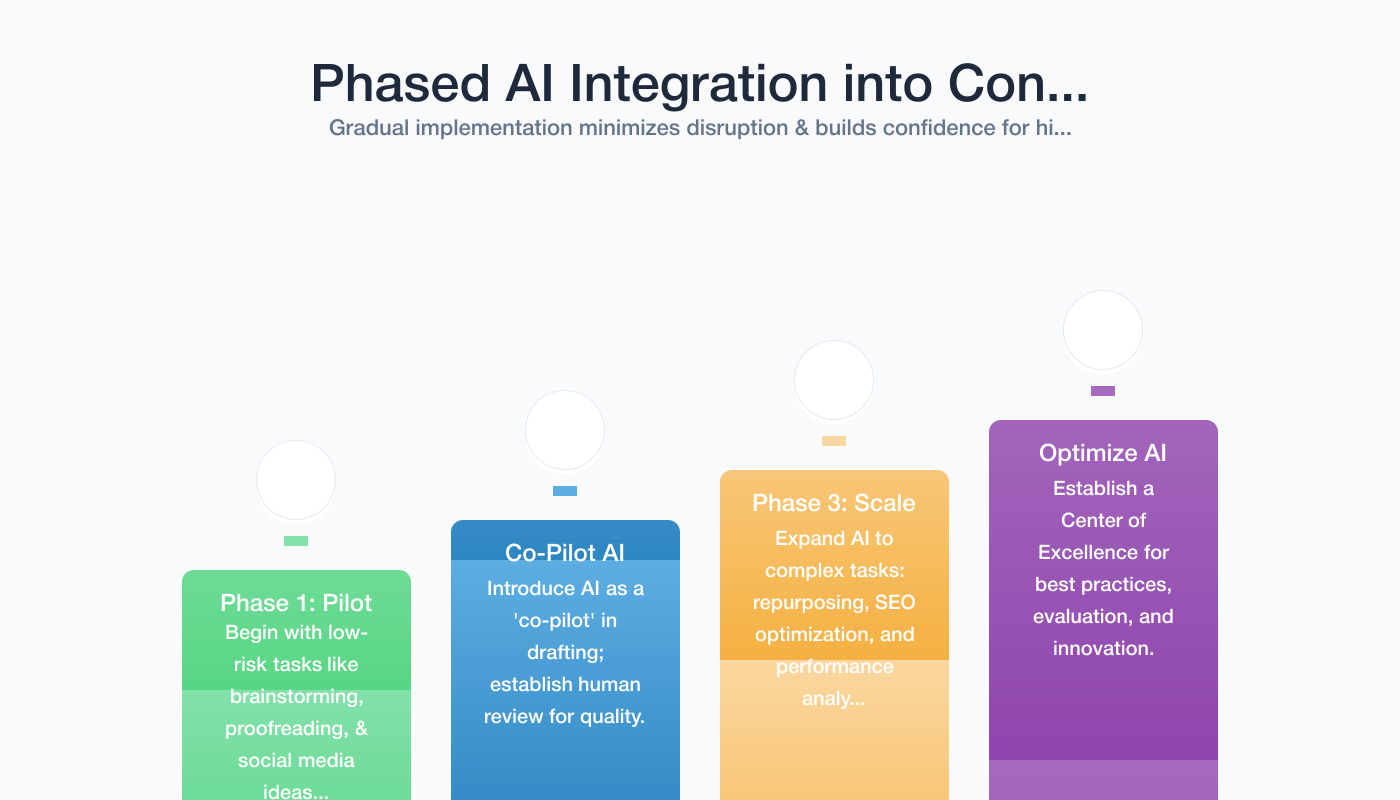
Here is a phased framework for integrating AI into your content workflow:
- Phase 1 (Pilot): Begin with low-risk, high-impact tasks such as brainstorming headlines, proofreading, or generating social media post ideas from existing content. This phase builds initial familiarity and demonstrates immediate value.
- Phase 2 (Integrate): Introduce AI as a 'co-pilot' in the drafting process, providing structured prompts and clear guidelines for its use. Establish robust human review processes to maintain content quality and brand voice.
- Phase 3 (Scale): Expand AI utilization to more complex areas, including comprehensive content repurposing, advanced SEO optimization, and performance analysis. Automate more significant portions of the content lifecycle.
- Phase 4 (Optimize): Establish a Center of Excellence to centralize AI knowledge, standardize best practices, and continuously evaluate new tools and techniques. This ensures ongoing innovation and efficiency improvements.
While 73% of organizations initiate AI cost reduction projects, only 41% achieve projected savings within 18 months, often due to poor implementation strategies (Deloitte, 2024 State of AI Report). A gradual, phased implementation of AI minimizes disruption and builds team confidence, leading to higher long-term success rates and greater ROI.
The Future of Content: Human Strategy, Amplified by AI
The evolution of content strategy is not a story of human replacement, but one of enhancement. AI is emerging as an amplifier, elevating human ingenuity to new levels of impact.
The future of content success resides in a strategic symbiosis between human expertise and artificial intelligence. AI is positioned to handle repetitive, data-intensive tasks, liberating human strategists to concentrate on authentic connection and complex narrative development. This shift empowers professionals to drive deeper audience engagement and build stronger brand authority.
This strategic integration of AI is already demonstrating significant economic impact. PwC (Global AI Study, 2017) projects that AI-driven optimization will contribute $15.7 trillion to the global economy by 2030. Furthermore, Gartner (2023) predicts that by 2027, 85% of cost reduction initiatives will strategically incorporate multiple AI technologies working in concert, underscoring AI's role in operational efficiency.
The evolving role of the content professional demands a refined focus:
- Strategic Insight: Prioritizing audience understanding and market positioning.
- Brand Narrative: Crafting compelling, unique brand stories that resonate deeply.
- Complex Problem-Solving: Addressing nuanced content challenges beyond automation's scope.
- AI Orchestration: Mastering the deployment and management of AI tools for optimal output.
The most impactful content teams will be those that skillfully master effective human-AI collaboration, turning technological advancements into a competitive advantage. Embracing continuous learning and adaptation to rapidly evolving AI tools will be essential for sustained market leadership.
The path to sustainable, high-impact content creation for lean budgets is paved with AI automation. This guide has illuminated the critical shift required to move beyond outdated, costly workflows towards a future defined by efficiency and strategic output.
Here are the pivotal insights to implement:
- Embrace AI for Cost Optimization: Acknowledge the rising costs of traditional content and leverage AI as the strategic solution to enhance output and reduce expenditure across the entire content lifecycle.
- Integrate AI as a Comprehensive Co-Pilot: Utilize AI beyond simple generation, deploying it for ideation, research, creation, editing, repurposing, and distribution to achieve a truly streamlined operation.
- Prioritize Measurable Impact: Establish clear metrics for tracking direct cost savings, quantifying productivity gains, and evaluating improvements in content performance to prove AI's tangible value.
AI's role is not to diminish human expertise but to amplify it, transforming your content strategy into a powerful engine for growth. It empowers teams to achieve greater velocity and strategic impact.
To fully harness this transformative power, consider moving beyond fragmented tools. Explore integrated AI automation platforms engineered to streamline your entire content workflow, from strategic planning to direct publication. Such systems are designed to convert your core expertise into high-performing content. This pragmatic step ensures your budget is optimized, your output is elevated, and your market position is strengthened.