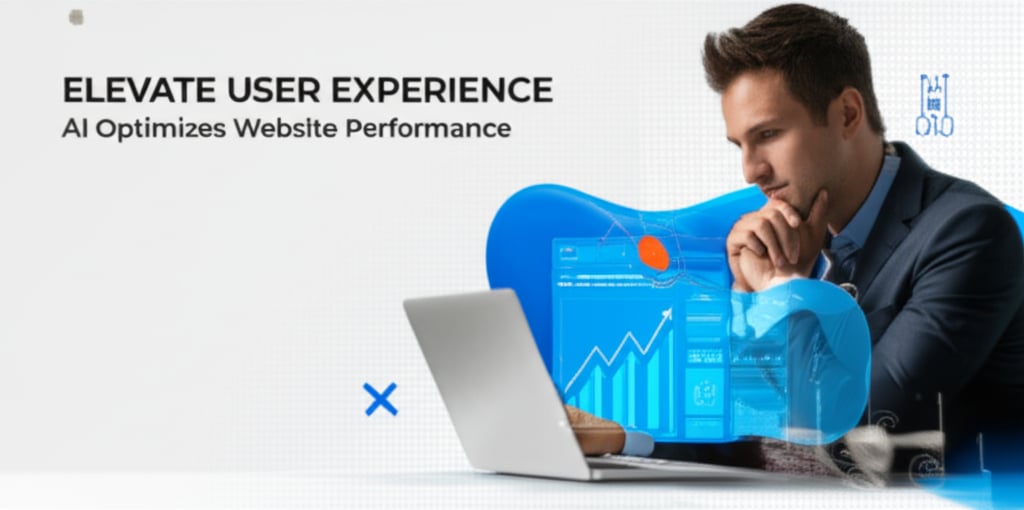
Elevate User Experience: How AI Optimizes Website Performance
Unlock superior website performance and elevate user experience with AI. This guide explores how artificial intelligence is revolutionizing optimization, from boosting page speed and personalizing content to streamlining SEO. Learn to create faster, smarter, and more engaging digital experiences for your audience.

The era of manual, reactive website optimization is giving way to a more intelligent, proactive approach. While foundational methods like A/B testing have been valuable, they are often too slow to meet the demands of today's digital landscape. Securing a competitive edge requires greater speed, personalization, and efficiency than traditional techniques can provide. A reliance on retrospective data and manual processes can prevent businesses from reaching their full potential.
Artificial intelligence offers an automated path to improved website performance and user experience. This technology transforms optimization from a manual task into a predictive, automated process. This guide explores how AI is changing every aspect of website optimization, moving beyond conventional methods to increase efficiency and engagement. The focus is shifting from iterative fixes to intelligent, scalable transformations.
This guide details how AI can achieve faster load times, improving Core Web Vitals and reducing bounce rates. We will explore the mechanics of hyper-personalization, which enables a 1:1 user experience tailored to individual behaviors. We will also cover how AI-driven optimization refines SEO strategies through advanced keyword research, content analysis, and automated technical fixes. Finally, we will discuss how AI delivers actionable insights from UX analysis and automates accessibility improvements, ensuring an inclusive and high-performing digital presence.
TL;DR
Website optimization has transformed from a reactive, manual process into a strategic, automated discipline. AI is the engine driving this evolution, providing a practical toolset for creating faster, more intuitive websites that improve the user experience and drive conversions. This shift enables a strategic approach to hyper-personalization and technical performance.
Research from Passionate Agency (2025) confirms this trend, noting AI adoption in UX design has surged from 15% to over 70%, underscoring its pivotal role. The applications are comprehensive and results-driven.
| Optimization Area | AI Application | Performance Impact |
|---|---|---|
| Site Speed & CWV | Predictive loading & resource management | 40-60% faster load times; 20-35% better Core Web Vitals |
| Personalization | Dynamic content & tailored UI elements | Increased user engagement and conversion rates |
| SEO Strategy | Automated keyword analysis & technical fixes | Higher SERP rankings and targeted traffic acquisition |
| User Experience | Deep user behavior analysis & A/B testing | Data-driven design improvements and enhanced usability |
Integrating AI into your optimization strategy is a critical step toward securing a sustainable competitive advantage.
Beyond A/B Testing: The Shift to AI-Driven Optimization
For years, A/B testing has been a standard for website optimization, serving as a methodical process with inherent limitations. This reactive framework, dependent on historical data and manual intervention, is being complemented and often superseded by a more intelligent, proactive engine for performance.
The fundamental distinction lies in strategic capability. Traditional optimization is a reactive discipline, relying on isolated tests that require significant time and often result in a 'one-size-fits-all' solution. In contrast, AI-driven optimization leverages machine learning (ML) and natural language processing (NLP) to analyze the full spectrum of user behavior in real-time. It moves beyond simple binaries to understand nuanced user intent, transforming optimization from a series of experiments into a continuous, predictive system that anticipates needs and dynamically architects the digital experience.
This industry-wide transformation is not a speculative trend but a significant movement toward intelligent automation. The global adoption of AI is projected to expand at a compound annual growth rate of 37.3%, according to analysis from Grand View Research (2023). This growth signifies a pivot away from legacy methods, as organizations recognize that competitive advantage is no longer found in manual adjustments alone. Projections from industry forums like UXify 2025 suggest a near-future where non-AI-driven user experience design will be unable to compete with platforms that learn and adapt instantaneously.
| Aspect | Traditional Optimization | AI-Driven Optimization |
|---|---|---|
| Methodology | Reactive; based on manual A/B/n testing and historical data analysis. | Proactive; uses real-time behavioral data and predictive modeling. |
| Data Scope | Static and segmented user groups. | Dynamic, continuous analysis of individual user interactions. |
| Adaptability | Slow; requires manual setup, execution, and analysis for each change. | Instantaneous; autonomously adapts user experience based on live data. |
| Strategic Outcome | Incremental improvements based on past performance. | Predictive personalization and continuous performance uplift. |
AI transforms website optimization from a series of manual, reactive adjustments into a continuous, predictive process that learns and adapts in real-time.
Achieving Near-Instant Load Times with AI
In the digital marketplace, every millisecond of load time impacts revenue and user retention. The delay between a click and content rendering is a critical factor for competitive advantage.
AI transforms website performance from a reactive challenge into a proactive, strategic operation. It employs predictive models to anticipate user navigation and intelligently optimizes digital assets, from images to scripts, before they are explicitly requested. This proactive resource management directly improves critical Core Web Vitals, delivering a seamless user experience that drives engagement and conversions.
The financial implications of latency are significant; research from Deloitte confirms that even a 100-millisecond improvement in site speed can yield an uplift in conversion rates. AI-driven optimization directly addresses this, with documented performance gains showing page loads accelerating by 40-60%.
- Predictive Prerendering: AI analyzes user navigation patterns to anticipate the next page a visitor is likely to access. It then preloads these resources in the background, making subsequent page loads feel instantaneous.
- Intelligent Asset Compression: Sophisticated algorithms assess images and videos to apply the optimal level of compression (often 30-70%) without perceptible loss in visual quality, drastically reducing page weight.
- Dynamic Caching & CDN Routing: AI optimizes caching strategies by predicting which assets will be most requested. It also intelligently routes traffic through the most efficient Content Delivery Network (CDN) nodes, minimizing latency for a global audience.
- Automated Code Optimization: The system analyzes CSS and JavaScript files to identify and eliminate redundant code, defer non-critical scripts, and prioritize the loading of above-the-fold content for the fastest possible initial render.
Leveraging AI for site speed is a strategic imperative that directly improves user experience and search engine rankings.
Hyper-Personalization: Crafting a 1:1 User Experience
The era of the static, one-size-fits-all website is coming to an end. Market leaders now present digital platforms not as fixed brochures but as dynamic, intelligent environments engineered for individual engagement.
Hyper-personalization is the strategic use of artificial intelligence to create a unique, 1:1 user experience in real-time. It moves beyond basic segmentation by analyzing a continuous stream of user data—browsing history, click patterns, and on-site behavior—to dynamically adapt content, product recommendations, and even the user interface itself. The objective is to make each user feel understood, which translates into superior engagement, loyalty, and conversion rates.
This shift from generic to individual experiences is a primary driver of growth and retention. Research from GemPages (2025) highlights that AI-powered recommendation engines are a major contributor to revenue for e-commerce giants like Amazon. Similarly, Netflix's use of AI to personalize content thumbnails for each user profile demonstrates a direct link between tailored visuals and increased user interaction.
To understand the strategic advantage AI delivers, it is helpful to differentiate hyper-personalization from its predecessors. The evolution from basic rules to intelligent adaptation reveals a clear trajectory toward a fully dynamic user experience.
| Personalization Level | Core Mechanism | AI's Role | Strategic Impact |
|---|---|---|---|
| Segmentation | Grouping users by broad demographics or actions (e.g., new vs. returning). | Minimal; relies on pre-defined rules and manual setup. | Basic relevance, but often misses individual intent and context. |
| Personalization | Using specific data points like name or past purchases to tailor content. | Limited; often used for templated recommendations or email marketing. | Improved engagement, but remains reactive and based on past data. |
| Hyper-Personalization | Real-time analysis of behavior to predict intent and adapt the entire UX. | Central; a predictive AI engine dynamically alters content, layout, and CTAs. | Maximized conversion, increased AOV, and strong customer loyalty. |
| Cognitive Personalization | Understanding emotional and psychological triggers to adapt tone and messaging. | Advanced; leverages sentiment analysis and NLP to craft empathetic interactions. | Deeper brand affinity and long-term customer value. |
The application of hyper-personalization extends across the entire digital ecosystem. In e-commerce, AI powers intelligent upselling and cross-selling by presenting relevant products at the precise moment of purchase intent. This transforms a simple transaction into a guided shopping experience.
Dynamic UI adaptation is another powerful manifestation. An AI can adjust a website's layout, navigation, and calls-to-action based on its real-time assessment of user intent. A visitor identified as a potential enterprise client might see case studies featured prominently, while a user focused on product support is guided directly to knowledge base articles. This ensures the user's path to their goal is as efficient as possible.
Finally, conversational AI, through advanced chatbots and voice assistants, provides deeply personalized support. These systems access user history and context to offer solutions and information that are not just accurate, but immediately relevant to that individual's specific situation. This elevates customer service from a cost center to a powerful engagement engine.
AI-driven hyper-personalization transforms the digital experience, converting a website from a static asset into an adaptive environment tailored to meet individual user needs.
Smarter SEO: How AI Refines Content and Ranking Strategy
Achieving search engine visibility requires a precise and consistent strategy. The manual, often disjointed processes that once defined SEO can now create inefficiencies in a competitive digital landscape.
Artificial intelligence changes this dynamic by serving as a high-performance engine for search optimization. AI automates many demanding aspects of SEO analysis and execution while providing greater analytical depth. This operational shift allows marketing leaders to pivot from granular, time-intensive tasks to high-level strategic direction. It frees human capital to focus on building brand narrative and creating resonant, high-authority content.
This shift from manual effort to intelligent automation is a clear competitive differentiator. Industry analysis from GemPages (2025) indicates that platforms leveraging AI for content optimization and technical SEO see a measurable uplift in organic traffic and keyword rankings. This advantage manifests as a faster time-to-rank for new content and a more resilient SERP presence against algorithm updates.
Here is a strategic breakdown of how AI systematically elevates SEO strategy and execution:
- Intelligent Keyword and Opportunity Analysis: AI platforms move beyond basic keyword research to perform comprehensive content gap analysis against top competitors. They analyze SERP features, user intent signals, and semantic relationships to identify high-value topics. This produces a data-driven roadmap for content that builds topical authority with calculated precision.
- Accelerated Content Development and Optimization: Generative AI tools like OutblogAI accelerate the creation of detailed, SEO-focused content briefs, ensuring every article is engineered to satisfy search intent. For existing content, AI can perform audits to suggest targeted optimizations for headings, internal linking, and keyword integration. It can also help structure articles to align with E-E-A-T signals, a critical factor in establishing trust.
- Automated Technical SEO and Site Health: AI automates critical technical tasks that are foundational to ranking success. This includes generating optimized meta descriptions and title tags at scale, building strategic internal linking structures, and generating correct schema markup to enhance SERP visibility. AI-powered tools can also implement smart redirects for broken links, preserving link equity and ensuring a seamless user experience.
- Nuanced Semantic and Conversational Search: By leveraging advanced Natural Language Processing (NLP), AI deciphers the intent behind the conversational queries that dominate search. This enables the optimization of content not just for keywords, but for the nuanced questions and phrases users employ. This capability is critical for capturing traffic from voice search and for creating content that directly answers user questions.
By automating foundational SEO tasks, AI enables teams to focus on high-level strategy and content creation.
From Data to Decisions: AI in UX Analysis and Accessibility
A superior digital experience is built on two pillars: a deep understanding of user behavior and universal accessibility. Overlooking either front can result in missed opportunities for engagement and revenue.
AI provides the engine to transform raw user data into actionable strategy and automate the technical requirements of digital inclusion. It moves beyond simple metrics to analyze complex, unstructured feedback from sources like session recordings and open-ended surveys, identifying friction points that manual analysis would miss. This allows teams to optimize user journeys with greater precision and scale.
The need for this automation is critical, especially in accessibility. A report from Passionate Agency (2025) found that a majority of websites contain accessibility failures, creating barriers for millions of users. AI directly addresses this gap by systematically identifying and offering solutions for these issues, turning compliance from a manual chore into an automated workflow.
| Area | Traditional Approach | AI-Powered Approach |
|---|---|---|
| UX Feedback Analysis | Manual review of thousands of survey responses; time-intensive, subjective pattern recognition. | Automated sentiment analysis and topic modeling; rapid insight generation from vast unstructured datasets. |
| A/B Testing | Requires large traffic volumes and significant time to achieve statistical significance. | Predictive UX analytics forecast outcomes with smaller datasets, accelerating optimization cycles. |
| Image Accessibility | Relies on content creators to manually write descriptive alt text for every image. | Computer vision analyzes images and automatically generates contextually relevant alt text. |
| Design Compliance | Manual audits against WCAG checklists; requires specialized human expertise and is prone to error. | Automated code scanning for color contrast, ARIA roles, and other elements; provides instant remediation suggestions. |
By automating these foundational elements, AI liberates strategic teams from tedious execution. For user experience, this means a shift from interpreting lagging indicators to proactively shaping user behavior based on predictive models. For accessibility, it means transforming a complex compliance burden into an integrated process that enhances the experience for every visitor.
Integrating AI into UX and accessibility workflows transforms complex data into actionable insights while building a more inclusive digital presence.
Putting AI to Work: A Guide to Implementation and Tools
Effective strategy is achieved through decisive implementation. The transition from planning to execution requires the intelligent application of technology.
Integrating AI into your digital ecosystem is a methodical process. It begins with a diagnosis of a core business challenge—whether it's lagging SEO performance, high user bounce rates, or stagnant e-commerce conversions. The objective is to deploy specialized AI tools as targeted solutions to these defined problems. This ensures that technology serves a strategic purpose and delivers a measurable return on investment.
The efficacy of this targeted approach is validated by the market's shift toward specialized, integrated solutions. An analysis from GemPages (2025) highlights how platform-agnostic tools are engineered to embed within established systems, directly addressing performance bottlenecks. This model of pinpoint application is becoming the standard for high-performance operations. Selecting the right tool requires matching its function to your specific pain point, as outlined below.
| Business Challenge | Tool Category | Example(s) | Primary KPI |
|---|---|---|---|
| Inefficient Content Scalability | AI Content & SEO Suite | Frase.io, Semrush | Content Velocity, Organic Traffic |
| Low Average Order Value (AOV) | E-commerce Personalization Engine | Wiser, Rebuy | Revenue per Session, AOV |
| High User Friction & Bounce Rates | Predictive Performance Optimization | Uxify (Navigation AI) | Page Load Time, Session Duration |
| Digital Accessibility Compliance | Automated Remediation Platform | accessiBe | WCAG Compliance Score, Reduced Legal Risk |
Each category represents a distinct lever for growth. AI-driven SEO suites move beyond simple keyword suggestions to generate comprehensive, optimized content briefs. In e-commerce, personalization engines use predictive algorithms to power relevant product recommendations, systematically increasing order value. For user experience, predictive preloading addresses core performance issues, while automated accessibility solutions help ensure your digital assets are compliant.
It is helpful to approach AI implementation not as a one-time project but as an ongoing strategic initiative. Continuously measure the impact of these tools against your core KPIs to refine your approach. The strategic deployment of specialized AI tools addresses specific operational weaknesses and strengthens your competitive position.
The Co-Pilot Model: The Future of Human-AI Collaboration
As AI continues its rapid evolution, its role is shifting from a tool to a collaborative partner. This partnership redefines how we approach digital strategy, placing human ingenuity at the center of innovation.
The future of website optimization lies in a collaborative model where AI handles data-intensive analysis, freeing human experts to focus on strategy, creativity, and empathy. The next frontier involves affective computing, where AI can detect user emotions like frustration or satisfaction to adapt interfaces dynamically. Websites will become increasingly self-optimizing, with AI autonomously running experiments and implementing improvements based on performance data from other platforms.
This paradigm shift is anticipated by industry leaders, with Passionate Agency (2025) highlighting the potential of AI in augmenting human decision-making. NameSilo (2025) further projects the rise of self-optimizing platforms, while GemPages (2025) emphasizes the critical role of human creativity alongside AI. Emerging emotional AI can analyze user signals to infer emotional state, enabling more personalized experiences.
Note: The most effective strategy leverages AI as a power-multiplier for business operations, reserving human intelligence for critical thinking, creative problem-solving, and empathetic engagement.
The ultimate goal is not to replace human designers and strategists but to empower them. By automating data analysis and repetitive tasks, AI allows experts to focus on high-level strategic oversight and the human-centric aspects of their work. Embracing this collaborative model allows businesses to drive innovation effectively by combining the strengths of AI with human expertise.
The integration of artificial intelligence is redefining website optimization, shifting it from a series of reactive adjustments to a proactive, intelligent strategy. This is a transformative change that allows organizations to improve their online presence and deliver a better user experience. AI empowers businesses to move beyond traditional methods, introducing automated precision and predictive performance across digital touchpoints.
Key takeaways from this exploration into AI's impact include:
- AI automation streamlines website optimization, moving operations from manual effort to intelligent, predictive processes.
- It helps deliver faster website speeds and better Core Web Vitals through advanced resource management, while also enabling hyper-personalized user journeys.
- The strategic advantages extend to refining SEO, deriving actionable UX insights, and automating critical accessibility enhancements for a more inclusive digital presence.
Adopting intelligent automation is a clear path toward achieving a sustainable advantage in a competitive digital environment. It signifies a move toward an operational model where efficiency and intelligence converge to create a superior online experience. To capitalize on this technology, the next step is to evaluate integrated, AI-driven platforms designed for end-to-end digital strategy and performance optimization. Such solutions provide the capabilities needed to automate the content lifecycle and ensure your online presence is continually optimized for growth.